



Introduction: Why Extension Cord Safety Matters More Than You Think
Extension cords are the unsung heroes of home repairs, upgrades, and DIY projects. Whether you’re running a power tool in the garage, plugging in a shop vac on the patio, or charging gadgets in a temporary workspace, extension cords bridge the gap between electrical outlets and productivity. Yet, their everyday utility often leads to overlooked risks. According to the Electrical Safety Foundation International (ESFI), extension cords are responsible for an estimated 3,300 home fires, 50 deaths, and over 270 injuries annually in the United States alone. Most of these incidents are preventable with the right knowledge and equipment.
Many homeowners underestimate the importance of choosing the correct cord, using it properly, and recognizing signs of wear. The wrong extension cord can overheat, trip breakers, damage expensive tools, or spark a dangerous fire. Conversely, the right cord can make your DIY life easier, safer, and more efficient—especially when you select models designed for heavy-duty use and demanding environments. This guide dives deep into extension cord safety, practical dos and don’ts, and a hands-on review of the best heavy-duty picks for homeowners. Whether you’re a seasoned DIYer or just starting your home repair journey, these tips will help you avoid common mistakes, extend the life of your tools, and keep your family safe.
Understanding Extension Cord Ratings and Types
Wire Gauge (AWG) and Ampacity: What You Need to Know
The effectiveness and safety of an extension cord depend largely on its wire gauge—measured in American Wire Gauge (AWG). The lower the AWG number, the thicker the wire and the more current it can safely handle. For example:
- 16 AWG: Light-duty. Max 10 Amps. Suitable for lamps, clocks, and small electronics.
- 14 AWG: Medium-duty. Max 13 Amps. Suitable for power tools, kitchen appliances.
- 12 AWG: Heavy-duty. Max 15 Amps. Suitable for space heaters, air compressors, and high-power tools.
- 10 AWG: Extra heavy-duty. Max 20-30 Amps. Used for industrial-grade tools and equipment.
Never exceed the cord’s rated amperage—doing so causes overheating and fire risks. Always check your tool’s amperage (often listed on the label or in the manual) and match it with an appropriately rated cord.
Indoor vs. Outdoor Extension Cords
Outdoor cords are built for durability, moisture resistance, and UV protection. Look for cords labeled “W” or “W-A” (weather-resistant) and “SJTW” (hard service, thermoplastic, weather-resistant jacket). Indoor cords are typically thinner and lack weatherproofing, making them unsafe for outdoor use or high-moisture environments.
Length and Voltage Drop
Longer cords create more resistance, leading to voltage drop. This can cause tools to underperform or overheat. As a rule:
- For tools rated under 10 Amps, limit cord length to 50 feet (16 AWG) or 100 feet (14 AWG).
- For tools over 10 Amps, use 12 AWG or thicker for lengths over 50 feet.
When in doubt, choose a shorter and thicker cord for maximum safety and performance.
Essential Extension Cord Dos and Don’ts
Dos: Best Practices for Safe Use
- Inspect before every use: Look for nicks, frays, cracked insulation, or bent prongs. Damaged cords must be replaced immediately.
- Use grounded cords: Three-prong plugs (with a grounding pin) are essential for power tools and appliances with metal shells.
- Uncoil cords fully: Coiled cords can overheat under heavy loads. Always unroll before use.
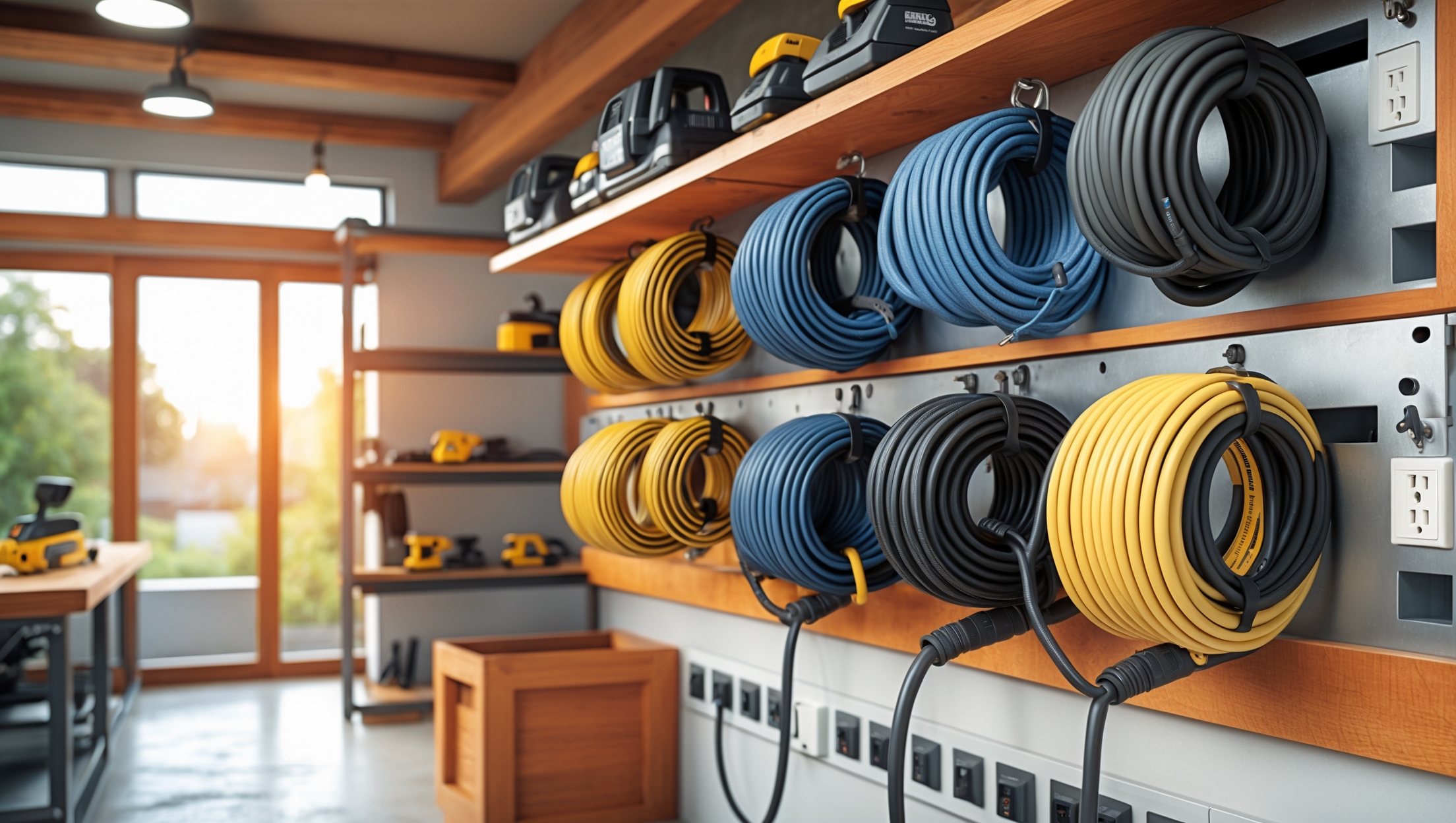
- Store cords properly: Coil loosely and hang on a wall hook or cord reel. Avoid sharp bends or tight knots that can break internal wires.
- Choose the right cord for the job: Match the AWG, length, and indoor/outdoor rating to your specific task.
- Plug into GFCI outlets: Especially important in garages, basements, and outdoors to prevent shock hazards.
- Label and organize: Mark heavy-duty cords for workshop use, and keep light-duty cords for electronics only.
Don’ts: Common Hazards to Avoid
- Don’t daisy-chain cords: Plugging one extension cord into another increases resistance and fire risk.
- Don’t run cords under rugs, carpets, or doors: Hidden cords overheat and are prone to damage from foot traffic.
- Don’t alter plugs or cut off grounding pins: This defeats built-in safety features and can lead to shocks or equipment damage.
- Don’t overload: Never exceed the cord’s maximum amp rating, even if appliances are running intermittently.
- Don’t use indoor cords outside: Lack of weatherproofing leads to cracking, short circuits, and shock risks.
- Don’t ignore warmth: If a cord feels hot to the touch, unplug immediately and reassess your setup.
Heavy-Duty Extension Cord Reviews: Top Picks for Home Workshops
Review Criteria
For this review, we focused on cords rated 12 AWG or thicker, with grounded plugs, weather-resistant jackets, and lengths suitable for workshops and garages (25–100 feet). We considered build quality, flexibility in cold weather, durability, and price.
1. Iron Forge Cable 12/3 SJTW Heavy-Duty Extension Cord
- Specs: 12 AWG, 15A, 125V, 50 ft, lighted end, weather-resistant jacket
- Pros: Thick, durable insulation; power indicator light; stays flexible in cold; reinforced strain relief; UL listed
- Cons: Bulky for storage; lighted end may crack if dropped repeatedly
- Best for: General workshop use, outdoor power tools, shop vacs, pressure washers
2. Southwire 2588SW 10/3 Heavy-Duty Outdoor Extension Cord
- Specs: 10 AWG, 15A, 125V, 100 ft, weather-resistant, lighted ends
- Pros: Industrial-grade durability; minimal voltage drop even at 100 ft; stays flexible in winter; bright colors for visibility
- Cons: Expensive; heavier than most; overkill for light-duty tasks
- Best for: High-power tools, portable generators, multiple-tool setups far from outlets
3. US Wire & Cable 74050 12/3 SJTW Yellow Extension Cord
- Specs: 12 AWG, 15A, 50 ft, weatherproof, oil and chemical resistant
- Pros: Ultra-flexible jacket; easy to coil; handles oil and grease well; clear, bright yellow color
- Cons: No lighted end; jacket can scuff after frequent outdoor dragging
- Best for: Garage workshops, automotive repairs, outdoor lighting setups
4. Flexzilla Pro Heavy-Duty Extension Cord with Lighted Ends
- Specs: 12 AWG, 15A, 25 ft, cold-weather flexibility (-58°F), water-resistant
- Pros: Stays supple in extreme cold; rugged molded ends; lighted plug; tangle-free
- Cons: Shorter length; pricier than generic cords; green sheath may show dirt
- Best for: Short-range heavy-duty use, snowblower or outdoor power tool connections in winter
5. Voltec Power & Lighting 05-00364 Multi-Outlet Contractor Cord
- Specs: 12 AWG, 15A, 50 ft, triple-tap outlet, weather-resistant, contractor grade
- Pros: Multiple outlets at the end; heavy-duty build; bright blue color; excellent strain relief; ETL listed
- Cons: Slightly stiff when new; triple outlet adds bulk to the end
- Best for: Running multiple tools, outdoor events, workshop setups with limited outlets
Honorable Mentions
- Amazon Basics 12/3 Outdoor Extension Cord: Affordable, reliable, with good flexibility.
- Woods 982452 12/3 SJTW Extension Cord: Reinforced blades, solid value for the price.
DIY Extension Cord Management: Storage, Organization, and Longevity
Proper Storage Techniques
How you store your extension cords directly affects their lifespan. Avoid wrapping tightly around your arm or elbow—this stresses the internal wires and creates permanent kinks. Instead:
- Over-Under Coil Method: Alternately loop the cord in opposite directions. This balances twists and prevents tangling.
- Use Cord Reels or Hangers: Wall-mounted reels, hooks, or even large Velcro straps keep cords off the floor and away from sharp objects or water.
- Separate by Use: Dedicate specific hooks for indoor, outdoor, and heavy-duty cords to prevent accidental misuse.
Troubleshooting and Repair
Never use electrical tape for permanent repairs. If you notice a frayed section or damaged plug:
- Replace the cord entirely if the damage is near the plug or multiple areas are affected.
- Install a new plug only if you have experience and the damage is limited to the end.
- Dispose of cords properly—never throw in regular trash if they contain significant copper. Recycle at an e-waste center when possible.
Extension Cord Accessories: Must-Have Gadgets for Safety and Convenience
- GFCI Inline Adapters: Add ground fault protection to any cord, especially for outdoor or damp locations.
- Cord Locks: Prevent accidental unplugging during heavy tool use.
- Weatherproof Covers: Snap-on covers shield plugs and outlets from rain or snow during outdoor projects.
- Smart Plugs and Timers: Automate power control and monitor tool usage remotely.
Frequently Asked Questions on Extension Cord Safety
- Can I use an extension cord with a space heater? Only if it’s a heavy-duty (12 AWG or thicker) cord and kept fully uncoiled. Space heaters should ideally be plugged directly into a wall outlet.
- Why does my extension cord get warm? Likely due to excessive load, inadequate gauge, coiling, or damage. Unplug and reassess immediately.
- Can I bury an extension cord? No. For permanent outdoor wiring, use UF-rated cable installed to code—never standard extension cords.
- Is it safe to leave an extension cord plugged in? Not for long-term use. Unplug when not in use, especially outdoors or in damp areas.
Conclusion: Make Smart, Safe Choices for Every Home Project
Extension cords may seem like a simple purchase, but their impact on your home’s safety, convenience, and the longevity of your tools is significant. By understanding the basics—matching gauge to load, choosing cords rated for your environment, and following best practices for use and storage—you’ll dramatically reduce the risk of fire, electrical shock, and costly equipment damage. Investing in high-quality, heavy-duty cords is not just about handling bigger loads; it’s about building resilience and safety into every project, from routine maintenance to ambitious upgrades.
Don’t take shortcuts: always inspect your cords, avoid daisy-chaining, and never push a cord beyond its limits. Organize your extension cord collection so the right cord is always at hand, and consider handy accessories like GFCI adapters or weatherproof covers to adapt to any scenario. Remember, a well-managed extension cord setup isn’t just about compliance or convenience—it’s about protecting your home, your family, and your investments.
With the knowledge and recommendations in this guide, you’re equipped to choose, use, and care for extension cords with confidence. Make smart choices, stay safe, and let your DIY ambitions thrive—powered responsibly.

I noticed you mentioned that 16 AWG cords are only suitable for light-duty use, but could you clarify if it’s ever safe to use a light-duty cord for something like a shop vac just for a quick job? Or is it always best to stick with heavier gauges even for short tasks?
It’s best to stick with a heavier gauge cord, such as 12 or 14 AWG, for a shop vac, even for quick tasks. Shop vacuums draw a lot of power, which can overheat a 16 AWG light-duty cord and create a fire risk. Using the right cord ensures your safety and protects your equipment.
Do heavy-duty extension cords for outdoor use last longer if I store them inside when not using them? Or is it mostly about the wire gauge and type, and not so much about storage? I want to get the most life out of my cords.
Storing heavy-duty outdoor extension cords inside when they’re not in use does help them last longer. Indoor storage protects them from sun, moisture, and extreme temperatures, all of which can degrade the cord over time. While wire gauge and type are important for performance and safety, good storage habits can definitely extend the life of your cords.
I’m just getting into some DIY projects and noticed you mentioned 12 AWG cords are good for heavy-duty use. If I’m running a table saw in my garage, is sticking with 12 AWG enough, or do certain tools call for even thicker cords?
A 12 AWG extension cord is generally safe for running most table saws, especially for typical garage DIY use. It handles higher currents and reduces voltage drop over longer distances. However, if your table saw is particularly high-powered or you’ll be running it far from the outlet (over 50–100 feet), you might consider a 10 AWG cord for extra safety and performance. Always check your tool’s amperage rating and match the cord accordingly.
For outdoor use around the yard, is it necessary to choose a certain type or thickness of extension cord even if I’m just running things like string lights or holiday decorations?
Yes, for outdoor use, it’s important to choose an extension cord labeled for outdoor use, as these are built to withstand moisture and temperature changes. Even for string lights or holiday decorations, look for cords marked with a ‘W’ on the jacket, which means they’re weather-resistant. For light loads like decorations, a 16-gauge cord is usually sufficient, but use a heavier 14- or 12-gauge cord for longer runs or higher wattage items.
Can you explain how to tell if an extension cord is starting to wear out or become unsafe, before it becomes a real fire hazard? I’m never really sure what signs to look for besides obvious fraying.
Besides obvious fraying, watch for cracks in the insulation, discoloration (like dark or melted spots), a cord that feels unusually hot, or a plug that doesn’t fit snugly in outlets. Also, if you notice flickering lights or a burning smell when the cord is in use, these are strong signs it’s unsafe. If any of these issues appear, stop using the cord right away.
I see you mentioned that 12 AWG cords are considered heavy-duty and can handle up to 15 amps, but how do I know if that’s enough for running multiple power tools at the same time in my garage? Should I look for something even heavier if I plan to use more than one tool?
A 12 AWG extension cord rated at 15 amps is generally suitable for running one or two standard power tools at the same time, as long as their combined amps don’t exceed 15. If you plan to use several high-powered tools together, you might want to calculate their total current draw. If it adds up to more than 15 amps, consider using separate circuits or a heavier gauge cord, such as 10 AWG, for added safety.
I noticed you mentioned that 12 AWG cords are heavy-duty and suitable for space heaters and air compressors. If I have several devices plugging into one cord at the same time, does that change the AWG or amp rating I should look for?
Yes, plugging multiple devices into one extension cord increases the total current draw, so you need to ensure the cord can handle the combined amps of all devices. You should still use a heavy-duty cord like 12 AWG, but also check its maximum amp rating and never exceed it. Overloading can cause overheating and is a fire risk. If your devices together draw more amps than the cord rating, use multiple cords or a higher-rated solution.
Are there any budget-friendly heavy-duty extension cords you recommend for outdoor work? Sometimes the best-rated cords seem expensive, so I’m wondering if there are affordable options that still meet the safety standards mentioned in your guide.
Yes, there are budget-friendly heavy-duty extension cords that are safe for outdoor use. Look for cords labeled as UL listed or ETL certified, which means they meet safety standards. Brands like Woods, Iron Forge, and Amazon Basics offer outdoor-rated, 12- or 14-gauge cords at reasonable prices. Just make sure the cord is rated for outdoor use and matches the power needs of your tools.
I noticed the guide differentiates between 16 AWG, 14 AWG, and 12 AWG cords for different uses. If I have a tool that draws 12 Amps, is it worth investing in a heavier duty 12 AWG cord for added safety, or would 14 AWG be sufficient?
For a tool that draws 12 Amps, a 14 AWG extension cord is generally safe for shorter lengths (up to 50 feet). However, if you plan to use a longer cord or want extra peace of mind, a 12 AWG cord is a better choice. It handles higher currents with less voltage drop, reducing overheating risk and ensuring your tool runs efficiently.
I noticed that you recommend specific AWG ratings for different uses. Is it ever okay to use a heavier-duty (lower AWG number) cord for light-duty appliances, or does that cause any issues with efficiency or safety?
Using a heavier-duty extension cord with a lower AWG number for light-duty appliances is perfectly safe and does not cause efficiency or safety issues. In fact, it can offer extra protection since heavier cords handle higher currents and are less prone to overheating. The main downside is that they can be bulkier and less convenient to handle, but there are no electrical drawbacks.
The guide touches on heavy-duty models for demanding environments. As a small business owner, I sometimes run extension cords outdoors for events. Would these heavy-duty picks be safe to use in wet or damp conditions, or should I look for cords rated specifically for outdoor use?
For running extension cords outdoors, especially in wet or damp conditions, it’s important to use cords rated specifically for outdoor use. Even heavy-duty cords may not be weather-resistant unless they’re marked for outdoor environments. Look for extension cords labeled ‘outdoor’ or ‘weatherproof’ and check for a ‘W’ marking on the cord to ensure they’re safe for outdoor and wet conditions.
I didn’t realize extension cords could be responsible for so many fires. If I need to use a long cord outside for power tools, are there certain ratings or labels I should specifically look for to make sure they’re safe for outdoor use?
Yes, when using an extension cord outdoors for power tools, it’s important to look for cords labeled as “outdoor” or marked with a “W” on the packaging. These are designed to withstand moisture, sunlight, and rougher conditions. Make sure the cord is heavy-duty, with a gauge suitable for your tool’s power needs—lower gauge numbers mean thicker wires and more capacity. Also, check for certifications like UL (Underwriters Laboratories) or ETL to ensure safety standards.
For someone trying to keep costs down, is it better to buy one long, heavy-duty extension cord for multiple uses, or should I get separate cords for each tool or area? Are there trade-offs in safety or convenience?
Buying one long, heavy-duty extension cord can save money upfront, but using it for multiple tools or areas may lead to safety risks like tripping hazards, overloading, or stretching the cord too far. Separate cords for each area or tool reduce these risks and are usually more convenient, but cost more. If you go with one cord, make sure it’s rated for the heaviest tool you’ll use and avoid daisy-chaining or overextending it.
With kids and pets around, I worry about accidental damage or overheating. Are there specific safety features or certifications I should look for when picking a heavy-duty extension cord for indoor use?
For homes with kids and pets, look for extension cords with built-in surge protection, child-resistant covers, and a sturdy, thick jacket to prevent chewing or damage. Make sure the cord is UL or ETL certified, which indicates it meets safety standards. Also, choose cords with a grounded three-prong plug and avoid running them under rugs or furniture to minimize overheating risks.
You mentioned that 12 AWG cords are best for heavy-duty appliances like space heaters. If I need one for occasional use outdoors, do I need to look for something marked specifically for outdoor use, or is wire gauge the only thing that matters?
For outdoor use, it’s important to choose an extension cord that’s specifically labeled for outdoor use, not just based on wire gauge. Outdoor-rated cords have extra insulation to protect against moisture, sunlight, and temperature changes. So, look for cords marked “outdoor” or “weather-resistant” in addition to selecting the correct gauge for your appliance.
I noticed the article talks about most home fires being preventable with better knowledge and equipment. Are there any regular maintenance checks or routines you recommend for people who use heavy-duty cords often, especially in outdoor or workshop settings?
Absolutely, for heavy-duty cords—especially outdoors or in workshops—it’s smart to inspect them regularly for frayed insulation, exposed wires, or cracked plugs. Clean off any dirt or debris, and make sure the connections stay dry and free from moisture. Untangle cords before use to avoid internal damage and never use them if you see any signs of wear. Storing them properly, coiled and off the ground, also helps extend their lifespan and keeps things safer.
When choosing a heavy-duty extension cord for outdoor use, are there specific features or certifications I should prioritize beyond AWG and amp rating? For example, do weather resistance or certain plug types make a significant difference in safety?
Yes, for outdoor use, weather resistance is crucial. Look for cords labeled ‘outdoor’ or with a ‘W’ marking, which means they’re designed to handle moisture and sunlight. UL or ETL certifications are also important for safety assurance. Plug types matter too—choose cords with grounded (three-prong) plugs and molded strain reliefs to reduce wear at connection points.
Is there a big difference between indoor and outdoor extension cords when it comes to safety? I sometimes use the same cord for both, but I’m not sure if that’s risky or if I should really have separate cords for each purpose.
There is an important safety difference between indoor and outdoor extension cords. Outdoor cords are designed to handle exposure to weather, moisture, and rougher conditions, while indoor cords are not. Using an indoor cord outside can increase the risk of electric shock or fire. It’s best to use outdoor-rated cords for any outdoor tasks and reserve indoor cords for indoor use only.
If I need to use an extension cord temporarily for a space heater during the winter, are there any specific brands or features you’d recommend that offer extra safety beyond just being 12 AWG? Budget is a concern, so I’m also wondering if there are affordable but reliable choices.
For space heaters, look for extension cords labeled for heavy-duty or appliance use, ideally with a wattage rating above what your heater draws. Features like a built-in circuit breaker, reinforced strain relief, and UL or ETL safety certification are important. Brands like Woods, Iron Forge, and Amazon Basics offer 12 AWG cords with these safety features at reasonable prices. Just make sure to check the cord’s maximum amperage and only use it for short-term needs.
If I need to run an extension cord outdoors for more than a day, are there additional safety steps I should be taking beyond just choosing a heavy-duty model? The article mentions heavy-duty cords for demanding environments, but I’m not sure if that covers long-term outdoor use.
For outdoor use longer than a day, you should use an extension cord rated specifically for outdoor use (often labeled ‘weather-resistant’ or ‘outdoor’). Protect all connections from moisture by keeping plugs off the ground and covering them, and check the cord daily for signs of wear or damage. Avoid running the cord through standing water or pinch points, and unplug it when not in active use.
If I’m using a 14 AWG extension cord for a power tool in my garage, is there a maximum length I should avoid to prevent overheating or voltage drop? The article mentioned amp limits but not how length factors in.
Length definitely matters with extension cords, especially for power tools. For a 14 AWG cord, it’s best to keep it under 50 feet when using higher-amp tools (up to 15 amps). Longer cords can cause voltage drop and overheating risks. If you need more length, consider moving up to a 12 AWG cord for better safety and performance.
You mention that many home fires are related to extension cord misuse. If I need to use an extension cord outdoors temporarily, what extra precautions should I take to keep it safe from rain and foot traffic?
When using an extension cord outdoors, make sure it’s rated for outdoor use, as these are built to withstand moisture and temperature changes. Keep all connections off the ground and away from puddles by elevating them if possible. Use a cord cover or tape to secure the cord and prevent tripping hazards, especially in walkways. Always unplug and store the cord indoors when not in use to avoid prolonged exposure to the elements.
Could you clarify if using a heavy-duty cord, like 12 AWG, is always safer even for lighter jobs? Or can that cause problems with smaller appliances or tools if they’re not drawing that much current?
Using a heavy-duty cord like 12 AWG is generally safe for lighter jobs because it can handle more current without overheating. It won’t harm smaller appliances or tools, as they will only draw the amount of current they need. The main drawbacks might be that heavy-duty cords are bulkier and more expensive than lighter ones. There’s no risk to your devices from using a heavier gauge extension cord.
I noticed the article mentions that most extension cord incidents are preventable with the right knowledge and equipment. Are there any warning signs or symptoms people often miss that could indicate an extension cord is becoming unsafe to use?
Yes, there are some warning signs that people commonly overlook. Frayed or cracked insulation, exposed wires, scorch marks, and unusual warmth or buzzing from the cord are all signs that it may be unsafe. If a cord feels hot to the touch or if plugs fit loosely in the outlets, it’s best to stop using it immediately and replace it with a new one.
When choosing between a 14 AWG and a 12 AWG cord for indoor DIY projects like running a shop vac and a space heater, is there much difference in performance or safety? Is it always better to go thicker, or can that be overkill for some tools?
For devices like a shop vac and a space heater, which often draw a lot of power, a 12 AWG cord is generally safer and can handle higher currents with less voltage drop compared to a 14 AWG cord. While a 14 AWG may be sufficient for lighter tools, using a thicker 12 AWG cord reduces the risk of overheating and is rarely overkill for high-wattage equipment indoors.
Could you clarify how to tell when an extension cord is showing signs of wear or damage? I want to make sure I replace them before they become a fire risk, but I’m not always sure what warning signs to look for.
Look out for cracks or splits in the cord’s insulation, any exposed wires, fraying, or melted areas. Also, check for loose or bent prongs, scorch marks, and if the cord or plug feels warm during use. If you notice any of these signs, it’s safest to replace the extension cord right away to avoid fire hazards.
When choosing between a 14 AWG and a 12 AWG extension cord for occasional power tool use in a garage, is there a significant safety or longevity advantage to opting for the heavier gauge, or does it only matter for continuous heavy loads?
Choosing a 12 AWG extension cord over a 14 AWG can offer advantages beyond just continuous heavy loads. The 12 AWG cord handles more current with less voltage drop, which is safer and can help your power tools perform better, especially over longer distances. Even for occasional use, the thicker gauge can add a margin of safety and may extend the life of both your cord and your tools.
If I need to run a heavy-duty extension cord to power my space heater in the garage, how do I figure out if a 12 AWG cord is actually safe for the distance I need, or do I need to go even thicker for a long run?
To check if a 12 AWG extension cord is safe for your space heater, consider both the length of the cord and the heater’s wattage. For runs up to 50 feet, a 12 AWG cord usually works for most space heaters (which often draw up to 1500 watts). If you need more than 50 feet, or your heater is especially high-wattage, a thicker 10 AWG cord is safer to prevent overheating or voltage drop.
The article mentions the importance of recognizing signs of wear on extension cords. Are there specific indicators or tests you recommend homeowners use to determine if a cord should be replaced immediately, beyond just visible fraying?
Beyond visible fraying, homeowners should watch for melted or discolored areas, cracked or exposed insulation, bent or loose prongs, and unusual warmth when the cord is in use. If you notice a burning smell or hear any buzzing, unplug the cord right away. Testing with a grounded outlet tester can also help identify internal wiring issues even if external damage isn’t obvious.
I noticed you mentioned 12 AWG cords for heavy-duty use, like heaters and air conditioners. What about situations where you have to connect multiple high-draw tools at once through the same cord? Is there a safe way to do this, or should I always keep it to just one device per extension cord?
When using high-draw tools, it’s safest to plug only one device into each heavy-duty extension cord. Connecting multiple high-power tools to a single cord can easily overload it, even if it’s a 12 AWG type, increasing fire risk and possibly damaging your equipment. Always use separate cords and outlets for each tool to ensure safe operation.
You mention that using the wrong cord can damage tools or trip breakers. If I’ve been using the same medium-duty extension cord for things like a space heater and then noticed it feels a little warm, is that a warning sign I should replace it?
Yes, if your extension cord feels warm while running high-power devices like a space heater, that’s a warning sign. It likely means the cord isn’t rated to handle the load safely, which can lead to overheating, damage, or fire risk. You should stop using it for that purpose and upgrade to a heavy-duty cord rated for the wattage of your space heater to stay safe.
When considering the best heavy-duty picks, do you have any tips for balancing durability with budget? For someone who only occasionally needs a heavy-duty extension cord, is it worth buying a top-tier model or would a mid-range option suffice for home projects?
If you only need a heavy-duty extension cord occasionally for home projects, a mid-range option usually offers a good balance between durability and cost. Look for cords with sufficient gauge (like 12 or 14 AWG), solid insulation, and safety certifications. Top-tier models are great for frequent or very demanding use, but a well-reviewed mid-range cord typically meets most homeowners’ needs without overspending.
The article says that most extension cord-related fires are preventable with the right knowledge and equipment. Are there any visible warning signs or things to check regularly to make sure an extension cord is still safe to use, especially one I use outdoors or in the garage?
Yes, there are several visible warning signs to watch for. Check the cord regularly for cracks, fraying, or exposed wires anywhere along its length. Look for melted areas, discoloration, or burn marks at the plug or outlets. If you notice the cord feels hot when in use or if the plug fits loosely, stop using it. For outdoor or garage use, make sure the cord’s insulation hasn’t become brittle or damaged from sun, water, or chemicals.
You list 12 AWG cords as suitable for things like space heaters and air conditioners, but is there a big difference in safety or performance between a 12 AWG and a 14 AWG cord if I’m only using it for short periods or lower amp devices?
If you’re using the extension cord for short periods or with low-amp devices, a 14 AWG cord can generally handle the load safely. However, a 12 AWG cord is thicker and better for higher wattage or longer runs, reducing the risk of overheating. For most everyday uses with low power devices, the difference is minor, but always check your device’s amp rating to be sure.
If I need an extension cord for outdoor use with power-hungry equipment like a pressure washer, how important is it to choose a cord with a lower AWG versus simply picking the cheapest heavy-duty option? Are there specific brands or certifications I should look for to ensure safety?
When using a pressure washer or other power-hungry equipment outdoors, choosing a cord with a lower AWG (which means a thicker wire) is very important for safety and performance. Lower AWG cords handle higher currents without overheating. Look for cords labeled for outdoor use, with certifications like UL (Underwriters Laboratories) or ETL. Brands like Southwire, Woods, and Iron Forge are known for quality. Avoid just picking the cheapest option, as lower quality cords can be unsafe for heavy loads.
The article covers different wire gauges like 16 AWG, 14 AWG, and 12 AWG for various uses. If I have a lot of mixed tools and devices, is it safer to just use a heavy-duty 12 AWG cord for everything, or are there any downsides to that approach?
Using a 12 AWG heavy-duty extension cord is generally safe for most household tools and devices, as it handles higher currents and reduces voltage drop. However, downsides include the cord being bulkier, heavier, and less flexible, which can make it harder to manage for light-duty tasks. For occasional light use, it might be overkill, but it offers added safety if you frequently use high-power tools.
The article mentions that most extension cord incidents are preventable with proper knowledge and equipment. Can you share some warning signs that tell me when it’s time to replace an extension cord, especially when I’m using them for high-powered equipment in my workshop?
Absolutely. You should replace an extension cord if you notice any fraying, exposed wires, scorch marks, melted insulation, or if the cord feels hot during use. If plugs fit loosely in the outlet or the cord frequently trips your breaker, it’s also a warning sign. For high-powered equipment, always ensure the cord is rated for the load, and never use cords that show signs of wear or damage.
I noticed the article talks about how overheating cords can actually damage expensive tools. How do you know if a cord is starting to pose a risk beyond obvious things like frayed wires? Are there any less visible warning signs I should look out for?
Apart from visible damage, there are a few subtler signs a cord might be unsafe. If you notice the cord or plug feels unusually warm or hot during use, that’s a warning sign. A burning smell, slight discoloration, or the cord feeling stiff or brittle can also suggest internal damage. If a tool suddenly loses power or flickers, the cord could be the culprit. Unplug and replace any cord you suspect might be compromised.
You list 16 AWG cords as suitable for small electronics, but sometimes I have to plug in multiple devices into a single cord. How do I figure out if I’m exceeding the safe limit, especially when using several gadgets at once?
To check if you’re staying within the safe limit for a 16 AWG extension cord, add up the wattage or amps used by all connected devices. Most 16 AWG cords can handle up to 13 amps (about 1,625 watts on a 125V circuit). If your combined devices go above that, use a heavier-duty cord or plug some items into a different outlet.
You mention that picking the right cord can prevent overheating and fire risks, but what are some warning signs on the cord itself that I should watch for during regular use? Is there a rule of thumb for when it’s time to replace an old extension cord?
Look out for signs like frayed or cracked insulation, exposed wires, burn marks, melted spots, or a cord that feels unusually warm while in use. If you notice any of these, stop using the cord immediately. As a general rule, replace extension cords if they show visible damage, don’t plug in securely, or are over five years old and have seen frequent use.
I noticed you listed different AWG ratings and their amp limits. How important is it to match the extension cord’s ampacity to each tool, or is it okay to use a heavier-duty cord for everything just to be on the safe side? Does using a 12 AWG cord with smaller devices have any downsides?
Matching the extension cord’s amp rating to your tool is crucial for safety, but using a heavier-duty cord—like 12 AWG—even for smaller devices is perfectly safe. There are no real downsides, except it might be heavier and less flexible than thinner cords. It won’t harm your devices or waste power, so it’s a smart choice if you want one cord for multiple uses.
You mention that choosing the correct wire gauge is important for safety, but how do I figure out the right AWG for running multiple power tools at the same time in my garage? Is there a guideline for adding up the amps from several devices?
To determine the right AWG for your extension cord, first add up the total amps your power tools will draw when used together. For example, if three tools each use 5 amps, your total is 15 amps. Choose a cord that supports at least that total; for 15 amps up to 50 feet, a 14 AWG cord is minimum, but 12 AWG is safer for longer distances or heavier loads. Always check each tool’s label for its amp rating.
Can you explain how using a cord with the wrong gauge—like a 16 AWG for something that draws more power—actually causes overheating or breaker trips? I’m a little confused about how that works in practice.
When you use a cord with too small a gauge, like 16 AWG, for devices that draw lots of power, the wire can’t safely handle the high current. This makes the cord heat up, which can damage insulation or cause a fire. If the current exceeds the cord’s limit, the heat can also make your breaker trip as a safety measure, cutting power to prevent danger.
For outdoor projects, are there certain heavy-duty extension cords you recommend that also offer good protection against moisture or UV exposure? I’m trying to find one that lasts through a few seasons of year-round use, not just occasional jobs.
For outdoor, year-round use, look for extension cords labeled as ‘weather-resistant’ or ‘outdoor-rated.’ These cords usually have thick, durable jackets made from materials like vinyl or rubber that protect against moisture and UV rays. Brands such as Southwire, Iron Forge Cable, and Coleman Cable are known for producing reliable, heavy-duty outdoor cords. Make sure to choose one with a high enough gauge (like 12 or 10 AWG) for your power needs.
I noticed the article talks about the risk of using the wrong extension cord leading to overheating or even fires. If an extension cord feels warm to the touch after running my space heater for a while, is that a clear warning sign, or is some warmth normal for heavy-duty cords?
If your extension cord feels noticeably warm while running a space heater, that’s a warning sign you shouldn’t ignore. Some very slight warmth can be normal with heavy-duty cords under load, but anything more than that suggests the cord may be overloaded or not rated for the heater’s power. To stay safe, make sure your cord is rated for at least the same wattage as your heater, and consider plugging the heater directly into a wall outlet if possible.
When choosing between the best heavy-duty extension cords you reviewed, what should I look for if I plan to use it outdoors year-round in extreme weather conditions? Are there features or certifications that are especially important for that scenario?
For outdoor, year-round use in extreme weather, choose a heavy-duty extension cord labeled for outdoor use (often marked as ‘W’ on the packaging). Look for cords with thick, durable insulation, weather-resistant jackets, and UL listing or ETL certification for safety. A cord with a high amperage rating and grounded, molded plugs will also help ensure safe, reliable performance in tough conditions.
I noticed the article mentions using 12 AWG cords for heavy-duty tasks like space heaters. If I only have a 14 AWG cord, is it ever OK to use it temporarily for something like a shop vac, or is that too risky even just for a quick job?
Using a 14 AWG cord for a shop vac is generally safe for short, temporary use, as most shop vacuums don’t draw extremely high currents. However, make sure the cord is in good condition, kept as short as possible, and doesn’t overheat. Avoid using it for high-wattage devices like space heaters, and never daisy-chain multiple cords. For frequent or prolonged use, stick with 12 AWG for added safety.
You listed specific AWG ratings and their uses, but what should I do if I have a home workshop with a mix of high and low-powered tools? Is there a single type of extension cord I can use for everything, or do I need to buy multiple cords for different devices?
For a home workshop with both high and low-powered tools, it’s safest to use a heavy-duty extension cord rated for the highest wattage tool you’ll be using. A 12 or even 10 AWG cord can handle most power tools without risk of overheating. You don’t need separate cords for each tool, just ensure the cord meets or exceeds the requirements of your most demanding device.
After selecting the right gauge and type as described, do you have tips on how to safely store extension cords to prevent damage and prolong their life, especially for those used less frequently?
To keep your extension cords in good shape, loosely coil them without sharp bends to avoid internal wire damage. Store them on hooks or reels off the ground, away from moisture and direct sunlight. For cords you use less often, consider using Velcro straps or twist ties to secure the coil, and keep them in a dry, dust-free area. Regularly check for any fraying or wear before each use.
You mentioned that most extension cord incidents are preventable with the right knowledge and equipment. Is there a way to tell if an extension cord is starting to go bad before it becomes dangerous? Like, are there warning signs other than obvious fraying?
Yes, there are several warning signs that an extension cord may be going bad beyond obvious fraying. Watch out for cords that feel hot to the touch, have loose or cracked plugs, or emit a burning smell. If you notice any buzzing sounds, discoloration, or if the cord frequently trips the circuit breaker, these are also signs of trouble. Replace any extension cord that shows these symptoms to stay safe.
You mention that most extension cord accidents are preventable with the right knowledge and equipment. Can you elaborate on what specific signs of wear or damage people should look for to know when it’s time to replace their extension cords?
Absolutely. When inspecting extension cords, check for cracks or splits in the insulation, exposed wires, fraying, or melted areas. Also look for loose or bent prongs, damaged plugs, scorch marks, and any spots that feel hot to the touch when in use. If you notice any of these issues, it’s safest to replace the cord right away to prevent hazards.
You provided amp ratings for different AWG sizes, but I’m wondering about the impact of cord length on safety. For example, does using a long 16 AWG cord for a shop vac in the garage change its safe amp rating significantly?
Cord length absolutely affects safety. As extension cords get longer, their ability to safely handle high currents drops due to increased resistance and voltage drop. For a 16 AWG cord, running a shop vac over a long distance (like 50 feet or more) means you should use less than the maximum amp rating you would for a shorter cord. It’s safer to choose a thicker cord (lower AWG number) or a shorter run for high-power tools like a shop vac.
When it comes to recognizing signs of wear on extension cords, what are the most important things I should be looking for? I’ve got a few older cords in my toolbox and want to make sure I’m not overlooking something that could be a fire risk.
When checking your older extension cords, look for cracks or splits in the insulation, exposed wires, or any melted or burnt spots. Also, examine the prongs and plugs for looseness, discoloration, or corrosion. If the cord feels unusually warm during use or you notice any strange smells, it’s best to stop using it right away. Replacing damaged cords is the safest option to avoid fire hazards.
Could you clarify whether it’s okay to use a medium-duty 14 AWG cord for several power tools at once, or should I always stick with a 12 AWG heavy-duty cord if I’m running multiple devices? I’m a bit confused about when to upgrade for safety.
When running several power tools at once, it’s safest to use a 12 AWG heavy-duty cord. Medium-duty 14 AWG cords are typically fine for lighter loads or single tools, but multiple devices can quickly exceed their capacity, risking overheating or even fire. Always match your extension cord to the total power draw and err on the side of caution with a heavier gauge for multiple or high-powered tools.
I noticed you recommend different AWG ratings for varying appliance sizes. Is it okay to use a heavier-duty cord, like 12 AWG, for smaller devices such as lamps, or could that cause any issues?
Using a heavier-duty extension cord like 12 AWG for smaller devices such as lamps is perfectly safe. The thicker wire can easily handle lower power draws, and there’s no risk of harming your devices. The main downside is that heavier cords can be less flexible and more cumbersome to handle, but electrically, it poses no issues.
When you mention signs of wear on extension cords, what should I be checking for routinely? Is it just obvious things like fraying, or are there less visible warning signs to catch before it becomes a fire hazard?
When inspecting extension cords, watch for obvious signs like fraying, cracks, or exposed wires, but also check for subtler problems. Feel along the cord for soft spots, lumps, or areas that seem unusually warm. Inspect the plug and prongs for discoloration or loose fitting. Any buzzing sounds, flickering power, or a persistent rubbery smell can also be warning signs, even if the cord looks fine.
I noticed the guide talks about heavy-duty cords for things like space heaters. Are those safe to run outside during colder months, or should I look for cords that are specifically rated for outdoor use even if they’re already heavy-duty?
Even if a cord is heavy-duty, it’s important to use one that’s specifically rated for outdoor use when running it outside, especially in cold or wet conditions. Outdoor extension cords are built to handle weather elements and temperature changes, making them safer for use with things like space heaters outdoors. Always check the packaging or labeling for an ‘outdoor’ or ‘weather-resistant’ rating.
I see you outlined which AWG ratings are best for certain uses, but is there a significant cost difference between 14 AWG and 12 AWG cords for home projects, and is it worth the upgrade for added safety even if I don’t plan to run high-amp devices often?
There is usually a small cost increase when moving from a 14 AWG to a 12 AWG extension cord, since 12 AWG uses thicker copper wire. For most basic home projects where you aren’t powering high-amp devices, 14 AWG is generally sufficient and safe. However, choosing 12 AWG does add a safety margin, especially for longer cords or if you might use more powerful equipment in the future. The upgrade isn’t strictly necessary for light use, but it can offer peace of mind.
For outdoor DIY projects, do you recommend any specific cord length or features to prioritize for both safety and convenience? I sometimes find that longer cords are more tempting but I’ve heard that can lead to voltage drop or overheating issues.
For outdoor DIY projects, try to use the shortest cord that will comfortably reach your work area, as longer cords can indeed cause voltage drop and increase the risk of overheating. Look for heavy-duty, outdoor-rated extension cords (usually marked as ‘SJTW’ or ‘SJEOOW’), with a thick gauge—preferably 12 or 14 AWG—for extra safety. Grounded, three-prong plugs and weather-resistant jackets are also important features to prioritize.
We have kids and pets at home, so extension cord safety is a big concern. Are there any extra precautions or types of cords you’d recommend to reduce risks in busy households beyond just picking the right AWG?
In homes with kids and pets, consider extension cords with tamper-resistant or locking outlets to prevent accidental shocks. Choose cords with tough, chew-resistant jackets and look for models with illuminated ends so you can easily tell if they’re plugged in. Always keep cords out of reach, avoid running them under rugs, and use cord shorteners or covers to minimize tripping and chewing hazards.
You mentioned 12 AWG cords for heavy-duty use like space heaters and air compressors. Are there any major differences in safety or durability between brands when it comes to heavy-duty cords, or is the wire gauge more important than the brand?
The wire gauge, such as 12 AWG, is the most important factor for safety and handling high loads. However, there can be differences between brands in terms of durability, insulation quality, plug construction, and weather resistance. Look for cords that are UL listed, have tough outer jackets, and sturdy connectors. But as long as you choose a reputable brand with the correct gauge, performance and safety should be similar.
I saw you mention that the wrong extension cord can damage tools and even start fires. If I already have several extension cords at home but I’m not sure about their AWG or ratings, is there a safe way to test or check if they’re still good for power tools or heavy appliances?
To check if your extension cords are safe for power tools or heavy appliances, look for printed markings along the cord that show the AWG (wire gauge) and maximum wattage or amperage. Thicker cords with lower AWG numbers (like 12 or 14) are best for high-powered devices. If the cord is missing labels, feels hot in use, or has damage, it’s safest not to use it for heavy loads.
The article talks about heavy-duty extension cords for demanding environments. For someone on a tight budget, are there specific features or certifications I should prioritize to ensure safety without overspending?
When shopping on a budget, look for extension cords labeled with UL (Underwriters Laboratories) or ETL (Intertek) certification, as these indicate the product meets safety standards. Prioritize cords with thick insulation and a grounded three-prong plug. Choose the shortest length that fits your needs and check the cord’s amp and watt rating to match your appliances. These basics will keep you safe without needing to buy the most expensive option.
With so many options in wire gauge and ampacity, how do I figure out which extension cord will be safest for using a space heater in my basement over several hours? Is 12 AWG always the safest choice, or are there other features I should look for?
For running a space heater, a 12 AWG extension cord is a reliable and safe choice, especially for continuous use over several hours, because it handles higher currents and reduces overheating risk. However, also check the cord’s amp rating—it should match or exceed your heater’s draw. Look for cords labeled for heavy-duty or appliance use, with a grounding prong and UL listing for added safety. Avoid coiling the cord while in use and keep it away from moisture, especially in a basement setting.
Can you explain what signs of wear I should be looking for on an extension cord before using it in a demanding environment, like outdoors or for power tools? I feel like I might be missing something beyond just frayed wires.
Besides frayed wires, check the entire cord for cracks, splits, or melted spots in the insulation, which could expose the wires inside. Make sure the plug prongs aren’t loose or corroded and that the plug itself isn’t damaged or wobbly. Also, look for any unusual stiffness, which can mean the cord is brittle from age or UV exposure. Any of these issues mean it’s time to replace the cord, especially in demanding environments.
The article mentions that using the wrong extension cord can actually damage expensive tools. If I only have a 14 AWG cord but need to run a space heater rated for heavy-duty use, what kinds of risks am I taking, and is there a safe workaround?
Using a 14 AWG extension cord with a heavy-duty space heater can cause the cord to overheat, potentially damaging both the cord and your heater, and creating a fire hazard. The safe approach is to use a cord rated for the same or higher wattage as your heater—usually 12 AWG or lower for high-wattage appliances. Avoid using the 14 AWG cord for this purpose to ensure safety.
You talked about extension cords causing home fires when used improperly. How can I tell if my current cords are showing signs of wear or damage before they become unsafe, and are there specific warning signs I should look out for?
Inspect your extension cords regularly for any fraying, cracks, or exposed wires along the cord. Look for discoloration, melted spots, or scorch marks around the plug or sockets. If the cord feels hot to the touch when in use, or if you notice a burning smell, those are also warning signs. Replace any cord that shows these signs or if the plug blades are bent or loose. Always avoid using cords that have been pinched, cut, or repaired with tape.