
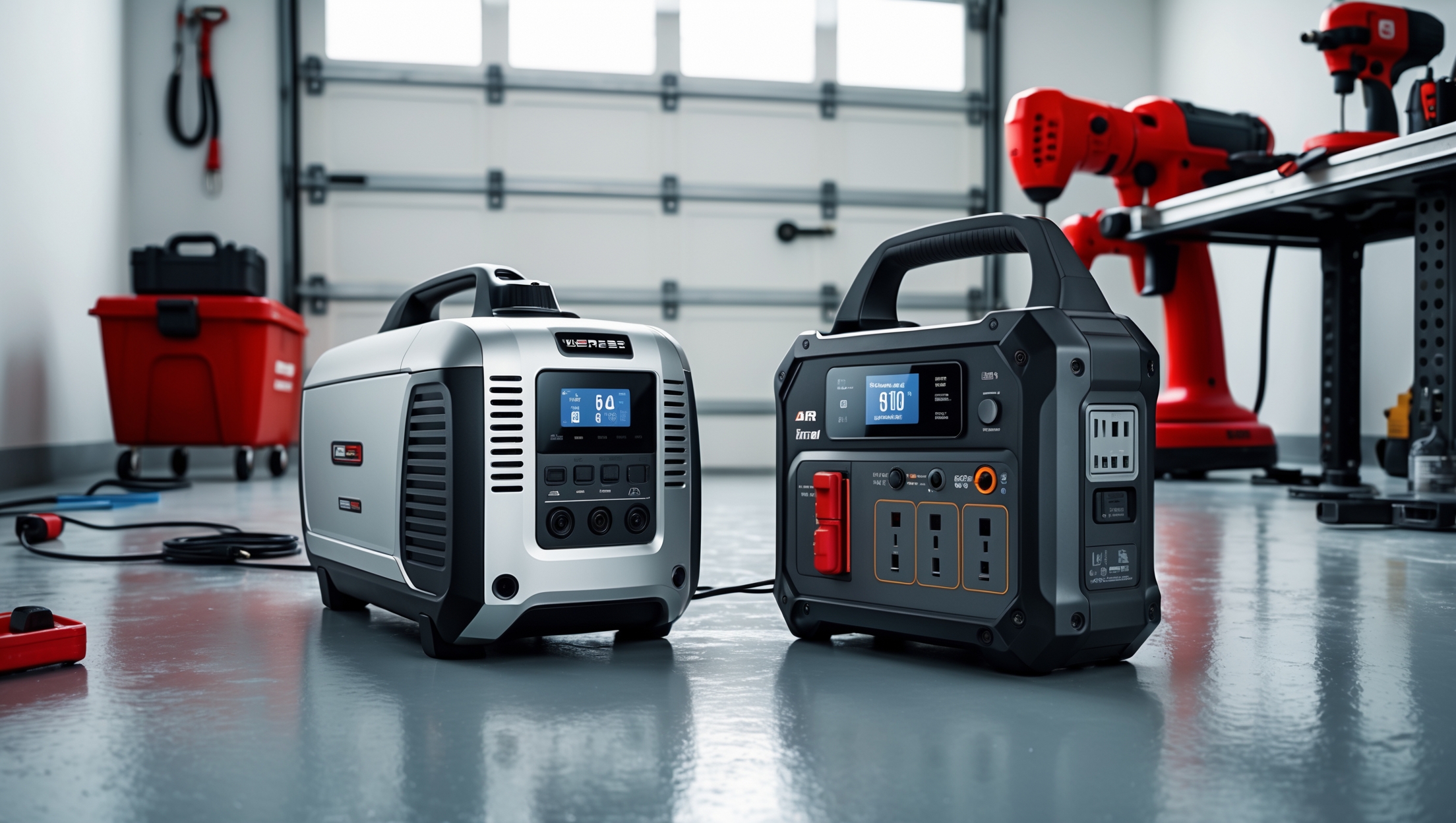
Introduction: Powering Your Home the Smart Way
Picture this: a thunderstorm knocks out your power right before a crucial work video call, or a winter blizzard leaves your home cold and dark for hours. Losing electricity, even temporarily, can turn daily life upside down. That’s why more homeowners are investing in backup power solutions—but the wide range of options can be overwhelming. Should you choose a fuel-powered inverter generator or a modern portable power station? Which is safer, quieter, easier to maintain, and more cost-effective in the long run?
This in-depth guide will walk you through a detailed comparison of inverter generators and portable power stations as DIY-friendly home backup solutions. We’ll examine features, setup requirements, costs, maintenance, and practical considerations—from powering refrigerators and medical equipment to running sensitive electronics. Whether you’re prepping for outages, camping, or just want peace of mind, you’ll find actionable advice and honest insights to help you make the right choice for your home.
How Home Backup Power Works: The Essentials
Understanding Your Needs
The first step is evaluating what you need to power during an outage. Common priorities include:
- Refrigerator/freezer
- Wi-Fi routers and laptops
- Medical devices (CPAP machines, oxygen concentrators)
- Phone/tablet chargers
- Lights and fans
- Sump pumps or well pumps
- Small appliances (microwave, coffee maker)
List the wattage requirements for each, then calculate your total running and starting wattage. This will determine the minimum capacity your backup solution needs.
Inverter Generators: The Basics
Inverter generators are fuel-powered (usually gasoline, propane, or dual-fuel) units that use advanced electronics to produce clean, stable electricity. Compared to conventional generators, they’re quieter, more efficient, and safe for sensitive electronics. Most come with 120V AC outlets, and some offer USB and 12V DC ports.
Portable Power Stations: The Basics
Portable power stations (also called solar generators) are large battery packs with built-in inverters, AC outlets, and USB ports. They’re rechargeable via wall outlet, car, or solar panels. No fumes or noise—just plug in and go. Modern units deliver pure sine wave power, suitable for electronics and small appliances.
Inverter Generators: Pros, Cons, and Key Specs
Advantages
- High Output: Most units range from 1,000 to 4,500+ running watts, enough for refrigerators, sump pumps, and more.
- Long Runtime: Can run for 6–20 hours on a tank, depending on load and fuel capacity.
- Refueling Flexibility: Gasoline and propane are widely available; dual-fuel models offer even more versatility.
- Parallel Capability: Some models allow linking two units for double the power output.
Drawbacks
- Noise: Even the quietest models are louder than power stations (typically 50–65 dB at 25% load).
- Emissions: Must be used outdoors due to carbon monoxide risk. Never operate in a garage or enclosed space.
- Fuel Storage: Requires safe storage of gasoline/propane, which has safety and shelf-life considerations.
- Maintenance: Regular oil changes, air filter cleaning, and winterizing are required for reliability.
Key Specs to Compare
- Running/starting wattage
- Fuel type and tank size
- Noise level (decibels)
- Weight and portability features (wheels, handles)
- Number/type of outlets
Portable Power Stations: Pros, Cons, and Key Specs
Advantages
- Zero Emissions: Safe for indoor use—no fumes, no risk of carbon monoxide poisoning.
- Silent Operation: Runs quietly, with only a faint fan noise.
- Instant Use: No fuel, no warm-up, no pull-starts. Just plug in and power up.
- Solar Charging: Option to recharge with solar panels for extended outages or off-grid use.
- Low Maintenance: No fluids or moving engine parts to service. Just keep the battery charged.
Drawbacks
- Limited Output: Most consumer models provide 300–2,000 running watts; only high-end units can run large appliances or multiple devices simultaneously.
- Finite Runtime: Once the battery is depleted, you must recharge from a wall, car, or solar panel—can take 5–10+ hours.
- Higher Upfront Cost per Watt: Large-capacity models are significantly more expensive than inverter generators of similar output.
- Battery Degradation: Lithium batteries lose capacity over time and with each cycle.
Key Specs to Compare
- Battery capacity (watt-hours, Wh)
- Peak and continuous inverter output (watts)
- Number/type of AC, DC, and USB outlets
- Charging options and times (AC, car, solar)
- Lifespan (charge cycles)
- Weight and portability
Cost Breakdown: Upfront, Maintenance, and Operation
Inverter Generators
- Upfront Cost: $400–$1,200 for quality models (1,500–4,500W range). Parallel kits and accessories extra.
- Fuel Costs: About $1–$3 per hour at half-load, depending on fuel type and prices.
- Maintenance: $20–$50/year for oil, filters, spark plugs. Occasional carburetor cleaning if stored with fuel.
Portable Power Stations
- Upfront Cost: $300–$2,500+ depending on capacity. Large units (1,000Wh+) often exceed $1,000.
- Recharging Costs: Minimal via AC outlet. Solar panels (optional) add $200–$800 for 100–400W kits.
- Maintenance: Virtually none, but battery replacement after 3–7 years ($200–$700, if possible).
Budgeting Tips
- Calculate your essential load and buy only as much capacity as you truly need.
- Factor in extension cords, transfer switches, or power strips for safe setup.
- If planning for multi-day outages, budget for extra fuel (generators) or solar panels (power stations).
DIY Setup: Step-by-Step Installation and Safety
Inverter Generator Setup
- Place Your Generator Outdoors: Always at least 20 feet from doors/windows. Never run inside a garage, even with the door open.
- Ground the Unit: Use the grounding lug if required by the manufacturer.
- Fuel and Oil: Fill the tank with fresh fuel and check the oil level before starting.
- Start-Up: Follow the manual’s steps (choke, starter, warm-up cycle).
- Connect Devices: Use heavy-duty, outdoor-rated extension cords. For whole-circuit backup, install a transfer switch (professional installation recommended for code compliance).
Portable Power Station Setup
- Charge Before Use: Fully charge via AC outlet or solar panel.
- Place Indoors: Set up in a central, accessible location for easy device connection.
- Connect Devices: Plug in appliances directly; avoid using power strips that exceed the unit’s rated output.
- Recharge as Needed: Monitor battery level and recharge during longer outages.
Comparing Performance: Real-World Scenarios
Powering Essential Appliances
Refrigerator/Freezer (120–800W):
- Both inverter generators and 1,000Wh+ power stations can handle most fridges for several hours. Generators can run indefinitely with fuel; power stations provide 8–24 hours depending on load.
Medical Devices (CPAP, 30–60W):
- Power stations excel here: silent, safe for bedroom use, no fumes. Even small units can provide a full night’s operation.
Sump Pump (1,000–2,000W starting):
- Inverter generators are typically required for high-draw, motor-driven devices. Few power stations can handle the surge wattage.
Electronics (Wi-Fi, laptops, phones):
- Both options deliver clean power for sensitive electronics. Power stations are quieter and more convenient indoors.
Duration and Refueling
- Generators can run as long as you have fuel, but require outdoor setup and monitoring.
- Power stations offer limited runtime per charge, but can be extended with solar panels—weather permitting.
Noise and Comfort
- Generators, even quiet inverter models, are best kept far from living spaces.
- Power stations make almost no noise, ideal for apartments, condos, and bedrooms.
Maintenance Best Practices
Inverter Generator Maintenance
- Run the generator monthly for 10–20 minutes to keep internals lubricated.
- Change oil every 20–50 hours or annually, whichever comes first.
- Check and clean the air filter regularly.
- Drain or stabilize fuel before long-term storage.
- Store in a dry, ventilated area with a trickle charger (for electric start models).
Power Station Maintenance
- Recharge fully every 3–6 months if not in regular use.
- Store between 32–104°F (0–40°C) to preserve battery health.
- Avoid dropping or exposing to moisture.
- Update firmware, if your unit supports it, for optimal performance.
Safety Checklist: What Every DIYer Must Know
- Never run fuel-powered generators indoors or in garages—risk of deadly carbon monoxide poisoning.
- Use heavy-duty, outdoor-rated extension cords and never backfeed power through a wall outlet.
- Install carbon monoxide detectors in your home if using a generator outdoors.
- Keep generators dry and shielded from rain using a ventilated canopy or enclosure.
- Follow all manufacturer guidelines for both generators and power stations.
- If unsure about wiring a transfer switch, hire a licensed electrician.
Case Study: Real-World Backup Solutions
Suburban Family—Frequent Storm Outages
After losing power for three days during a spring storm, a family needed backup for their refrigerator, sump pump, and phone chargers. They chose a 2,200W inverter generator, installed a transfer switch, and budgeted for 4 days of gasoline. Total cost: $1,100. During a subsequent outage, they powered essentials for 48 hours with no spoilage or flooding.
Urban Apartment—Quiet, Indoor Backup
A city-dweller wanted silent, fume-free backup for Wi-Fi, laptop, and medical device. They invested in a 1,000Wh portable power station and a 200W solar panel for extended outages. Total cost: $1,200. The system powered devices for 24 hours and recharged fully from solar within 8 hours of daylight.
Common Myths Debunked
- Myth: “All generators are too loud for neighborhood use.”
Fact: Modern inverter generators can be as quiet as 52 dB—similar to a normal conversation—but are best kept outdoors for safety and comfort. - Myth: “Power stations can replace all home backup needs.”
Fact: For high-draw appliances or extended outages, only large, costly power stations or fuel generators suffice. Assess your actual needs first. - Myth: “You can plug a generator into any wall outlet.”
Fact: This is dangerous and illegal. Use transfer switches or plug appliances in directly with proper cords.
Conclusion: Choosing the Right Backup for Your Home
Backup power is no longer a luxury—it’s a practical investment for anyone who values comfort, safety, and productivity during outages. Inverter generators and portable power stations each bring unique strengths to the table. Generators deliver robust, long-lasting power for whole-home or high-wattage needs but require diligent outdoor setup and regular maintenance. Portable power stations offer silent, indoor convenience for smaller loads and sensitive electronics, but their limited capacity and charging times may not suit every scenario.
Ultimately, the best backup system is one that matches your specific needs, budget, and comfort level with DIY setup and upkeep. Start by identifying your essential devices and tallying their wattage. Consider your living environment, typical outage duration, and whether you value silent operation or maximum output. Remember to factor in all costs—upfront, fuel or solar, accessories, and maintenance—when making your decision.
Whether you opt for the reliable hum of an inverter generator or the quiet power of a portable station, a little planning and preparation will ensure you stay comfortable and connected, no matter what the weather brings. Invest wisely, follow safety best practices, and enjoy the peace of mind that comes with a well-chosen home backup solution.

When calculating wattage needs for medical devices and refrigerators during an outage, do you recommend leaving extra capacity beyond the total running wattage to avoid overload, or is the exact sum usually sufficient?
It’s best to leave some extra capacity above the total running wattage for your medical devices and refrigerator. This helps prevent overload, especially since many appliances draw more power at startup. Aiming for at least 20–25% more than your calculated total is a safe approach and allows for any unexpected power surges.
When figuring out the total wattage needed for backup, how much extra capacity is smart to add for safety? Should I size the inverter generator or portable power station exactly to my needs or build in a buffer for unexpected appliances?
It’s best to add a buffer when sizing your backup power source. A common recommendation is to add about 20–25% extra wattage above your calculated needs. This helps cover unexpected power draws or starting surges from appliances. Sizing your inverter generator or portable power station with this margin makes your backup setup more reliable and flexible.
I noticed you mentioned calculating both running and starting wattage for essential devices. Do you have tips or resources for accurately estimating those numbers for a typical home setup during a power outage?
To estimate running and starting wattages, check the labels or manuals of your devices—appliances like refrigerators and sump pumps usually need more power to start than to run. If info isn’t listed, many manufacturers provide wattage charts online. You can also use a watt meter to measure actual usage for plug-in devices. Make a list of essentials and add their running wattages, then add the highest starting wattage to your total for a safe estimate.
Could you clarify how long a portable power station typically lasts when powering something like a refrigerator and a Wi-Fi router? I’m trying to figure out if one could get me through a full night without recharging.
The runtime of a portable power station depends mainly on its battery capacity and the power draw of your devices. For example, if your refrigerator uses about 150 watts and your Wi-Fi router uses 10 watts, you’ll need roughly 1,280 watt-hours to run both for eight hours. Many compact power stations have 500–1,000 watt-hour capacity, which might not last a full night for those combined devices. Larger models (1,500–2,000 watt-hours) are more likely to get you through the night without a recharge.
For someone on a limited budget, is it more cost-effective in the long run to invest upfront in a portable power station or to go with a lower-end inverter generator and add accessories over time? I’m mainly concerned about ongoing fuel costs and maintenance.
If ongoing fuel costs and maintenance are big concerns, a portable power station is generally more cost-effective over time. While inverter generators may have a lower initial price, they require regular fuel purchases and maintenance like oil changes. Portable power stations cost more upfront but are nearly maintenance-free and recharge using electricity or even solar panels, which can save money in the long run, especially if you only need backup for essentials.
When you mention that inverter generators are safe for sensitive electronics, are there specific brands or models you recommend that have the most reliable output quality for things like CPAP machines or high-end laptops?
For powering sensitive electronics like CPAP machines and high-end laptops, look for inverter generators known for clean, stable power. Brands such as Honda (especially the EU2200i series) and Yamaha (like the EF2000iSv2) are widely regarded for reliability and low total harmonic distortion. Champion and Generac also offer well-reviewed inverter models. Always check specifications for ‘THD under 3%’ to ensure safe operation with delicate devices.
Is there a practical way to estimate the total cost over five years, including fuel or battery replacement, for each backup option? I want to factor in long-term expenses before deciding which one makes sense for our home.
Yes, you can estimate the five-year total cost by adding up the initial purchase price, expected fuel costs (for inverter generators), and battery replacement costs (for portable power stations). For inverter generators, estimate annual fuel use based on your anticipated outage hours and current fuel prices, then multiply by five. For portable power stations, check the battery cycle life and expected replacement schedule, then include any battery costs you might incur within five years. Don’t forget to add in any routine maintenance costs for generators, too.
When you calculate your total wattage needs for a backup system, is it better to go a little higher than your estimated requirement? Also, is there a way to expand the capacity of a portable power station if you underestimate?
It’s definitely wise to size your backup power system a bit above your estimated wattage needs. This buffer helps handle startup surges from appliances and allows for a few extra devices if needed. For portable power stations, some models let you expand capacity by connecting extra external batteries, but not all support this feature—so check the model’s specifications before buying if expandability is important to you.
I’m new to backup power solutions, and I’m wondering how difficult it is for a beginner to actually set up either an inverter generator or a portable power station for the first time. Does one require professional installation or extra wiring if I want to power essentials like my fridge and router during an outage?
A portable power station is generally much easier for beginners to set up—it just requires plugging your devices directly into its outlets, with no wiring or installation needed. Inverter generators can also be simple for basic use, but powering home circuits (like your fridge) safely may require a transfer switch, which should be installed by a professional. For quick, hassle-free backup, a power station is usually the easiest option.
You mentioned listing wattage for devices to determine backup power size. Do you have advice for people on a tight budget who might not be able to cover all their essentials—what should be prioritized or are there ways to stretch the backup power setup?
If you’re on a tight budget, prioritize powering the most critical devices first, such as your refrigerator, phone chargers, and essential medical equipment. Consider using LED bulbs and unplugging non-essentials to reduce overall wattage. You can also stagger usage—run key devices one at a time instead of all together—to make the most of a smaller backup system. Planning and focusing on true essentials will help stretch your backup power setup further.
Can you clarify if portable power stations are typically powerful enough to run something like a sump pump during a storm, or is that where inverter generators really shine? I’m trying to avoid being caught off guard during the next outage.
Portable power stations can run small devices and some appliances, but most struggle with high-surge devices like sump pumps, which often need a large burst of power to start. Inverter generators generally provide much higher output and are better suited for running sump pumps reliably during storms. If your main concern is backup for a sump pump, an inverter generator is usually the safer choice.
When calculating total wattage needs as suggested, do I need to include the surge wattage for devices like refrigerators each time they cycle on, or just the initial startup? Hoping for clarity on making sure I don’t under-size the backup system.
When calculating total wattage needs, you should include the highest surge wattage that could be required at once, which typically means covering the initial startup of devices like refrigerators. If multiple devices with high surge wattage might start up together, add their surge wattages. Otherwise, it’s usually enough to plan for the highest single surge, so your backup system isn’t under-sized during those critical moments.
How do maintenance costs and routines really compare between inverter generators and portable power stations over several years? I’m trying to figure out which option would be less hassle and more budget-friendly in the long run.
Inverter generators require regular maintenance like oil changes, spark plug replacements, and air filter cleaning—usually every year or after a set number of hours. These costs add up over time. Portable power stations, on the other hand, need very little upkeep apart from keeping the battery charged and occasionally updating firmware. Over several years, portable power stations are generally less hassle and more budget-friendly since they have fewer parts to service and lower long-term maintenance expenses.
For someone who mainly wants to back up a refrigerator, a modem, and a CPAP machine during outages, how do you figure out whether a small inverter generator or a portable power station will last through an overnight power cut without refueling or recharging?
To determine which option will last overnight, add up the wattage your refrigerator, modem, and CPAP machine use per hour, then multiply by the number of hours you need backup (for example, 8 hours). For a portable power station, check if its watt-hour (Wh) rating covers your total. For an inverter generator, see if it has enough tank capacity to run at that load for the same time without refueling. This comparison helps you choose the right model for overnight use.
You mentioned cost-effectiveness as a factor—do you have any advice on how to estimate the long-term fuel and maintenance expenses of an inverter generator compared to the replacement costs or battery degradation of a portable power station?
To estimate long-term costs for an inverter generator, calculate fuel use based on your typical power needs and local fuel prices, then add annual maintenance like oil changes, filters, and occasional repairs. For a portable power station, check the battery cycle rating—divide expected cycles by your use to estimate how often you’ll need a replacement battery. Factor in the cost of a new battery or unit and any warranty coverage.
If my main concern is keeping my refrigerator, Wi-Fi, and a few lights running for at least 24 hours during a power outage, which solution would be more cost-effective factoring in both the upfront investment and ongoing fuel or charging costs?
For running essentials like your refrigerator, Wi-Fi, and a few lights for 24 hours, inverter generators tend to be more cost-effective upfront and over time, especially for longer outages. They typically have a lower price per watt and you only need to refill with gasoline as needed. Portable power stations are quieter and require no fuel, but for a full 24-hour backup at that load, you’d need a large—and pricier—unit, plus the cost of recharging it. If budget is a key factor, the inverter generator is usually the better value.
If I want to keep my refrigerator, a couple of laptops, and a CPAP machine running for a full day during an outage, which is likely to be more cost-effective considering fuel or battery replacement—an inverter generator or a portable power station?
An inverter generator is usually more cost-effective for running appliances like a refrigerator, laptops, and a CPAP machine for a full day. While portable power stations are quieter and require less maintenance, their batteries may not last a full day with those loads and can be expensive to replace. Inverter generators can run continuously as long as you have fuel, and the cost of gasoline is often less than replacing large batteries.
Can you discuss the long-term maintenance costs and fuel storage concerns for inverter generators compared to just charging and occasionally cycling a portable power station? I’m trying to figure out which option would be less hassle as a backup for short outages.
Inverter generators need regular maintenance like oil changes, spark plug replacements, air filter cleaning, and keeping fresh fuel on hand. Storing gasoline safely adds extra responsibility due to shelf life and fire risk. In contrast, portable power stations require minimal upkeep—mainly keeping them charged and cycling the battery every few months, with no fuel storage worries. For short outages and low-maintenance needs, portable power stations are usually less hassle.
You mentioned calculating total running and starting wattage for all the devices I’d want to power—are there any online calculators or tips to make that process easier for someone doing this for the first time?
Absolutely, figuring out total running and starting wattage can feel a bit overwhelming at first. Many generator manufacturers have simple online wattage calculators—just search for ‘generator wattage calculator’ and you’ll find several. When gathering your device info, check the labels or manuals for wattage, and remember that some appliances (like refrigerators or power tools) have a higher starting wattage than running wattage. Write down each device’s numbers, add up the running wattage, and separately add up the highest starting wattage needed at once.
The article mentions factoring in both running and starting wattage when sizing backup power. Can you explain how accurate you need to be with those calculations, and what happens if you slightly underestimate your total wattage needs?
When sizing backup power, it’s important to be as accurate as possible with both running and starting wattage. If you slightly underestimate your total wattage needs, your backup system may not start certain appliances, especially those with high starting surges like refrigerators or pumps. This can cause overloads, shutoffs, or even damage to your generator or power station. It’s a good idea to add a safety margin (about 10-20%) to your calculated needs to avoid these issues.
You mentioned inverter generators can run on gasoline or propane. In your experience, how practical is it to store enough fuel safely at home for multi-day outages, and does fuel storage affect overall maintenance or costs compared to using a portable power station?
Storing enough gasoline or propane for several days is doable but does require planning. Gasoline needs to be rotated regularly and kept in approved containers, while propane stores longer but takes up more space. Both come with added safety considerations and costs over time, especially for fuel stabilizers and container replacements. In contrast, portable power stations avoid these storage and maintenance issues, but you’ll need to ensure they’re fully charged and may need solar panels for extended outages.
For homeowners on a budget, what are the realistic ongoing costs and maintenance tasks involved with keeping an inverter generator versus a portable power station ready for emergencies? For example, how often would I need to service or replace parts, and what might that cost over a few years?
Inverter generators require regular maintenance, such as oil changes every 50–100 hours of use, air filter cleaning or replacement, and occasional spark plug or fuel filter changes. Expect about $30–$50 per year for supplies if used lightly, plus fuel costs. Portable power stations need little to no regular maintenance, but their batteries may need replacing after 3–5 years, which can cost $100–$300 depending on the model. Overall, inverter generators have ongoing servicing costs, while portable power stations have a bigger occasional expense when the battery wears out.
For someone on a budget, does the article go into whether inverter generators or portable power stations have better long-term value when you factor in fuel, battery replacement, and maintenance costs? I’m trying to plan for both upfront and ongoing expenses.
The article touches on initial costs and ongoing expenses for both inverter generators and portable power stations, but it doesn’t give a direct comparison of long-term value. It notes that inverter generators usually require fuel and some maintenance, while portable power stations come with battery replacement costs over time. For someone budgeting, the article suggests considering both upfront price and these recurring expenses, but it stops short of calculating which option is more cost-effective in the long run.
If my main priority is just keeping my fridge and Wi-Fi running for a few hours during a storm outage, is it overkill to invest in a full inverter generator, or could a smaller portable power station handle those essentials without issue?
For your needs—running a fridge and Wi-Fi for a few hours—a smaller portable power station should be sufficient. Check your fridge’s wattage (typically 100–800 watts) and add your Wi-Fi equipment’s use. If a power station’s capacity matches your combined needs for several hours, it’s a practical and quieter solution compared to a full inverter generator, which may be more than you require.
I noticed you said inverter generators are safe for sensitive electronics. If I mostly want backup for computers and home office gear, is there any risk of damaging them with a generator, or would a power station be the better pick for electronics?
If you use an inverter generator, your computers and home office equipment should be safe because these generators produce clean, stable power similar to what you get from the grid. However, portable power stations are even simpler to use and completely safe for sensitive electronics since they act like large rechargeable batteries. If you prioritize easy, quiet, maintenance-free backup and only need to run electronics, a power station might suit your needs better.
Are there any specific maintenance tasks I should expect with an inverter generator compared to a portable power station, especially for someone new to DIY projects? I’m trying to figure out what long-term upkeep or costs I should plan for after the initial purchase.
Inverter generators require more ongoing maintenance than portable power stations. You’ll need to check and change the oil, replace spark plugs and air filters, and occasionally run the engine to keep it in good shape. With portable power stations, upkeep is minimal—mostly keeping the battery charged and storing it properly. Long-term, inverter generators might have higher maintenance costs, while power stations are generally hassle-free.
You mentioned calculating total running and starting wattage for all the essentials. Are there easy tools or apps you recommend to do this accurately for someone who doesn’t have much electrical knowledge?
There are several user-friendly tools that make wattage calculations simple. Many generator manufacturers have online wattage calculators where you just select your appliances, and the tool adds up the starting and running watts for you. You can also try apps like ‘Wattage Calculator’ or ‘Energy Cost Calculator’ on your phone. These tools guide you step by step so you don’t need much electrical knowledge.
With maintenance in mind, how does the long-term upkeep of an inverter generator compare to a portable power station? Especially for someone who might not want to deal with regular fuel or oil changes, is the price difference worth it for less hassle?
Inverter generators need regular maintenance like oil changes, checking spark plugs, and refueling, which can add up in both effort and cost over time. Portable power stations, on the other hand, require very little upkeep—mostly just keeping them charged and storing them properly. If you prefer minimal maintenance and want to avoid dealing with fuel or oil, the higher upfront cost of a power station could be worth it for the convenience and peace of mind.
After estimating my total wattage needs, how much extra capacity should I plan for in case I add more devices to my home backup setup later? Is it easier to scale up with an inverter generator or a portable power station without overspending upfront?
It’s wise to add about 20–30% extra capacity above your current wattage estimate to accommodate future devices and prevent overloading. Inverter generators are generally easier to scale up since you can often parallel two units together, but this might mean a higher upfront investment. Portable power stations can sometimes be expanded with extra battery packs, but not all models support this, so check before buying. Consider your expected growth and how much flexibility you’ll need.
You mentioned calculating total running and starting wattage to size the backup system. Can you provide a step-by-step example for a typical home setup, or maybe a wattage chart, so I can figure out what size inverter generator or power station I’d actually need?
Absolutely! To calculate your needs, first list all essential devices you want to power—like refrigerator (700W running, 2200W starting), lights (60W per bulb), laptop (60W), and TV (150W). Add the running watts together for the total running load. Identify the highest starting wattage device and add that to the total running load for your max wattage. For example, if you have a fridge (700W running, 2200W starting), 4 bulbs (240W), and a TV (150W), total running is 1090W; peak (with fridge starting) is 2590W. Choose a generator or power station rated above your peak wattage.
Are there any maintenance requirements with portable power stations similar to those of inverter generators, like replacing batteries or keeping the unit in a certain condition, especially if I only use backup power a few times per year?
Portable power stations need much less maintenance than inverter generators. You don’t have to deal with oil changes or fuel. However, to keep the battery healthy, it’s recommended to recharge the unit every 3–6 months, even if you’re not using it. Store it in a cool, dry place and avoid leaving it fully discharged for long periods. You generally don’t need to replace the battery for several years, but check the manufacturer’s guidelines for specifics.
For someone with a medically necessary device like a CPAP machine, how can I make sure either an inverter generator or a portable power station will run safely and reliably during an extended outage? Are there models better suited for this kind of sensitive equipment?
For a CPAP or other sensitive medical device, look for inverter generators or portable power stations that provide pure sine wave output, as this matches household electricity and prevents damage or malfunctions. Check the wattage needs of your device and make sure the model you choose exceeds that requirement. Many portable power stations list CPAP compatibility and offer quieter, emission-free indoor use, making them a popular choice for medical needs during outages.
Could you explain a bit more about the maintenance side of things? I’ve heard inverter generators need regular oil changes and upkeep, but I’m not sure about portable power stations. What should a homeowner realistically expect in terms of ongoing tasks and costs for each option?
Inverter generators do need regular maintenance, such as oil changes, air filter replacements, and occasional spark plug checks, usually every 25-50 hours of use. Portable power stations, on the other hand, require very little upkeep—mainly charging the battery every few months and keeping it in a cool, dry place. The ongoing costs for generators can add up with fuel and parts, while power stations have minimal ongoing expenses.
You mention calculating both running and starting wattage for appliances. Should I add the starting wattage for each device together or just for the appliance with the highest surge when sizing an inverter generator for my home?
When sizing an inverter generator, you should add the running wattage for all devices you plan to power at the same time, but for starting (surge) wattage, only add the highest single starting wattage from your appliances to the total running wattage. This approach ensures your generator can handle the largest surge that might happen when everything starts up together.
You mentioned inverter generators are more efficient and safe for sensitive electronics, but how often do they require maintenance compared to portable power stations? I want a backup solution that won’t become a hassle with frequent upkeep or complex fuel storage.
Inverter generators generally require more maintenance than portable power stations. You’ll need to check oil, change air filters, and manage fuel for generators, possibly a few times a year depending on use. Portable power stations, on the other hand, are mostly maintenance-free—just keep them charged and store them properly. If low upkeep is a priority, a portable power station will likely be the easier option.
I’m new to backup power and wondering how tricky the initial setup can be for either an inverter generator or a portable power station. Do I need special cords or panels for hooking up things like a fridge and a router, or can they just be plugged in directly?
For most portable power stations, you can plug your fridge or router directly into the built-in outlets—no special cords or panels needed. Inverter generators often work the same way if you’re powering individual devices with extension cords. However, if you plan to connect either option to your home’s main circuits, that requires special transfer switches and professional installation. For basic use, direct plug-in is usually simple and safe.
Once I’ve added up the wattage for my essentials, is there a general guideline for how much extra capacity I should consider when choosing a backup power solution? I want to make sure I don’t undersize the system, but I also don’t want to overspend.
A good rule is to add about 20–25% extra wattage to your total essentials when choosing a backup power solution. This buffer accounts for surges, unexpected additions, and helps prevent running your system at maximum capacity all the time. It’s a practical way to ensure reliability without overspending on unnecessary capacity.
When adding up the wattage for things like a fridge, router, and medical devices, is it smarter to round up the capacity a lot for extra safety, or does that just end up costing more without much benefit? Any tips on how much buffer to leave?
It’s wise to add some buffer to your total wattage, but you don’t need to go overboard. A 20–25% margin above your combined running wattage usually covers start-up surges and unexpected needs. Rounding up a lot more can add unnecessary cost and bulk. Focus on the devices you’ll actually run together, and check if any have high startup (surge) wattages, especially fridges or medical equipment.
When calculating total wattage needs, is it better to get a backup power source that just covers essentials, or should I add extra capacity for unexpected items? Would that significantly affect the cost between an inverter generator and a portable power station?
It’s wise to size your backup power source with some extra capacity beyond just your essentials. Unexpected needs can come up during outages, and running devices at full load all the time reduces their lifespan. Adding capacity does increase cost—typically more for portable power stations, since their price rises quickly with higher wattage. Inverter generators tend to scale more affordably. We recommend a buffer of 20-30% above your calculated essentials for peace of mind.