



Introduction: Why Smart Gutter Cleaning Matters for Homeowners
Gutters are one of the most overlooked yet crucial components in home maintenance. They quietly manage rainwater runoff and protect your foundation, siding, and landscaping from water damage. But when gutters clog with leaves, twigs, and debris, that protection quickly disappears—leading to costly repairs, water infiltration, and even structural issues. For most homeowners, regular gutter cleaning is a non-negotiable seasonal task. And while many dread the idea of climbing ladders or paying for professional service, advances in DIY gutter cleaning tools and attachments have made this job safer, faster, and more efficient.
This in-depth guide examines the latest and most effective gutter cleaning tools for DIYers, including telescopic attachments, specialty scoops, hose adapters, and crucial safety gear. You’ll learn how to assess your unique gutter system, select the right equipment for your home, and establish a maintenance strategy that keeps your gutters clear all year. Whether you’re a seasoned DIYer or new to home maintenance, this post demystifies the process with actionable advice, comparative insights, and expert safety tips.
Understanding Your Gutter System
Types of Gutters and Their Cleaning Challenges
Before investing in tools, it’s vital to understand your gutter system’s specifics. Gutters typically come in sectional or seamless designs and are made from aluminum, vinyl, or steel. Each material and design presents unique cleaning challenges:
- Aluminum Gutters: Lightweight and rust-resistant, but can dent if you use rigid tools.
- Vinyl Gutters: Affordable and easy to install, but brittle in cold weather—avoid heavy scraping attachments.
- Steel Gutters: Extremely durable, but prone to rust if scratched; great for heavy-duty cleaning tools.
Gutter size (usually 5″ or 6″) and mounting height also influence tool selection. Two-story homes, for instance, require longer telescopic poles and more advanced safety gear.
Comparing DIY Gutter Cleaning Tools & Attachments
Telescopic Gutter Cleaning Wands
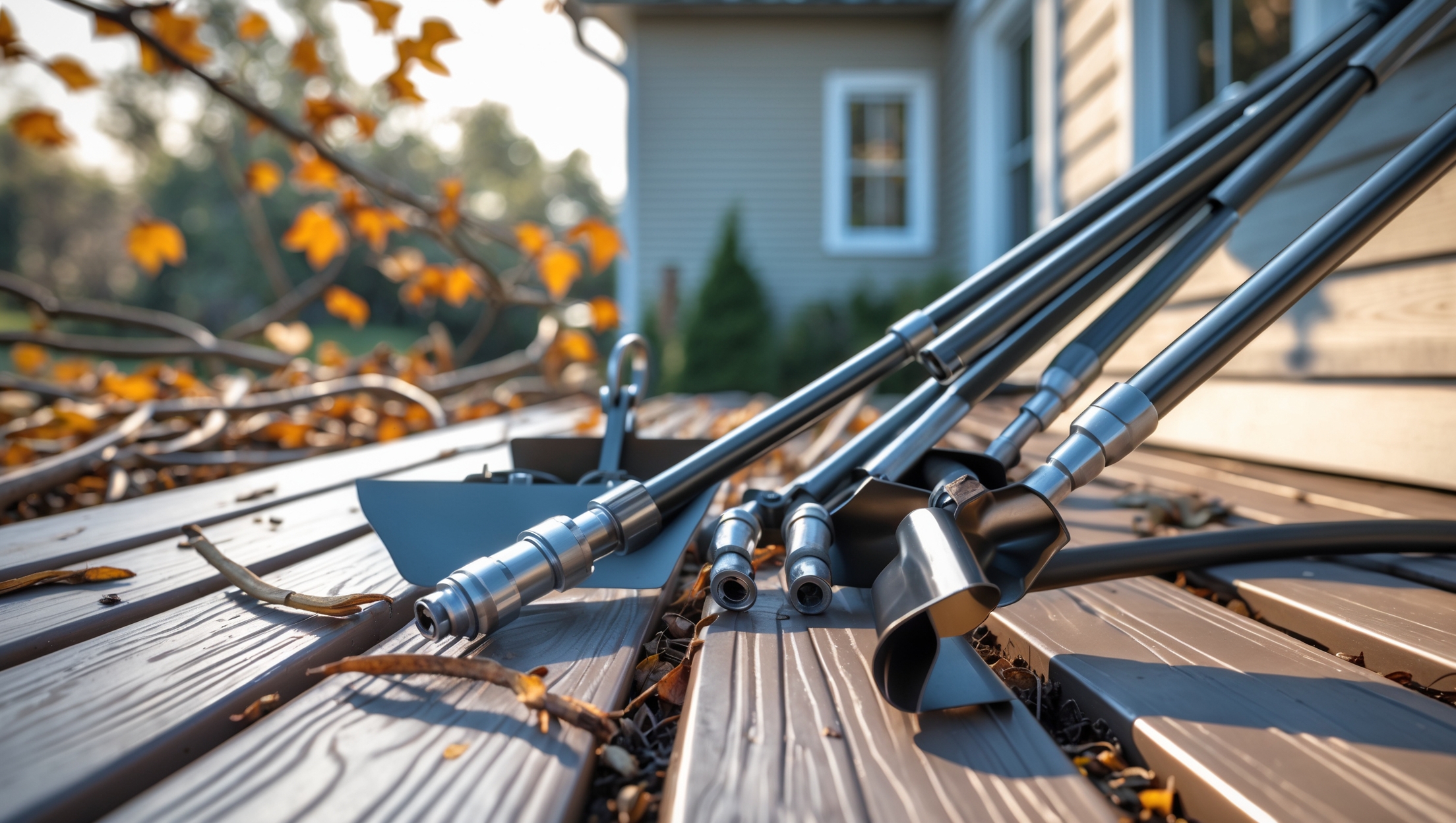
Telescopic wands have revolutionized gutter cleaning for homes with hard-to-reach gutters. These extendable poles (typically ranging from 6 to 24 feet) allow you to clean gutters from the ground without a ladder. Attachments vary:
- Water Jet Nozzles: Connect to a garden hose and blast debris out of gutters. Adjustable heads can target specific angles and stubborn clogs.
- Rotating Brushes: Some wands feature brush attachments for scrubbing gutter interiors, ideal for caked-on dirt or moss.
- Leaf Blower Attachments: Specialized kits convert leaf blowers into gutter cleaning machines, directing powerful air streams through curved tubes to clear dry leaves.
Pros: Safe for ground-level cleaning, reduces ladder use, efficient for light to moderate debris.
Cons: Less effective for wet, compacted material; difficult to see results while standing on the ground.
Gutter Scoops and Hand Tools
For hands-on DIYers, gutter scoops remain a staple. Designed to fit standard gutter widths, these tools have shaped edges to conform to gutter contours and scrape out debris. Some feature extended handles or flexible materials for tight corners.
- Plastic Scoops: Gentle on all gutter types, won’t scratch or rust surfaces.
- Metal Scoops: Ideal for heavy-duty jobs but can scratch painted or coated gutters—use with caution.
- Extended-Handle Trowels: Allow you to reach farther without overreaching or straining your wrist.
Pros: Precise, effective for wet or compacted debris, inexpensive.
Cons: Requires ladder use, slower for large homes.
Hose Attachments and Adapters
Several hose-based attachments are available to turn your standard garden hose into a gutter-cleaning powerhouse:
- Curved Spray Nozzles: Designed to fit inside the gutter and spray debris toward downspouts or out the end.
- Pressure Washer Attachments: For homes with heavy buildup, these use high-pressure water to blast away dirt—ensure your gutters are rated to withstand the force.
- Gutter Flushing Kits: Often include flexible hoses and specialty nozzles to clear downspouts as well as gutters themselves.
Pros: Great for flushing out fine debris and sludge, can be used from the ground with telescopic poles.
Cons: Messy—expect some backsplash; not ideal for dry, heavy accumulations.
Shop Vacuum and Wet/Dry Vac Attachments
Some manufacturers offer kits that convert shop vacuums into gutter cleaners. These typically include long, curved tubes to reach gutters from the ground and special adapters to handle wet or dry debris.
- Vacuum Suction Kits: Powerful suction removes leaves, pine needles, and even small twigs.
- Blower Conversion Kits: Reverse the shop vac function to blow out lighter debris.
Pros: Efficient, minimizes mess, good for homeowners with shop vacs.
Cons: Limited reach (may require ladder for higher gutters), additional cost if you don’t own a compatible vacuum.
Gutter Cleaning Robots
A newer, high-tech option, gutter cleaning robots travel along the inside of your gutters, using rotating brushes and augers to clear debris.
- Programmable Movement: Some models can be set to stop and reverse at the end of each section.
- Remote Control: Direct the device via remote, ideal for complex gutter layouts.
Pros: Minimal ladder use, perfect for multi-story homes, impressive cleaning power.
Cons: Expensive, may struggle with corners or very compacted debris, requires charging and cleaning after use.
Essential Safety Gear for DIY Gutter Cleaning
The Ladder: Stabilizers, Platforms, and Best Practices
If your gutters require ladder access, safety should never be an afterthought. Choose a sturdy, appropriately sized ladder (preferably fiberglass for electrical safety). Invest in these add-ons for extra security:
- Ladder Stabilizers: Prevent side-to-side movement and protect gutters from direct pressure.
- Leveling Feet: Essential for uneven ground—look for models with adjustable bases.
- Ladder Platforms: Provide a secure foothold for buckets or tools, reducing the risk of dropping items.
Always follow the three-point contact rule (two hands and one foot, or two feet and one hand on the ladder at all times) and never overreach—move the ladder frequently.
Personal Protective Equipment (PPE)
Debris in gutters often contains sharp sticks, animal droppings, or even nesting insects. Protect yourself with:
- Heavy-Duty Gloves: Choose waterproof, cut-resistant gloves to protect from sharp edges and biohazards.
- Safety Glasses or Goggles: Shield eyes from flying debris, especially when using blowers or high-pressure nozzles.
- Non-Slip Shoes: Essential for ladder work or walking on wet surfaces near the home.
- Long-Sleeved Shirts and Pants: Minimize skin contact with irritants or insects.
- Dust Mask: Recommended if gutters are dry and dusty, or if you have mold sensitivities.
Maintenance Strategies for Clog-Free Gutters
Establishing a Cleaning Schedule
The frequency of gutter cleaning depends on your location, tree coverage, and gutter guard status. As a general rule:
- Once per Year: For homes with minimal tree coverage and gutter guards.
- Twice per Year: Most homes—early spring and late fall (after leaves drop).
- More Often: If you have pine, oak, or other heavy-shedding trees.
Mark your calendar and inspect gutters after major storms or wind events.
Preventing Future Clogs: Gutter Guards and Covers
Gutter guards can dramatically reduce cleaning frequency by blocking large debris. Types include:
- Screen Guards: Metal or plastic mesh covers that block leaves and twigs but allow water through.
- Foam Inserts: Fit inside the gutter, letting water pass while trapping debris on top.
- Surface Tension Covers: Solid covers with a curved edge that channels rainwater into the gutter while shedding leaves.
Even with guards, periodic inspection and cleaning are necessary, as small debris and shingle grit can still accumulate over time.
Downspout Flushing and Inspection
Clogged downspouts defeat the purpose of clean gutters. Use a hose with a high-pressure nozzle or a dedicated downspout cleaning tool to flush out blockages. Ensure downspouts are securely fastened to the house and extend at least 3-4 feet away from the foundation to prevent pooling.
DIY Maintenance Checklist
- Inspect gutters and downspouts for visible debris or plant growth.
- Check for leaks at seams, corners, and end caps; reseal with appropriate gutter caulk if needed.
- Ensure all hangers and fasteners are secure and not pulling away from the fascia.
- Look for signs of rust, corrosion, or paint peeling—address promptly to avoid structural damage.
- Trim back overhanging branches that contribute to debris buildup.
Cost Breakdown: Budgeting for DIY Gutter Cleaning
Tool Investment vs. Ongoing Professional Services
DIY gutter cleaning can save hundreds of dollars per year, but initial tool investment varies:
- Telescopic Wands: $35–$90 depending on length and attachments.
- Gutter Scoops/Hand Tools: $6–$25 each.
- Hose Attachments: $10–$40; pressure washer kits cost more.
- Shop Vac Attachments: $25–$60, not including the vacuum itself.
- Gutter Cleaning Robots: $120–$300+.
- Safety Gear Bundle: $40–$80 for quality gloves, goggles, and ladder stabilizers.
Compare this to professional cleanings (typically $100–$250 per visit for a standard-sized home, twice per year), and most DIY kits pay for themselves within a single season.
Common DIY Gutter Cleaning Mistakes (and How to Avoid Them)
- Ignoring Safety: Skipping PPE or ladder stabilizers is a leading cause of home maintenance injuries.
- Using the Wrong Tool: Forcing a metal scoop into a vinyl gutter, or using high-pressure washers on loosely mounted gutters, can cause damage.
- Overreaching from Ladders: Always move your ladder; never lean beyond your center of gravity.
- Neglecting Downspouts: Clean gutters but clogged downspouts still lead to overflow and water damage.
- Forgetting Final Cleanup: Debris left on the roof or ground often finds its way back into clean gutters. Finish by clearing the surrounding area.
Case Study: Choosing the Best Tools for a Two-Story Home
Consider a homeowner with a two-story colonial surrounded by mature maples. After years of expensive professional cleanings, they decide to invest in DIY tools:
- Telescopic Wand with Water Jet and Brush Attachments: $80
- Heavy-Duty Ladder Stabilizer: $45
- Cut-Resistant Gloves and Safety Goggles: $30
- Mesh Gutter Guards (optional): $120 for materials
With these tools, the homeowner cleans all gutters from the ground or with minimal ladder use, reduces annual maintenance costs by over $200, and improves home safety. After one season, they find that mesh guards further cut down on cleaning time and frequency.
Conclusion: Building Your DIY Gutter Cleaning Toolkit for Safer, Smarter Home Maintenance
Gutter cleaning doesn’t have to be daunting, dangerous, or expensive. With the right mix of DIY tools, attachments, and safety gear, homeowners can take full control of a critical maintenance task—saving money, reducing risk, and extending the life of their gutters and home. Whether you’re clearing out seasonal leaf buildup or tackling chronic clogs, choosing the right equipment is essential.
Begin by assessing your home’s unique gutter type, height, and surrounding landscape. Invest in telescopic wands or hose attachments for high or hard-to-reach gutters, and use hand scoops for precision work. Don’t skimp on personal protective equipment or ladder accessories—most injuries occur from avoidable shortcuts. Consider gutter guards as a long-term solution, but remember that even the best covers require occasional inspection and cleaning. Establish a seasonal maintenance schedule to stay ahead of problems and protect your biggest investment: your home.
By following the strategies and recommendations in this guide, you’ll build a reliable DIY toolkit tailored to your needs. Not only will you save on professional service fees, but you’ll also enjoy the peace of mind that comes with a job well done—and a home well protected from the elements.



You mentioned that steel gutters are durable but can rust if scratched. What kind of cleaning attachments would be safest to use on steel gutters to avoid scraping off the protective coating, especially if I have a lot of stuck-on debris?
To protect steel gutters, it’s best to use cleaning attachments made of soft materials like nylon or plastic bristles instead of metal. Foam gutter cleaning tools and soft-bristle brushes are gentle on the protective coating, reducing the risk of scratches. For stubborn debris, you can soak the area with water first to loosen it, then gently brush or flush it away. Avoid metal scrapers and stiff wire brushes, as these can damage the coating and increase the risk of rust.
You mentioned that two-story homes typically need longer telescopic poles for gutter cleaning. Is there a specific pole length or type you recommend for safely reaching high gutters without overextending, especially for someone working alone?
For two-story homes, a telescopic pole that extends to at least 20–24 feet is usually ideal for safely reaching most high gutters from the ground. Look for sturdy aluminum or fiberglass poles with secure locking mechanisms to prevent bending or collapsing. If working alone, a lightweight pole with a comfortable grip and compatible gutter cleaning attachments can make the job safer and easier. Always avoid overextending, and consider using a stabilizing support if needed.
How often should gutter cleaning actually be done if I’m surrounded by a lot of trees, and do any of these DIY tools help cut down on how frequently I need to get up there and clean?
If your home is surrounded by trees, it’s best to clean your gutters at least twice a year, but many homeowners find that every three months is necessary during heavy leaf-fall seasons. DIY tools like gutter cleaning attachments and extension poles can make the job quicker and safer, but they don’t eliminate the need for regular cleaning. They do, however, help you stay on top of maintenance more easily, potentially reducing the time each cleaning takes.