


Introduction: Why Choosing the Right Stud Finder Matters for DIYers
If you’ve ever tried to mount shelves, hang a heavy mirror, or install a new TV bracket, you know that finding wall studs isn’t just a minor step—it’s the difference between a job well done and a future repair disaster. For homeowners and DIY enthusiasts, selecting the right stud finder isn’t as simple as grabbing the cheapest tool off the shelf. Today’s options range from classic magnetic devices to advanced electronic models and even app-based tools that promise high-tech convenience. Yet, each has its own strengths, quirks, and limitations. In this deep dive, we’ll compare the three main types of stud finders—magnetic, electronic, and app-based—so you can avoid beginner mistakes, save time, and choose the perfect tool for your repair, maintenance, or upgrade project. Whether you’re a casual DIYer or a tool enthusiast, understanding these differences is key to working smarter, not harder, and preventing costly wall mishaps.
Understanding Stud Finders: The Basics
What Is a Stud Finder and Why Is It Essential?
A stud finder is a handheld device used to locate framing studs behind the surface of drywall or other wall types. Studs are the backbone of your wall—vertical wood or metal frames spaced at regular intervals (typically 16 or 24 inches apart). Securely attaching heavy objects to these studs is the safest way to prevent accidents and structural damage. A reliable stud finder helps you avoid guesswork, minimize unnecessary holes, and ensure your projects last.
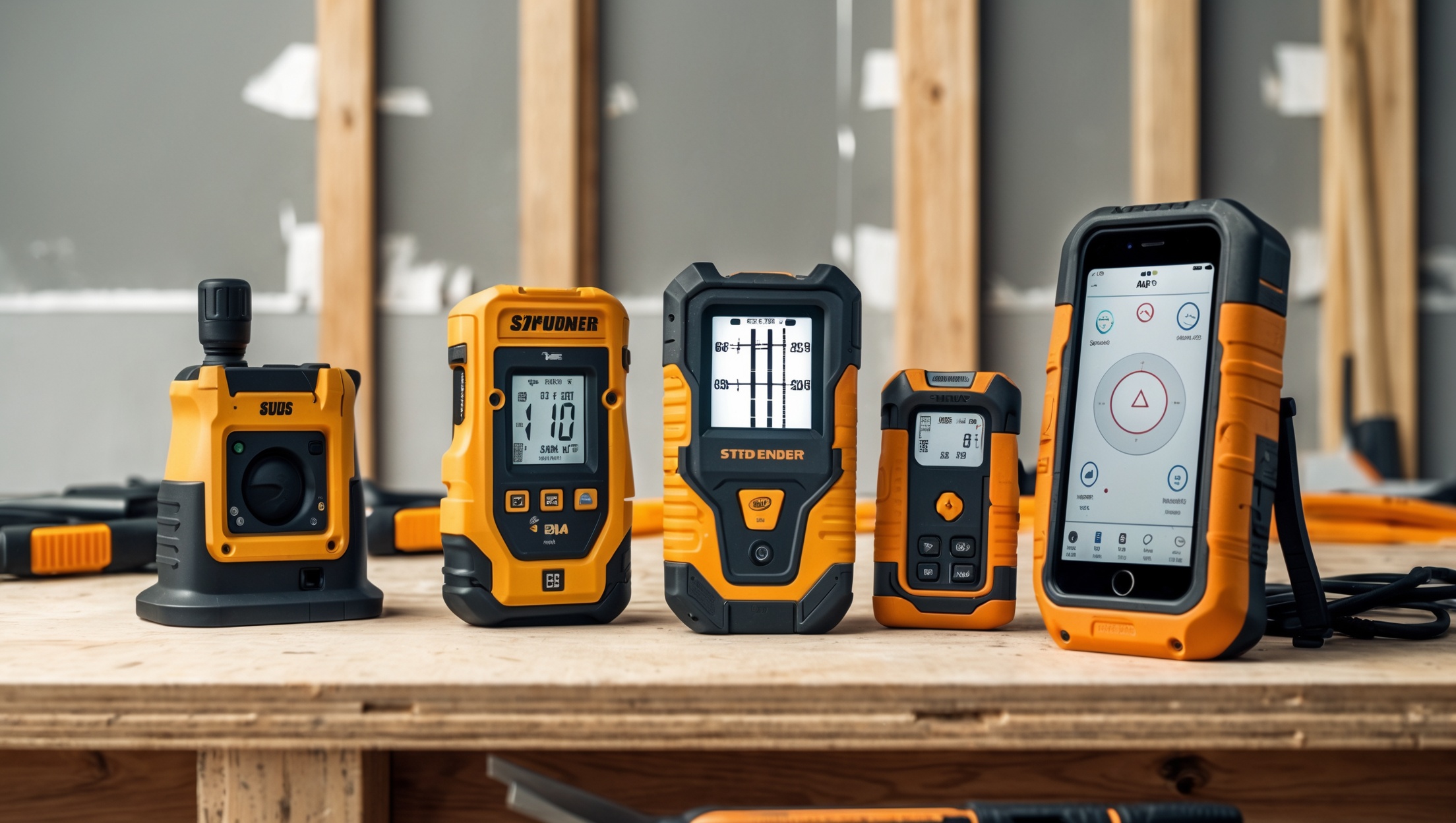
The Three Main Types at a Glance
- Magnetic Stud Finders: Use a magnet to detect the metal fasteners (nails or screws) in studs.
- Electronic Stud Finders: Measure changes in wall density to identify the edges or center of a stud.
- App-Based Stud Finders: Use your smartphone’s sensors—sometimes paired with external hardware—to locate studs, often with augmented reality features.
Magnetic Stud Finders: Simple, Reliable, but Are They Enough?
How Magnetic Stud Finders Work
Magnetic stud finders contain strong rare-earth magnets. When you move them across the wall, they stick slightly when passing over screws or nails used to fasten drywall to the stud. Some models feature a swinging indicator or even multiple magnets to increase sensitivity.
Pros of Magnetic Stud Finders
- Affordability: Typically priced between $5 and $20.
- No Batteries Required: Always ready to use—no power issues.
- Durability: Few moving parts, virtually unbreakable.
- Simple Operation: No calibration or learning curve.
Cons and Limitations
- Accuracy Depends on Fastener Placement: If the drywall installer missed the stud or used minimal fasteners, detection may be inconsistent.
- No Indication of Stud Width or Edges: You only know where the fastener is, not the full width of the stud.
- Can Be Thrown Off by Metal Lath or Pipes: Any ferrous metal near the surface can trigger a false positive.
Best Use Cases for Magnetic Stud Finders
- Quick checks in older homes where fasteners are predictably placed.
- DIYers who need a budget solution for occasional use.
- Secondary confirmation with other types of stud finders.
Electronic Stud Finders: The Modern Standard
How Electronic Stud Finders Work
Electronic stud finders use sensors to detect changes in wall density. As you slide the device across the wall, it senses where the denser material of the stud begins and ends. Most require calibration—placing the device on the wall and pressing a button to set a baseline reading. Some higher-end models can also detect live wires or metal pipes.
Types of Electronic Stud Finders
- Edge Finders: Indicate where the edge of a stud is located.
- Center Finders: Use multiple sensors to pinpoint the center of the stud.
- Multi-Function Models: Add live wire or metal detection for extra safety.
Pros of Electronic Stud Finders
- Higher Accuracy: Especially for finding both edges and the center of studs.
- Versatility: Some models detect other materials—metal pipes, AC wiring, etc.
- Depth Adjustment: Can be set for thicker walls or multiple layers of drywall.
Cons and Limitations
- Battery Dependency: Requires fresh batteries, and performance drops as batteries drain.
- Calibration Required: Skipping calibration leads to false readings.
- Less Effective on Lath-and-Plaster Walls: Density changes are less distinct, increasing error rates.
- Price: Quality models range from $25 to $70 or more.
Best Use Cases for Electronic Stud Finders
- Modern drywall construction where accuracy is crucial.
- Frequent DIYers and homeowners who need reliable results.
- Situations involving electrical safety (models with live wire detection).
App-Based Stud Finders: Convenience or Gimmick?
How App-Based Solutions Work
App-based stud finders leverage your smartphone’s magnetic sensors (magnetometer) and/or accelerometer, sometimes in combination with an external accessory that attaches to your phone. Some use augmented reality to overlay stud locations on your screen. Others use audio cues or vibration to indicate detection.
Pros of App-Based Stud Finders
- Always With You: Your phone is rarely out of reach.
- Cost-Effective: Many apps are free or low-cost; external accessories are generally under $30.
- Modern Features: Augmented reality overlays, room scanning, project documentation, and more.
Cons and Limitations
- Sensor Limitations: Smartphone magnetometers are less sensitive than dedicated magnets or electronic sensors.
- Hardware Compatibility: Not all phones work equally well—older models may be unreliable.
- App Quality Varies: Some are poorly designed or packed with ads.
- Accessory Dependency: Many apps require a compatible external device for best results.
- Battery Drain: Extended use can quickly deplete phone battery.
Best Use Cases for App-Based Stud Finders
- Casual DIYers who need an occasional solution without buying new hardware.
- Renters or travelers who want a portable tool.
- Tech enthusiasts looking to experiment with new features.
Comparing the Three: Head-to-Head Breakdown
Accuracy
- Magnetic: Accurate only if fasteners are present and well-placed.
- Electronic: Most accurate for locating edges and centers on modern drywall.
- App-Based: Varies widely; best with external accessories.
Ease of Use
- Magnetic: Easiest—just move it slowly along the wall.
- Electronic: Requires calibration and slower movement for best results.
- App-Based: May require learning the app interface and accessory setup.
Cost Comparison
- Magnetic: $5–$20, lasts forever.
- Electronic: $25–$70; batteries add a minor ongoing cost.
- App-Based: Free–$10 for app only, $15–$30 for app plus accessory.
Reliability and Durability
- Magnetic: Virtually indestructible.
- Electronic: Susceptible to battery and sensor issues over time.
- App-Based: Dependent on your phone’s condition and app updates.
Best for Different Wall Types
- Drywall: Electronic or magnetic both work well; electronic is more precise.
- Lath-and-Plaster: Magnetic is often more reliable; electronic and app-based can struggle.
- Paneling or Tile: All types face challenges; electronic with deep scan is your best bet if studs are deeper.
Real-World DIY Scenarios: Which Stud Finder Wins?
Mounting a Heavy TV Bracket
For a project where reliability is paramount, invest in a quality electronic stud finder with both edge and center detection. Confirm your results with a magnetic finder to double-check screw placement. Avoid app-only solutions unless paired with a proven accessory.
Quick Picture Hanging
If you’re hanging a lightweight frame, a magnetic finder is fast and effective. Scan the wall for screws, mark your spot, and you’re done. For renters who can’t make many holes, use an app-based tool if a magnetic isn’t handy.
Older Homes with Lath-and-Plaster
Here, even the best electronic finders can falter due to inconsistent density. Use a magnetic finder to chase after old nails, or try a deep-scan electronic model. Be prepared to verify with small exploratory holes if needed.
Multi-Layered Walls (Tile Over Drywall)
Choose an electronic stud finder with a ‘deep scan’ mode. Magnetic finders often can’t reach through tile, and app-based tools are typically ineffective. Mark both edges of the stud to avoid mounting hardware in tile grout lines.
Practical Tips for Reliable Stud Finding
- Start With a Visual Survey: Electrical outlets are usually mounted to studs—measure 16 or 24 inches from them for your first scan.
- Scan Slowly: Rushing increases missed detections and false positives.
- Mark Both Edges: With electronic finders, always mark both edges of the stud to find the true center for heavy loads.
- Double-Check: Use two different stud finders (e.g., electronic and magnetic) for critical projects.
- Be Wary of False Positives: Pipes, wiring, and even ductwork can confuse your finder—never drill deeply without confirming what’s behind the wall.
- Replace Batteries Regularly: For electronic models, weak batteries lead to poor results.
- Consider Wall Type: Know whether you’re dealing with drywall, lath-and-plaster, paneling, or tile—the type of wall will affect your tool’s accuracy.
- Test on a Known Stud First: Practice on a wall section where stud location is obvious, such as near an outlet or corner.
Maintenance and Storage Best Practices
Magnetic Stud Finders
- Wipe occasionally with a clean cloth to remove drywall dust.
- Keep away from electronics and credit cards—strong magnets can reset magnetic strips.
- Store in a dry area to prevent rusting of metal parts.
Electronic Stud Finders
- Remove batteries when not in use for extended periods.
- Clean sensor area with a soft, dry cloth—avoid moisture.
- Store in a padded case to protect sensitive electronics.
App-Based Stud Finders
- Keep your phone’s sensors clean and free of dust.
- Update apps regularly for best performance.
- Store external accessories in a case to avoid loss or damage.
Common Stud Finder Myths—Debunked
- Myth: All stud finders work equally well on every wall.
Reality: Wall type greatly affects performance—know your construction. - Myth: A single scan is enough.
Reality: Multiple passes and marking both edges are essential for accuracy. - Myth: App-based finders are just as good as dedicated tools.
Reality: Most apps are less accurate unless paired with specialized hardware. - Myth: Stud finders can detect all hidden hazards.
Reality: Only certain electronic models can find live wires or pipes—always drill with caution.
Conclusion: Which Stud Finder Should You Choose?
Choosing the right stud finder comes down to a mix of wall type, frequency of use, and budget. For most modern drywall projects, a quality electronic stud finder is the best all-rounder, offering the accuracy and features needed for secure mounting and peace of mind. Magnetic stud finders remain a reliable backup or budget option—especially for those who tackle occasional projects or work in older homes with unpredictable framing. App-based tools, while convenient, are best reserved for casual tasks or when paired with specialized accessories. No matter which you choose, always double-check your results, scan slowly, and avoid the temptation to cut corners—your walls (and whatever you’re mounting) will thank you. With the right tool and a careful approach, you’ll avoid the frustration of misplaced holes, wobbly shelves, and unexpected surprises lurking behind your drywall. Invest in quality, learn your tool’s quirks, and you’ll make every repair, upgrade, and DIY adventure smoother, safer, and more satisfying.


I get that magnetic stud finders detect nails or screws in studs, but what if the builder used fewer fasteners or placed them irregularly? Do magnetic types still work reliably in those cases, or should I go for an electronic or app-based one for older or quirky walls?
You’re right to be cautious—magnetic stud finders depend on finding metal fasteners, so if there are fewer or irregularly placed nails or screws, they can miss studs or give uncertain results. For older homes or odd wall constructions, electronic stud finders are more reliable because they sense changes in wall density, not just metal. App-based tools can also work, but their accuracy varies. For tricky walls, an electronic stud finder is usually your safest bet.