
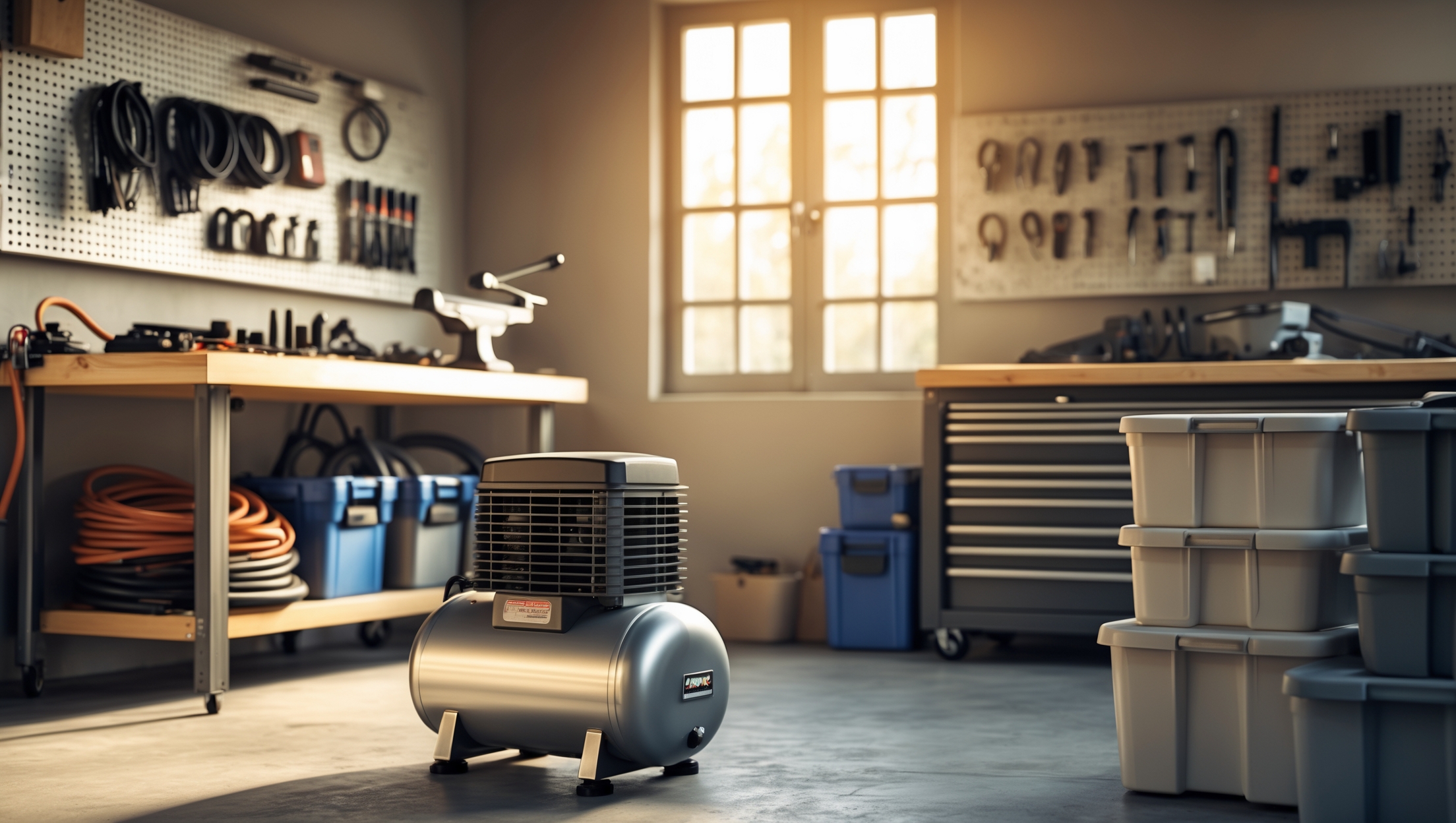
Introduction: Why the Right Air Compressor Matters for DIYers
Air compressors are the unsung heroes of home workshops, powering everything from nail guns and tire inflators to spray painters and impact wrenches. While these machines once seemed reserved for professional garages, today’s home air compressors are more affordable, versatile, and user-friendly than ever. But with dozens of models, confusing specs, and a dizzying array of features, first-time buyers often struggle to pick the right unit. Choose wrong, and you could end up with a machine that’s too weak for your needs, or one that’s frustratingly large, loud, and expensive to run. In this guide, we’ll break down the different types of home air compressors, explain the key features that actually matter for DIY applications, and highlight common mistakes to avoid. Whether you’re planning to power up a pneumatic tool collection, tackle car maintenance, or simply want reliable inflation around the house, this practical guide will empower you to make a confident, cost-effective purchase.
Understanding Air Compressor Types: Which Suits Your Projects?
Before diving into specs and features, it’s essential to understand the main air compressor types available for home and light workshop use. The right type depends on your space, mobility needs, and typical DIY tasks.
Portable vs. Stationary Models
- Portable Compressors: Compact, lightweight, and designed for easy movement. Ideal for inflating tires, airbrushing, brad nailing, or small repairs around the home or yard. Most commonly available in pancake, hotdog, and twin-stack forms.
- Stationary Compressors: Larger, heavier, and meant for fixed installation in a garage or workshop. These deliver higher air volumes and pressures, making them suitable for demanding tools like impact wrenches, sanders, or spray guns.
Oil-Free vs. Oil-Lubricated Compressors
- Oil-Free: Require less maintenance, lighter, and cleaner operation. Best for light, intermittent DIY use. Slightly noisier and may have shorter lifespans under heavy use.
- Oil-Lubricated: Longer-lasting, quieter, and better for continuous or heavy-duty operation. Require periodic oil checks and changes.
Tank Size: Pancake, Hotdog, Twin Stack, and Vertical Units
- Pancake Compressors: Flat, round tanks (often 3–6 gallons), stable and portable. Excellent for trim work, stapling, or inflating.
- Hotdog Compressors: Cylindrical tanks (1–8 gallons). Slightly larger, more stable airflow, easy to carry.
- Twin Stack Compressors: Two cylindrical tanks. More air storage, suitable for running small tools longer.
- Vertical Compressors: Large, upright tanks (20+ gallons). Best for high-demand tools in a fixed location.
Key Specifications and Features That Actually Matter
While marketing often touts horsepower or tank size, informed buyers look deeper. Here’s what you really need to compare:
1. Air Delivery: CFM and PSI
- CFM (Cubic Feet per Minute): Tells you how much air the compressor delivers at a given pressure. Match this to your most demanding tool.
- PSI (Pounds per Square Inch): Maximum pressure the compressor can generate. Most home tools need 90–150 PSI.
Tip: Check both “running” (delivered) CFM at 90 PSI and “maximum” PSI. Always ensure your compressor can meet or exceed your tool’s requirements.
2. Tank Capacity
- Smaller tanks (1–6 gallons) are fine for inflating, stapling, or brad nailing.
- Medium tanks (6–20 gallons) suit most DIYers using air ratchets, small impact wrenches, or occasional spray painting.
- Larger tanks (20+ gallons) are ideal for extensive automotive work, sandblasting, or continuous spraying.
Tip: Larger tanks mean longer runtime between cycles, but reduced portability.
3. Noise Level
- Measured in decibels (dB). Most home compressors range from 60–90 dB.
- Consider “quiet” models if working indoors, in apartments, or around family.
4. Duty Cycle
- Indicates how long the compressor can run before needing a cool-down (e.g., 50% duty cycle = 5 minutes on, 5 minutes off).
- Higher duty cycles are better for longer projects or running air tools continuously.
5. Portability and Footprint
- Weight, handle design, wheel quality, and cord/hose storage all impact ease of movement and storage.
- Measure your available space before buying.
6. Power Source
- Most home compressors are electric, plugging into standard 120V outlets.
- Some larger or professional models require 240V, which may mean electrical upgrades.
7. Additional Features
- Automatic shutoff for safety and efficiency.
- Multiple quick-connect couplers for running more than one tool.
- Integrated regulators and gauges for precise pressure control.
- Thermal overload protection to prevent overheating.
Common DIY Uses for Home Air Compressors
An air compressor’s value goes far beyond the occasional tire fill. Here are the most popular ways DIYers use them around the home and garage:
- Tire Inflation: Fast, accurate car, bike, or lawnmower tire fills.
- Air Nailing and Stapling: Powering brad nailers, finish nailers, and staplers for woodworking or trim work.
- Spray Painting: Smooth, even finishes for furniture, cabinets, or fences (requires compatible spray guns and moderate tank sizes).
- Cleaning: Blasting away dust and debris from tools, workbenches, filters, and electronics (careful with pressure!).
- Automotive Repairs: Running impact wrenches, ratchets, or air hammers for tire changes and repairs.
- Airbrushing: Detailed craft, model, or hobby work (benefits from quiet, oil-free units).
- Inflatables: Quickly blowing up mattresses, pool toys, or sports equipment.
- Winterizing: Blowing out sprinkler systems to prevent pipe freezing.
Real-World Scenario: Matching Compressor to Project
Let’s see how to match air compressor specs to common DIY tasks:
- Inflating Tires and Sports Gear: A small, portable 2–4 gallon compressor, 1–2 CFM at 90 PSI.
- Installing Baseboards with a Brad Nailer: Pancake or hotdog compressor, 2–3 CFM at 90 PSI, 3–6 gallon tank.
- Spray Painting a Deck: 20+ gallon, 4–6 CFM at 40 PSI, oil-lubricated for continuous flow.
- Automotive Impact Wrench: 20+ gallon tank, 4–5 CFM at 90 PSI minimum, stationary preferred.
Always check the air consumption (CFM/PSI) of your specific air tool and ensure your compressor meets or exceeds these requirements.
Beginner Mistakes to Avoid When Buying an Air Compressor
- Ignoring CFM Needs: Don’t buy solely based on tank size or horsepower—match CFM at 90 PSI to your tools.
- Overestimating Portability: Large, powerful compressors are heavy and often require two people to move.
- Underestimating Noise: Many compressors are louder than expected. Check decibel ratings and consider location.
- Skipping Duty Cycle: If your projects require extended run times, avoid low-duty cycle models.
- Overbuying: Bigger isn’t always better. Oversized units cost more, use more power, and take up space.
- Neglecting Maintenance: Oil-lubricated models require regular checks. Always drain condensation from the tank to prevent rust.
- Forgetting Accessories: Budget for hoses, couplers, fittings, inflation needles, and tool-specific adapters.
Budgeting: What to Expect and Where to Save
Air compressor prices vary widely, depending on type, size, and features. Here’s a practical breakdown:
- Small portable (1–4 gal): $60–$120. Great for inflation, light nailing, and hobbies.
- Medium portable (6–8 gal): $120–$250. Versatile for most DIYers, occasional tool use.
- Large portable/stationary (20+ gal): $250–$600. For frequent tool use, spray painting, and automotive work.
Factor in the cost of essential accessories (hoses, couplers, filters, oil for lubricated types) and, if needed, power upgrades for larger units. Saving by buying a smaller compressor only makes sense if it meets your actual project needs.
Essential Accessories for a Safe and Productive Setup
- Quality Air Hose: 25–50 feet, rated for your compressor’s max PSI. Consider hybrid or rubber for flexibility.
- Quick-Connect Couplers: Simplify tool swaps. Brass is more durable than plastic.
- Inline Filter/Dryer: Removes moisture and debris—critical for paint or finish work.
- Regulator: Fine-tunes air pressure for different tools.
- Oil (for lubricated models): Use manufacturer-recommended compressor oil.
- Blow Gun Attachment: For cleaning and dusting surfaces.
- Safety Goggles and Hearing Protection: Always wear both during use.
Maintenance Best Practices: Keeping Your Compressor Reliable
- Drain the Tank: After every use, release condensation to prevent rust.
- Check Oil Level: For lubricated models, inspect before every use and top up as needed.
- Inspect Hoses and Fittings: Look for cracks, leaks, or wear and replace if damaged.
- Clean or Replace Air Filters: Dirty filters reduce performance and strain the compressor.
- Monitor Gauges: Ensure pressure readings are accurate; replace faulty gauges promptly.
- Store Properly: Coil hoses, unplug the unit, and keep the compressor dry and dust-free.
Conclusion: Choosing with Confidence
Selecting the right air compressor is less about chasing the biggest tank or highest horsepower, and more about realistically evaluating your DIY goals, space, and tool requirements. Start by listing your most common tasks and the tools you plan to run—then match the compressor’s CFM and PSI ratings accordingly. Prioritize ease of use, portability, and maintenance if you’ll be moving the unit around or working in tight spaces. Don’t underestimate the impact of noise—especially if you’ll use the compressor indoors or near living areas. Budget for quality accessories and remember that proper upkeep will extend the lifespan and reliability of your investment.
Most importantly, avoid common beginner pitfalls: overbuying, ignoring duty cycle, and neglecting maintenance. With a clear understanding of compressor types, key features, and real-world DIY uses, you’ll be well equipped to make a purchase that serves your home projects for years to come. The right air compressor will not only simplify tasks but also unlock new possibilities for creativity and efficiency in your workshop. Take your time, compare carefully, and enjoy the versatility and power that a well-chosen compressor brings to your DIY life.
I’m mostly interested in using a compressor for tire inflation and occasional brad nailing at home, so do I really need to worry about air volume and pressure specs, or will any portable model do the job?
For tire inflation and occasional brad nailing, you don’t need a high-powered air compressor. Most portable models provide enough pressure (PSI) and air volume (CFM) for these tasks. Just check that the compressor can reach at least 90 PSI and has a CFM rating that matches your brad nailer’s requirements—usually around 1 CFM or less. Any basic portable unit should suit your needs.
Can you clarify how much louder stationary compressors typically are compared to portable ones in a small home garage setting? I’m curious if noise levels should be a major factor when choosing between these two types for occasional DIY projects.
Stationary compressors are usually louder than portable models because they have larger motors and higher output. In a small garage, stationary units can reach 80 to 90 decibels, while many portable compressors operate around 60 to 75 decibels. For occasional DIY use, noise can be significant, especially in tight spaces, so consider this when choosing. If noise is a concern, look for quieter portable models or stationary units labeled as ‘low-noise’.