
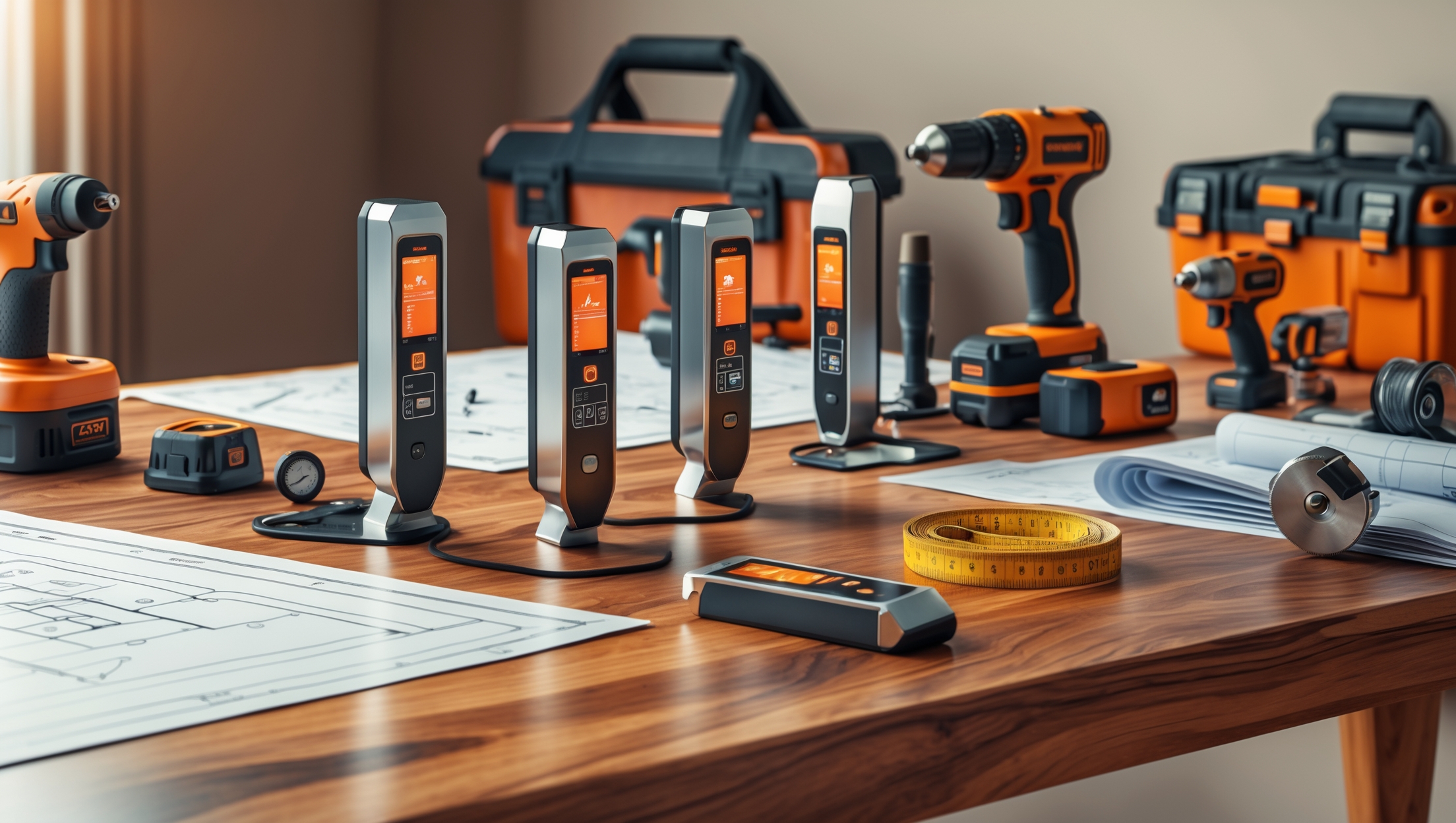
Introduction: Why Laser Measuring Tools Are Game-Changers for DIYers
Whether you’re mounting shelves, laying new flooring, or planning a major renovation, precision is key. Traditional tape measures have served homeowners for centuries, but in recent years, laser measuring tools have rapidly gained popularity among both professionals and DIY enthusiasts. These compact devices offer fast, accurate distance measurements at the push of a button—no more wrestling with kinked metal tapes or estimating in tight spaces. But with a growing variety of models boasting differing features and price points, how do you choose the right laser measure for your needs? And once you’ve picked one, how can you maximize its accuracy and utility across a range of home projects?
This comprehensive guide dives deep into the world of laser measuring tools. We’ll compare top-rated models, review their pros and cons, explore real-world DIY applications, and share expert tips for avoiding common accuracy pitfalls. Whether you’re a first-time buyer or looking to upgrade, you’ll find practical advice to make your next measurement project simpler, faster, and more reliable.
Understanding Laser Measuring Tools: Core Features and How They Work
What Is a Laser Measuring Tool?
A laser measuring tool (sometimes called a laser distance meter or laser tape) is a handheld device that uses a laser beam to determine the distance between itself and a target. By calculating the time it takes for the laser to reflect off a surface and return, the tool can instantly compute distances—often to within a fraction of a millimeter.
Key Features to Consider
- Range: The maximum distance the device can accurately measure (typically 30–300 feet for consumer models).
- Accuracy: Most home models offer accuracy to within 1/16 or 1/8 of an inch.
- Units: Look for the ability to switch between metric and imperial measurements.
- Functionality: Basic models measure straight-line distances; advanced options add area, volume, Pythagorean calculations, and memory storage.
- Display: Backlit, legible screens are vital for dim workspaces.
- Durability: Water and dust resistance (look for IP ratings) and rugged casings for demanding environments.
- Battery Life: Rechargeable batteries are convenient, but some models use AA or AAA cells for easy replacement.
Top Laser Measuring Tools Reviewed: Performance, Pros, and Cons
Bosch GLM 50 C Bluetooth Laser Distance Measure
- Range: 165 feet
- Accuracy: ±1/16 inch
- Key Features: Color display, Bluetooth connectivity, area/volume/indirect measurements, memory storage.
- Pros: Intuitive controls, robust app integration, compact design.
- Cons: Bluetooth sync can be finicky; higher price point.
Leica DISTO D2 New
- Range: 330 feet
- Accuracy: ±1/16 inch
- Key Features: Bluetooth, area/volume/Pythagorean functions, memory for 10 measurements, small form factor.
- Pros: Extremely accurate, excellent build quality, pocket-sized.
- Cons: Pricey for DIYers; the display is less vibrant than some rivals.
Huepar 9211G Green Laser Measure
- Range: 131 feet
- Accuracy: ±1/16 inch
- Key Features: Green laser for improved visibility, area/volume/indirect measurement modes, IP54 dust/water resistance.
- Pros: Green laser easier to see in bright conditions, affordable, rugged.
- Cons: Shorter range; fewer advanced features.
Mileseey by RockSeed S2
- Range: 165 feet
- Accuracy: ±1/16 inch
- Key Features: Area/volume/Pythagorean calculations, IP54 rating, backlit display.
- Pros: Inexpensive, straightforward operation, solid accuracy.
- Cons: No Bluetooth or app integration; slower response time.
Comparison Table: Key Specs at a Glance
| Model | Range | Accuracy | Notable Features | Price Range (USD) |
|---|---|---|---|---|
| Bosch GLM 50 C | 165 ft | ±1/16 in | Bluetooth, color display, app | $100–$130 |
| Leica DISTO D2 | 330 ft | ±1/16 in | Bluetooth, compact, memory | $120–$170 |
| Huepar 9211G | 131 ft | ±1/16 in | Green laser, IP54 | $40–$55 |
| Mileseey S2 | 165 ft | ±1/16 in | IP54, backlit, no Bluetooth | $35–$50 |
Practical DIY Applications: Where Laser Measures Shine at Home
Room Dimensioning and Layout
Measuring wall-to-wall distances, ceiling heights, or total room area is fast and highly accurate with a laser measure. This is invaluable for furniture layouts, flooring projects, or calculating paint and flooring needs.
Hanging Shelves, Art, and Cabinets
Laser measures excel at quickly finding the precise distance between anchor points when mounting shelves, picture frames, or cabinets. Some models even let you measure indirectly if obstacles block a straight shot.
Estimating Materials for Renovation
Area and volume calculations help with ordering tiles, drywall, insulation, or paint. Many devices store multiple measurements, making it easy to tally up totals for complex spaces.
Outdoor Projects
Whether you’re plotting a deck, measuring fencing runs, or sizing up a garden shed, laser tools handle long outdoor distances that would be tedious (and less accurate) with a tape measure. Choose a model with a visible green laser for daylight work.
Leveling and Alignment
Some advanced laser measures double as basic levels, projecting straight lines for aligning tiles, backsplashes, or trim.
DIY Accuracy: Pro Tips for Getting Reliable Results
Common Accuracy Pitfalls
- Shaky Hands: Slight movements can skew readings, especially over long distances. Use both hands or a tripod for stability.
- Target Surfaces: Glossy, dark, or transparent surfaces can reflect lasers unpredictably. Place a piece of white paper or tape at the target point if needed.
- Obstructions: Anything blocking the laser’s path (furniture, moldings) will return a false short measurement. Double-check your line of sight.
- Measurement Reference Point: Some tools measure from the front, some from the back. Confirm your device’s settings before you start.
- Ambient Light: Bright sunlight can wash out the laser dot. Green lasers offer better outdoor visibility, or create shade when possible.
How to Calibrate and Test Your Laser Measure
- Compare a few short measurements (<6 feet) against a physical tape measure to confirm accuracy.
- Check both minimum and maximum ranges to ensure consistency.
- Reset or recalibrate per the manufacturer’s instructions if you notice discrepancies.
- Store your device in a protective case to avoid lens scratches.
Best Practices for Repeatable Results
- Always measure at a right angle to the target surface when possible.
- Take several readings and average them for critical measurements (like cabinetry or flooring cuts).
- Use the memory or note-taking features of your device to avoid misreading the screen or forgetting results.
- Replace batteries as soon as you notice dimming laser brightness or slow response.
Laser Measuring Tools vs. Tape Measures: When to Use Each
Laser Measure Advantages
- Lightning-fast measurements—ideal for large spaces or high ceilings.
- No need for a second person on long runs.
- Built-in calculations for area, volume, or indirect distances.
- Reduces human error from tape sag or misreading.
Where Tape Measures Still Win
- When you need to measure around corners or odd shapes.
- For very short distances (<2 feet) where setup time outweighs benefits.
- Marking and transferring dimensions directly onto materials.
Choosing the Right Laser Measuring Tool for Your Needs
Questions to Ask Before Buying
- What’s the maximum distance you’ll need to measure?
- Will you use it outdoors in daylight?
- Do you need Bluetooth/app integration or just basic measurements?
- How rugged does it need to be for your work environment?
- What is your budget?
Recommended Picks by User Type
- Casual DIYers: Mileseey S2 or Huepar 9211G offer excellent value and all essential functions.
- Advanced Hobbyists/Pros: Bosch GLM 50 C or Leica D2 for their superior accuracy, advanced features, and app connectivity.
- Outdoor Users: Prioritize green lasers (like Huepar) or longer-range models with high visibility.
Maintenance Tips: Keeping Your Laser Measure Accurate for Years
- Store in a dry, dust-free case to protect the lens and electronics.
- Clean the lens gently with a microfiber cloth—never use harsh chemicals.
- Remove batteries during long-term storage to prevent corrosion.
- Update firmware/app when available for connected models.
- Regularly retest accuracy using a tape measure.
Conclusion: Make Precision Your DIY Superpower
Laser measuring tools have transformed home projects, bringing professional-grade precision to the hands of everyday DIYers. With the right tool, you can measure entire rooms in seconds, estimate materials with confidence, and tackle renovations that would have been daunting with analog tape measures. The convenience and accuracy of these devices encourage better planning, reduce costly mistakes, and ultimately streamline every step of your repair, maintenance, or upgrade journey.
Choosing your ideal laser measure comes down to understanding your project needs—considering range, visibility, durability, and advanced features. By applying the practical accuracy tips outlined above, you’ll avoid common errors and get the most out of your investment. Remember, while a tape measure still has its place, a laser measure is an indispensable upgrade for anyone serious about DIY efficiency and precision.
Ready to make your next project easier and more precise? Explore the reviewed models, test one out with your next project, and watch your productivity—and results—improve dramatically. Happy measuring!
When comparing different laser measuring tools, how much of a difference does the maximum range make for typical home DIY projects? I’m mostly doing things like mounting shelves and measuring room sizes, so I’m not sure if it’s worth paying extra for a model with a longer range.
For most home DIY projects like mounting shelves or measuring room sizes, the maximum range of a laser measuring tool isn’t usually critical. Most rooms and indoor tasks rarely exceed 30–50 feet, so a basic model with a moderate range should work well. Paying extra for a long-range model is only worthwhile if you plan to measure large outdoor areas or very spacious interiors.
I noticed the article mentions laser measuring tools have different ranges and levels of accuracy. For someone mostly working in a small apartment with projects like hanging picture frames or shelves, is it worth paying extra for a model with a longer range or higher-end features?
For small apartment projects like hanging picture frames or shelves, a basic laser measuring tool with a shorter range and standard accuracy is usually more than enough. Higher-end features or longer ranges are designed for larger spaces or professional use, so you can save money by choosing a simpler model that meets your everyday needs.
I’m interested in upgrading from a basic tape measure, but I’m on a college budget. Are the extra features on advanced laser models, like area or volume calculation, actually worth the higher price for DIY home projects?
For most DIY home projects, a simple laser measuring tool is usually enough—you’ll get fast, accurate distance readings without spending too much. Extra features like area or volume calculation add convenience if you’re frequently estimating paint, flooring, or furniture fit, but they’re not essential. If your budget is tight, a basic model should serve you well for typical college and home tasks.
The article mentions switching between metric and imperial units on laser measures—do most devices make that easy to do, or is it buried in complicated menus? I sometimes work on projects using both systems.
Most modern laser measuring tools let you switch between metric and imperial units quite easily. Usually, there’s a dedicated button or a straightforward menu option, often shown with ‘m/ft’ or ‘unit’ symbols. In most cases, you can change units with just a couple of button presses, so you shouldn’t have to dig through complicated menus during your projects.
Can you explain how switching between imperial and metric units works on these devices? Are there any models that make changing units especially easy, or is it a standard feature across most consumer laser measures?
Most consumer laser measuring tools let you switch between imperial (feet/inches) and metric (meters/centimeters) units, typically with the press of a dedicated button or through the device’s settings menu. Some models, like those from Bosch or Leica, make this particularly straightforward with a clearly labeled button. It’s generally a standard feature, but checking the user manual or product specs for your model will confirm how the unit switching works.
I’m interested in buying my first laser distance meter, but I’m on a tight budget. Are entry-level models with basic straight-line measurements good enough for medium-sized rooms, or do you think the extra features on pricier options are actually worth the investment for most home projects?
Entry-level laser distance meters with basic straight-line measurement are usually accurate and reliable enough for measuring medium-sized rooms, especially for typical home projects like checking wall lengths or planning furniture layout. Advanced features, like area calculation or Bluetooth connectivity, can be convenient but aren’t essential for basic tasks. If your needs are straightforward, a budget model should serve you well.
You touched on the issue of maximizing accuracy with these devices. Have you run into specific surfaces or lighting conditions around the house that interfere with the laser’s readings, and if so, how do you get around those problems during a project?
Yes, certain surfaces and lighting can definitely affect a laser measurer’s accuracy. Shiny or reflective surfaces, like mirrors or glass, can scatter the laser, while very dark or absorbent materials might not reflect the beam well. Bright sunlight can also make the dot hard to see. To work around these, I suggest using a target plate or placing painter’s tape on the spot you’re measuring to provide a clear surface. Indoors, dimming the lights or shielding the target area can help improve visibility and accuracy.
I have never used a laser measuring tool before, and I am wondering how accurate they really are compared to a regular tape measure, especially for smaller indoor projects like hanging picture frames or shelves. Do these tools sometimes have trouble reading off certain wall surfaces or colors?
Laser measuring tools are generally very accurate for small indoor projects and can be just as precise as a tape measure, often within 1/16 inch. However, glossy, dark, or textured surfaces can sometimes affect their readings, causing slight inaccuracies or difficulties picking up the laser dot. For best results, aim at light, matte surfaces, or use a sticky note as a target on tricky spots.
When using a laser measuring tool in a room with a lot of furniture or irregular surfaces, how reliable are the readings compared to a traditional tape measure? Any practical tips to ensure accuracy in cluttered or awkward spaces?
Laser measuring tools can be just as reliable as tape measures in cluttered rooms, but certain factors can affect accuracy. Furniture and irregular surfaces may reflect or block the laser, leading to inaccurate readings. For best results, aim the laser at a flat, solid surface like a wall rather than furniture, and clear a direct line of sight if possible. If that’s not feasible, use a flat object as a temporary target for the laser. Double-check tricky measurements with a tape measure to confirm accuracy in especially awkward spaces.
I’m curious about how laser measuring tools handle uneven surfaces or obstacles like furniture when measuring distances in a typical home. Do you have any advice on maintaining accuracy in these scenarios, especially for beginners?
Laser measuring tools work best with a clear line of sight, so obstacles like furniture or uneven surfaces can affect accuracy. For best results, try to measure above or around obstacles rather than through them. If you need to measure a space with furniture in the way, place a flat object (like a book or board) against the wall and aim the laser at it. This gives the laser a clear target and helps ensure accurate readings, even for beginners.
I’m curious about maximizing accuracy. Are there specific surfaces or materials you’ve found tend to throw off laser measurements, like glossy tile or mirrors? If so, what’s the best way to deal with those surfaces to avoid getting inaccurate readings during a DIY project?
Yes, certain surfaces like mirrors, glossy tiles, glass, or highly reflective metals can cause laser measurements to bounce or scatter, leading to inaccurate readings. To work around this, try sticking a piece of matte tape or paper where you want to measure. Aim the laser at this non-reflective target instead—it helps the device register the endpoint accurately.
You list both area calculation and the ability to switch between metric and imperial units as advanced features. Are those typically found together in mid-range models, or do you have to spend a lot more to get both? Any recommendations for balancing features and price?
Area calculation and switching between metric and imperial units are often included together in many mid-range laser measuring tools. You usually don’t need to buy a high-end model for these features. Look for reputable brands in the mid-price range, as they commonly offer both capabilities and good reliability. Reading user reviews can also help you find the best value models without unnecessary extras.
You mention that most laser measuring tools are accurate to within 1/16 or 1/8 of an inch. In your experience, are there specific factors or room conditions that can cause these devices to be less precise, and how can DIYers address those issues?
Yes, factors like bright sunlight, glossy or translucent surfaces, and obstructions in the line of sight can reduce the precision of laser measuring tools. Dust or dirty lenses may also affect readings. DIYers can improve accuracy by using a target plate on tricky surfaces, making sure the lens is clean, and avoiding direct sunlight when possible. Always take multiple measurements to confirm consistency.
When comparing basic models that only measure straight-line distances versus more advanced options with area and volume functions, is it usually worth investing in those extra features for someone who mostly takes basic measurements, or do those added functions end up going unused for most DIYers?
For most DIYers who primarily take straight-line measurements, a basic laser measuring tool is usually sufficient and more cost-effective. The extra area and volume functions in advanced models can be handy for specific projects, but they may go unused if you rarely need to calculate room sizes or material quantities. Unless you foresee needing those additional features regularly, sticking with a basic model should meet your needs.
You mentioned that consumer models typically have a range between 30 and 300 feet. For someone mostly working indoors on smaller projects like hanging shelves or measuring rooms, do the more advanced range options really make a difference, or is a basic model enough?
For indoor projects like hanging shelves or measuring typical room sizes, a basic laser measuring tool with a range of 30 to 100 feet is usually more than sufficient. The advanced range options are generally useful only for large spaces or outdoor use. A simpler model should meet your needs while being easier to use and often more affordable.
I’m interested in using a laser measuring tool for flooring projects in older homes where walls aren’t always straight. How well do these tools handle irregular angles or uneven surfaces compared to a standard tape measure?
Laser measuring tools work well even in older homes with uneven surfaces or non-straight walls, as they measure straight-line distances with high accuracy. However, for irregular angles or surfaces that aren’t flat, readings can be less reliable if the laser doesn’t hit a solid, perpendicular target. Compared to a tape measure, lasers are faster and more precise for longer distances, but for tricky corners or uneven areas, you might still need a tape measure to double-check or measure along the surface itself.
Could you share tips on using a laser measure for oddly shaped rooms or spaces with a lot of windows and open doorways? I want to avoid common mistakes, especially since I’m planning a DIY flooring project soon.
When measuring oddly shaped rooms or areas with many windows and open doorways, break the space into smaller, simple sections. Measure each section separately and add up the areas. For spaces with open doorways, measure wall-to-wall rather than doorframe-to-doorframe to ensure accuracy. Always aim the laser at a solid, flat surface, and avoid windows as they can reflect the beam. Double-check each measurement, and jot down details as you go to prevent mix-ups during your flooring calculations.
Could you provide more details about the reliability of entry-level versus premium laser measurement models, especially regarding their stated accuracy of 1/16 or 1/8 inch? I am interested in knowing if it is worth spending extra for home DIY projects.
Entry-level laser measuring tools often claim accuracy within 1/8 inch, while premium models may advertise up to 1/16 inch. In practice, environmental factors and build quality can affect results. For typical home DIY tasks, entry-level devices generally provide enough accuracy and reliability. However, if your projects demand highly precise measurements or you’ll use the tool frequently, investing in a premium model could be worthwhile for extra consistency and durability.
I noticed you talked about the range differences between various models. For someone working mainly in small apartments or condos, is it worth investing in a higher range device, or would a basic model be more practical?
For work in small apartments or condos, a basic laser measuring tool is usually sufficient. Higher range models are designed for larger spaces or outdoor use, and you likely won’t need that extra distance. A basic model will be more budget-friendly, easier to use, and still provide accurate measurements for typical indoor projects.
When you mention that most consumer models can measure up to 300 feet, is there a specific type of project where that much range is actually necessary for a typical DIYer? Or would something in the 30 to 50 foot range usually be enough for home use?
For most home projects like measuring rooms, hanging pictures, or checking ceiling heights, a 30 to 50 foot range is usually plenty. The 300-foot range is more relevant for large outdoor projects, such as measuring property lines or big landscaping layouts. Most DIYers find the shorter range models more than sufficient for regular household tasks.
I’m curious about the accuracy mentioned—within 1/16 or 1/8 of an inch. Have you found that certain brands or models consistently perform closer to their advertised precision, especially on uneven or textured surfaces?
In our testing, higher-end brands like Bosch and Leica tend to deliver accuracy closest to their advertised specs, even on uneven or textured surfaces. Less expensive models sometimes struggle, especially when the laser dot is diffused by rough materials. For best results on challenging surfaces, using a laser target plate or choosing a model with advanced sensors can help maintain precision.
I noticed you pointed out that these tools come with a pretty wide range capability, from 30 up to 300 feet in consumer models. For someone mostly working indoors or in smaller spaces, is there any practical advantage to having a device with a much higher range, or would that be unnecessary?
For indoor work or smaller spaces, a high maximum range usually isn’t necessary. Most indoor tasks—like measuring rooms, furniture placement, or hanging pictures—rarely need more than 30 to 100 feet. Higher range models are useful mainly for outdoor or large-scale projects. For your needs, a standard range will likely be more affordable and just as effective.
You mention some models can switch between metric and imperial units. Have you noticed if this feature tends to make the devices less accurate or slower, or is the conversion seamless when measuring lots of rooms back-to-back?
Switching between metric and imperial units on most laser measuring tools is typically seamless and does not affect the accuracy or speed of the device. The conversion is handled instantly by the internal software, so you can measure multiple rooms back-to-back without any noticeable lag or errors. Just make sure you select your preferred unit before starting a set of measurements to avoid confusion.
The article talks about advanced models with extra features beyond basic straight-line measuring. For a DIYer, which extra functions do you find genuinely useful in practice, and are there any that are more marketing than necessity?
For most DIY projects, features like area and volume calculation, indirect (Pythagorean) measuring, and memory storage can be genuinely useful—they save time and improve accuracy, especially if you’re working alone. Bluetooth connectivity or app integration is handy if you like organizing measurements on your phone, but for many users, extras like digital leveling or fancy display modes tend to be more marketing than necessity unless you tackle more technical or frequent projects.
If I mostly do small home projects like hanging pictures and installing shelves, is it worth getting a more advanced laser measure with area or volume functions, or would a basic model be enough to cover those needs?
For small home projects like hanging pictures or installing shelves, a basic laser measure should be more than sufficient. Advanced features like area or volume calculations are typically used for larger renovation work, flooring, or painting. A simpler model will cover your needs, be easier to use, and usually cost less.
You mention that some advanced models can calculate area and volume in addition to simple distance. Are these extra features worth the higher price for someone mostly doing standard home improvement tasks, or would a basic model be sufficient?
For most standard home improvement tasks like measuring walls, furniture, or simple room dimensions, a basic laser measuring tool is usually sufficient. The area and volume calculation features are most helpful if you frequently need those measurements, such as for flooring, paint, or air conditioning estimates. If those tasks are occasional, the extra features may not justify the higher price.
When using a laser measuring tool for renovations like laying new flooring, have you noticed any accuracy issues when measuring over carpet or uneven surfaces? Any tips to get reliable measurements in those tricky situations?
Measuring over carpet or uneven surfaces can definitely affect the accuracy of laser measuring tools. The laser might not reflect properly or the device could sit unevenly, leading to slightly off readings. For better accuracy, try placing a flat, sturdy object (like a tile or board) on the surface before measuring. Also, take multiple measurements from different points and use the average for more reliable results.
You mentioned that most home laser measures are accurate to 1/16 or 1/8 of an inch. In practice, how noticeable is this difference for common DIY projects like laying flooring or hanging cabinetry?
For most DIY projects like laying flooring or installing cabinets, the accuracy difference between 1/16 and 1/8 of an inch is usually not noticeable. Both are precise enough for typical home tasks. Only in projects requiring extremely tight tolerances—like fine woodworking or custom-fit pieces—would you likely notice the difference. For flooring and cabinetry, either level of accuracy should keep your results clean and professional.
I’m interested in using a laser measuring tool mainly for interior projects like hanging shelves and measuring room dimensions. Are there certain accuracy specifications or features that are more important for indoor use versus outdoor, based on what you mentioned about range and accuracy?
For indoor projects like hanging shelves and measuring rooms, prioritize a laser measuring tool with high accuracy (usually within ±1/16 inch or ±1.5 mm). Long range isn’t as important indoors—a range of 100 feet or less is usually sufficient. Look for features like a clear backlit display, area and volume calculation modes, and memory storage. Outdoor tools often need higher range and visible laser points, but for indoor use, accuracy and ease of use matter most.
The article talks about switching between metric and imperial measurements. If I buy one of the more affordable models, is that usually an option, or do you have to go for a pricier tool to get that feature?
Switching between metric and imperial measurements is a common feature in most laser measuring tools, even the more affordable models. However, it’s a good idea to double-check the product details or specifications before purchasing, as there can be exceptions. You usually don’t need to buy a high-end tool just for this switching capability.
The article mentions that most consumer laser measuring tools have a range of 30 to 300 feet. For DIY projects in a typical apartment or small house, is there any advantage to getting a model with a longer range, or would a basic one be just as accurate?
For most DIY projects in an apartment or small house, a basic laser measurer with a shorter range will be just as accurate as higher-range models. Longer range tools are mainly useful for larger spaces or outdoor work. Accuracy for indoor measurements is typically the same, so you can confidently choose a basic model for home use.
When using these laser distance meters, have you found any accuracy issues when measuring across uneven surfaces, like old plaster walls or textured drywall? Are there certain tricks or settings that help maintain precision in tricky spots around the house?
Uneven surfaces like old plaster or textured drywall can sometimes cause slight inaccuracies, as the laser may hit peaks or recesses rather than a flat plane. To improve accuracy, try aiming at the flattest, most solid part of the surface, or use a target plate if available. Some meters have a reference or surface selection mode—using this can help compensate for surface irregularities. Taking multiple readings and averaging them is also a helpful trick for tricky spots.
You mentioned that most home laser measuring tools are accurate to within 1/16 or 1/8 of an inch. Have you found that this level of accuracy holds up when measuring longer distances, say over 100 feet, or should I expect some deviation?
When measuring longer distances, like over 100 feet, you may notice a slight increase in deviation, even with quality laser tools. While most maintain close to their stated accuracy, factors like target surface, lighting, and tool stability can affect results. For critical measurements at long ranges, it’s best to take multiple readings and ensure the device is steady to minimize error.
You highlighted that some models just measure distance and others include area or volume calculations. As a first-timer doing basic home projects, would those extra features be useful, or should I just stick with a straightforward distance-measuring tool to start out?
For basic home projects, a simple distance-measuring laser tool should cover most of your needs, like measuring wall lengths or furniture spaces. The extra area and volume features are handy if you plan to calculate paint, flooring, or room volume frequently, but they’re not essential for typical beginner tasks. Starting with a straightforward model will keep things simple and budget-friendly.
I’m planning to upgrade from a traditional tape measure, but I’m on a tight student budget. Are there laser measuring tools with just the core features you described—like solid range and accuracy—without the extra functionality that drives up the price?
Absolutely, there are budget-friendly laser measuring tools that focus on basic functions like reliable range and accuracy. Look for entry-level models from well-known brands; they often skip extras like Bluetooth, area calculations, or memory storage, which helps keep costs down. These simpler models are great for straightforward measuring tasks and usually offer good performance for everyday use.
In the accuracy tips section, do you cover how reflective surfaces or crowded spaces can affect the measurement? I’m curious how reliable these tools are when used around mirrors or glass.
Yes, the accuracy tips section does address how reflective surfaces like mirrors and glass can impact laser measurements. These surfaces can cause the laser to bounce, resulting in inaccurate readings. The article suggests avoiding aiming directly at highly reflective surfaces and, if possible, selecting matte, flat targets instead. Crowded spaces can also interfere with the beam, so clearing the measurement path or using a laser target plate can help improve reliability.
I noticed the article mentions that most home laser measures are accurate to within 1/16 or 1/8 of an inch. For someone new to these tools, how much of a difference does that level of accuracy actually make for typical DIY projects like hanging shelves or measuring for flooring?
For most home DIY projects like hanging shelves or measuring for flooring, an accuracy of 1/16 or 1/8 of an inch is more than sufficient. That small difference is usually not noticeable and won’t affect the fit or appearance of shelves, flooring, or furniture placement. These levels of accuracy provide reliable measurements for nearly all typical household tasks.
The article talks about common accuracy pitfalls with laser measuring tools. What are some real-world situations where the accuracy can be thrown off, and how can I avoid making those mistakes during my own DIY projects?
Laser measuring tools can be thrown off by reflective or uneven surfaces, bright sunlight, obstructions in the line of sight, or shaky hands. For DIY projects, make sure to aim at a flat, non-reflective target, avoid obstacles between the tool and the target, use the device in good lighting but not direct sunlight, and keep your hand steady or use a tripod. Double-check measurements for consistency if something seems off.
Can you elaborate on common accuracy pitfalls? For instance, how much do things like shiny surfaces or measuring through glass actually impact measurements in everyday DIY scenarios? I’m curious how much I need to worry about those factors.
Shiny surfaces can reflect the laser and cause inaccurate readings, sometimes by several centimeters, especially in bright lighting. Measuring through glass can lead to the laser reflecting off the glass surface rather than passing through, often giving a false reading or no reading at all. In everyday DIY tasks, it’s best to avoid pointing the device at mirrors, windows, or very glossy tiles. If you must measure near these surfaces, double-check your results or use a less reflective target.
With so many options out there, could you clarify if the more advanced laser measures with area and volume calculations are worth the higher price for a DIY parent, or would a basic straight-line model handle most around-the-house projects?
For most DIY projects around the house, a basic straight-line laser measure is usually sufficient, especially if you mainly need accurate length measurements. Advanced models with area and volume calculations are really helpful if you frequently measure multiple rooms, need fast estimates for paint or flooring, or do more complex layouts. If your needs are mostly simple measurements, you can confidently stick with a basic model and save some money.
Do the more affordable consumer laser measures in the 30–50 foot range still perform accurately enough for tasks like hanging cabinets or installing flooring, or would you recommend investing in a higher-end model even for occasional projects?
Most affordable laser measuring tools in the 30–50 foot range are accurate enough for typical home projects like hanging cabinets or laying flooring, especially for occasional use. Just make sure to check the device’s stated accuracy, which is often within 1/8 inch at 30 feet—sufficient for most DIY work. Unless you need advanced features or consistently greater precision, a budget-friendly model should meet your needs.
The article mentioned both basic and advanced laser measure features, like area calculation. For most home renovation projects, is it worth spending extra to get those advanced functions, or will a standard model do the trick?
For most typical home renovation projects, a standard laser measure with basic distance measuring should be sufficient. Advanced functions like area and volume calculation are convenient, but you can often do those calculations yourself with basic measurements. If you plan to take on larger projects or want extra convenience, the advanced features can save time. Otherwise, a basic model will usually cover your needs.
You mention that most home models of laser measuring tools have an accuracy of 1/16 or 1/8 inch. Are there specific factors, like wall texture or lighting, that commonly throw off that accuracy when working on DIY home projects?
Yes, several factors can affect the accuracy of laser measuring tools. Wall texture can scatter the laser beam, making it harder for the device to get a precise reading. Glossy or dark surfaces might also reflect or absorb the beam differently. Bright lighting or direct sunlight can interfere with the visibility of the laser dot, too. For best accuracy, try to aim at flat, matte surfaces and use the tool in moderate lighting conditions whenever possible.
For someone just starting out with laser distance meters, could you clarify which practical features are most essential for basic home projects? For example, is it worth paying extra for area and volume calculation, or should a simple straight-line model suffice?
If you’re planning to use a laser distance meter mainly for tasks like measuring wall-to-wall distances, hanging pictures, or checking room sizes, a basic straight-line model should be enough. Area and volume calculation features are helpful if you regularly need to estimate paint, flooring, or storage space. For most simple home projects, you can save money by choosing an easy-to-use model without these extras.
Could you elaborate on how advanced models that calculate area and volume differ in setup or usability from basic straight-line models? I’m weighing whether those extra features are truly helpful for the average homeowner or just add to the price.
Advanced laser measuring tools that calculate area and volume usually have extra buttons and modes, requiring a few more steps during setup—like entering multiple measurements instead of just one. For most homeowners doing simple tasks, a basic straight-line model is easier and quicker to use. The advanced features are useful if you frequently need room measurements for projects, but if not, you might find the extra cost and complexity unnecessary.
For someone totally new to laser measures, how long does it usually take to get comfortable using one and avoid common accuracy mistakes? Any learning curve tips for parents squeezing projects into a busy schedule?
Most people get the hang of basic laser measuring within 15–30 minutes, especially if they spend a few moments reading the manual and trying a few practice measurements. To avoid common errors, make sure the tool is steady and aimed correctly, and use a flat surface as your target whenever possible. For busy parents, practicing on a few easy projects—like measuring a room or furniture—can quickly build confidence without taking much time.
When comparing basic models that only measure straight-line distances with the more advanced ones that calculate area and volume, do you think the added features are worth the higher price tag for typical DIY home projects?
For most typical DIY home projects, a basic laser measurer that gives you straight-line distances is usually sufficient and cost-effective. Advanced models with area and volume calculations are really helpful if you often measure whole rooms, multiple surfaces, or need quick, complex measurements. But for simple tasks like hanging pictures or measuring furniture space, the extra features might not justify the added expense.
I noticed you talked about advanced features like area and volume calculation. Would you recommend those for someone just starting with DIY home projects, or is it better to stick with a basic model for budget reasons and learn the basics first?
If you’re new to DIY home projects, starting with a basic laser measure is usually a smart choice, especially if you want to keep costs down and focus on mastering measurement basics. Many advanced features like area and volume calculation are helpful for bigger projects, but for most simple home tasks, a basic model will serve you well. You can always upgrade later once you’re comfortable and need more functionality.
Once I pick a laser measuring tool, are there specific tips for calibrating or maintaining its accuracy over time, especially if I’m using it for both indoor and outdoor DIY projects?
To keep your laser measuring tool accurate, regularly check its calibration using a known tape measure distance, especially if you’ve dropped it or use it outdoors where dust or moisture can affect performance. Clean the lens gently with a soft cloth, store it in its protective case, and avoid exposing it to extreme temperatures. Some models also have a built-in calibration mode—refer to your manual for details. Routine care helps ensure both indoor and outdoor measurements stay reliable.
You mention that some advanced laser measuring tools can calculate area and volume, not just straight-line distances. For everyday DIYers, are those extra features actually useful, or do you find that basic models are usually enough for most home projects?
For most everyday DIY tasks—like hanging shelves, measuring furniture space, or checking room dimensions—a basic laser distance measurer is usually sufficient. The area and volume features on advanced models become handy if you frequently need to calculate paint, flooring, or storage space, but many casual users find they rarely use those extras. If your projects are simple, a basic model should meet your needs.
You mention that some laser measures can switch between metric and imperial units and offer advanced functions beyond just distance. For a small business with a modest budget, are those extra features really necessary, or would a basic model be enough for most home improvement jobs?
For most home improvement jobs, a basic laser measuring tool that provides accurate distance readings is usually enough, especially if your business mainly handles straightforward measurements. Features like switching between metric and imperial units can be convenient if you work with different contractors or clients, but advanced functions such as area, volume, or indirect measurement are only essential if your projects demand them. For a modest budget, a reliable basic model should serve you well unless you anticipate needing those extra features regularly.
The excerpt mentions both basic and advanced models of laser measures. For someone who mostly does home improvement like mounting shelves and changing flooring, is it worth it to spend extra on an advanced model with features like area calculation?
For typical home improvement tasks like mounting shelves or updating flooring, a basic laser measure is usually sufficient. These models provide accurate distance measurements, which are ideal for most DIY projects. Advanced features like area calculation are helpful if you frequently need to measure and calculate spaces for tasks like painting or tiling, but for occasional use, a basic model should meet your needs and save you money.
If I’m just getting into DIY projects and mostly measuring rooms and walls, is it worth investing in the more advanced models with area and volume functions, or would a basic straight-line distance tool cover most home renovation needs without overcomplicating things?
For most home DIY projects, especially if you’re mainly measuring room dimensions and wall lengths, a basic laser distance measurer should be more than sufficient. Advanced features like area and volume calculations are handy but not essential unless you frequently need those functions for larger or more complex projects. Starting with a simple model can keep things straightforward and budget-friendly.
For someone just getting into DIY projects, is it worth investing in a mid-range laser measuring tool with area and volume functions, or would a basic unit with solid accuracy be enough for most home projects?
For most beginner DIY projects around the house, a basic laser measuring tool with good accuracy is usually all you need. The extra area and volume functions on mid-range models are helpful for larger or more complex tasks, but for simple measuring or room layouts, a straightforward unit should serve you well and save you money.
For someone mainly tackling interior DIY tasks like shelving and flooring, do you recommend going for a basic laser measure or spending a bit more for advanced features like area and volume calculations? I’m wondering if the extra cost is really worth it for typical home projects.
For most interior DIY projects like shelving and flooring, a basic laser measure is usually sufficient. These tools easily handle straightforward distance measurements, which cover most tasks. Advanced features like area and volume calculations are helpful if you plan to do larger or more complex projects later, but for typical home improvements, the extra investment isn’t strictly necessary.
For someone who mainly does simple DIY projects like mounting shelves or measuring rooms under 30 feet, would an entry-level laser measure suffice, or are there key advantages to spending a bit more on advanced functionalities?
For basic DIY tasks such as mounting shelves or measuring rooms under 30 feet, an entry-level laser measure should meet your needs. These models are usually accurate enough for home use and easy to operate. More expensive options often add features like Bluetooth, advanced memory, or longer range, which might not be necessary for simple projects. An entry-level device keeps things straightforward and budget-friendly.
I noticed you mentioned that most laser measuring tools for home use are accurate to within 1/16 or 1/8 of an inch. For mounting shelves, is that level of precision good enough, or should I be looking for a higher-end model with better accuracy?
For mounting shelves, an accuracy of 1/16 or 1/8 of an inch is generally more than sufficient. This level of precision ensures your shelf placement will be straight and secure, especially for typical home projects. You only need a higher-end model if you’re working on tasks demanding extremely tight tolerances, like fine woodworking or detailed cabinetry.
If I have a basic laser measure but want to tackle projects that require area and volume calculations, is it better to get a more advanced tool, or can I make those conversions manually without losing accuracy?
You can absolutely calculate area and volume manually using a basic laser measure. Just take the necessary length measurements (like length and width for area, or length, width, and height for volume) and then do the math yourself. As long as your measurements are accurate and you calculate carefully, you won’t lose accuracy compared to an advanced tool—though a more advanced model does make the process quicker and easier.