

Introduction: Why Smart Tool Storage Matters for Every DIYer
Every DIYer knows the frustration of searching for a misplaced screwdriver or untangling a pile of power tool cords just to get started on a project. Whether you’re a weekend warrior or a dedicated home improver, how you store and organize your tools is just as important as the tools themselves. A well-thought-out storage system not only streamlines your workflow but also protects your investments, extends the life of your equipment, and keeps your workspace safer. With the explosion of affordable storage solutions—ranging from classic wall-mounted pegboards to sleek modular cabinets and robust mobile carts—choosing the right method can be overwhelming. Each system offers unique benefits, drawbacks, and best-use scenarios. In this comprehensive guide, we’ll compare three leading home tool storage options: wall-mounted systems, modular setups, and mobile units. You’ll learn how to assess your needs, avoid common setup mistakes, maximize your budget, and create a storage solution that truly simplifies repairs, maintenance, and upgrades in your home. Let’s dive in and transform your tool chaos into order!
Understanding Your Tool Storage Needs
Assessing Your Tool Inventory
Before investing in any storage system, take inventory of what you actually own. Lay out all your tools—hand tools, power tools, specialty gadgets, fasteners, and accessories. Note the following:
- Tool types: Are you heavy on power tools or do you mostly use hand tools?
- Sizes and shapes: Do you have bulky items like saws or mostly compact screwdrivers and wrenches?
- Frequency of use: Which tools do you use weekly, monthly, or only on rare occasions?
- Safety and protection: Do any tools need special handling or dust protection?
Evaluating Your Workspace
Your available space will heavily influence your storage decisions. Consider:
- Wall space: Is there open wall area for hanging storage?
- Floor space: Can you accommodate cabinets or rolling carts?
- Ceiling height: Can you use vertical storage or overhead racks?
- Access points: Are there doors, windows, or obstacles that limit placement?
Setting Your Budget
Tool storage options range from budget DIY hacks to premium systems. Decide upfront what you’re comfortable investing, and remember to factor in extra costs such as mounting hardware, drawer organizers, or even professional installation if needed.
Wall-Mounted Tool Storage Systems
Types of Wall-Mounted Solutions
- Pegboards: Perforated hardboard panels with hooks and holders for hanging tools
- Slatwalls: Grooved panels compatible with a variety of hook, shelf, and basket attachments
- Custom Shelving: Wall-mounted shelves for bins, toolboxes, or larger equipment
- Magnetic Strips: Ideal for metal hand tools like screwdrivers and pliers
Pros of Wall-Mounted Storage
- Maximizes vertical space: Frees up floor area, perfect for small workshops or garages
- Immediate visibility: Tools are easy to spot and access, reducing setup time
- Customizable layouts: Rearrange hooks and shelves as your collection grows
- Affordable: Entry-level pegboard systems are budget-friendly and expandable
Cons of Wall-Mounted Storage
- Limited weight capacity: Heavy power tools may not be suitable for hanging
- Requires wall access: Not ideal for renters or finished spaces where drilling is restricted
- Exposed tools: More susceptible to dust and humidity; not ideal for delicate electronics
Best Practices for Setup
- Use wall studs: Always anchor panels and shelves into studs for maximum strength
- Group by function: Keep measuring tools together, fasteners in bins, and power tools in their own zone
- Label hooks and bins: Especially helpful for families or shared workspaces
- Regular cleaning: Dust exposed tools to prevent rust and wear
Cost Breakdown
- Pegboard panel (2×4 ft): $10–$25
- Slatwall panel (2×4 ft): $25–$50
- Hook assortment: $10–$30
- Magnetic strip (18–24”): $15–$30
- Installation hardware: $5–$15
- Total for basic wall setup: $50–$150
Modular Tool Storage Systems
What is Modular Storage?
Modular storage systems consist of stackable cabinets, drawers, and racks that can be configured to fit your specific needs and space. These systems are often made of steel, heavy-duty plastic, or wood, and are designed to grow with your tool collection.
Pros of Modular Storage
- Customizable and expandable: Add more units as your needs change
- Protects tools from dust and moisture: Enclosed drawers and cabinets keep equipment safe
- Professional appearance: Clean, uniform look enhances any home workshop
- Secure storage: Many units offer lockable compartments for expensive items
Cons of Modular Storage
- Higher initial investment: Quality systems can be expensive
- Requires assembly: Some units are time-consuming to set up
- Consumes floor space: May not be suitable for very tight work areas
Popular Modular Storage Configurations
- Stackable drawer units: Great for organizing fasteners, bits, and hand tools
- Rolling base cabinets: Combine storage with mobility for heavy power tools
- Wall-mounted modular panels: Hybrid systems that combine wall and modular benefits
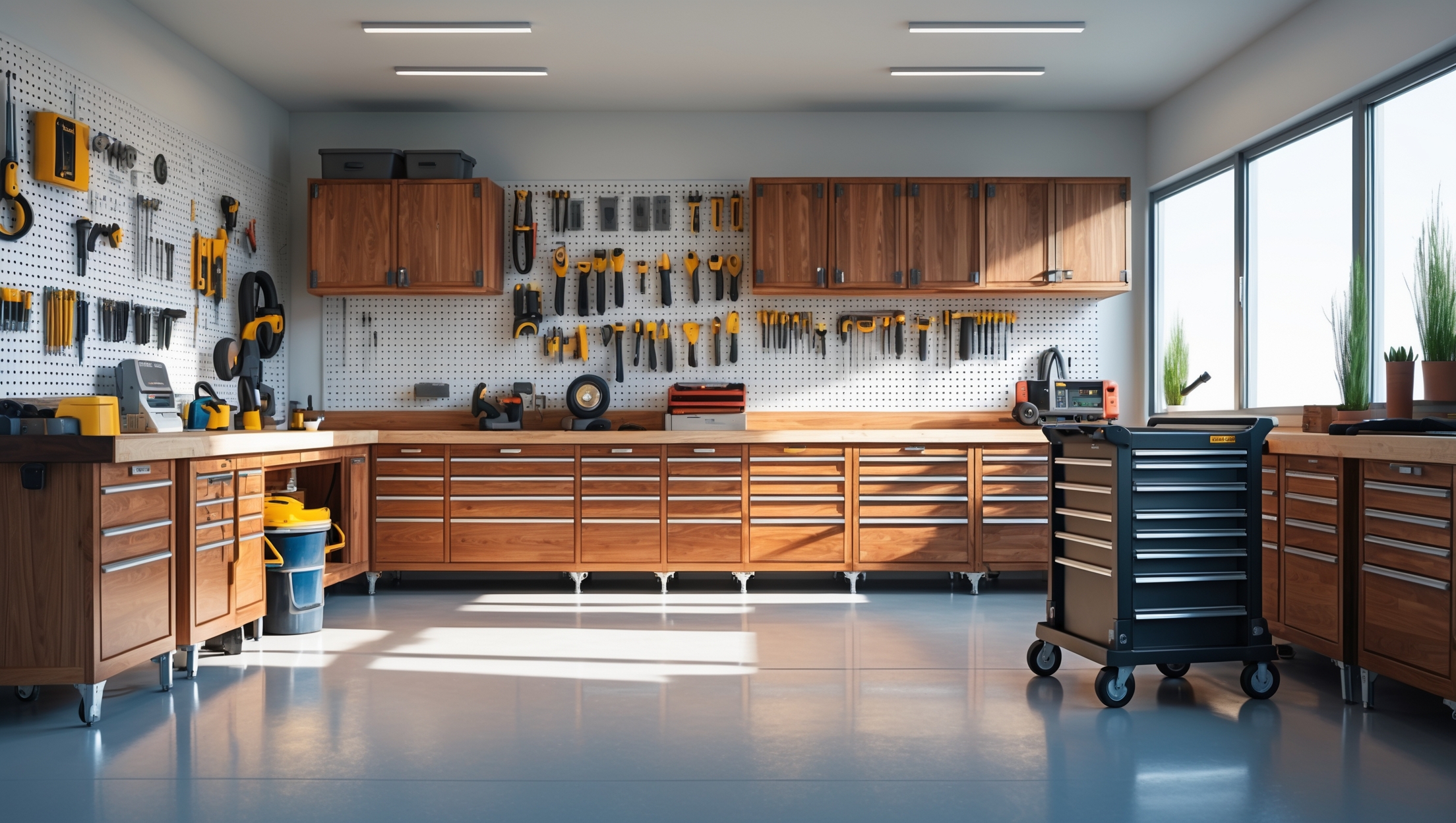
- Integrated workbench solutions: Combine a sturdy work surface with drawer storage below
Cost Breakdown
- Small modular drawer unit: $30–$60
- Medium rolling cabinet: $100–$350
- Integrated workbench: $300–$800
- Complete modular system: $500–$2,000+
Setup and Organization Tips
- Plan your layout: Sketch your space and measure to ensure cabinets fit without crowding
- Store by frequency: Place most-used tools in top drawers or at arm’s reach
- Use organizers: Drawer dividers and foam inserts prevent tools from shifting
- Label everything: Clear labels save time and prevent tool loss
Mobile Tool Storage Systems
Types of Mobile Storage
- Portable toolboxes: Small, lightweight, ideal for basic kits or on-the-go repairs
- Rolling tool chests: Multi-drawer cabinets on wheels, perfect for large collections
- Tool carts: Open or closed shelves on casters, offer quick access during active projects
- Stackable mobile systems: Interlocking bins and cases that can be transported as a unit
Pros of Mobile Storage
- Maximum flexibility: Move your tools wherever the project takes you
- Ideal for multi-space use: Great for those who work in the garage, yard, and inside the house
- Protects tools in transit: Lidded systems keep dust and debris out
- Expandable: Add more modules or cases as needed
Cons of Mobile Storage
- Limited storage capacity: Portable systems may not hold entire tool collections
- Heaviness when full: Large chests or carts can be difficult to move up stairs or over uneven surfaces
- Organization required: Tools can get jumbled if not properly secured within drawers and bins
Cost Breakdown
- Basic toolbox: $20–$50
- Rolling tool cart: $70–$200
- Large rolling chest: $250–$800
- Stackable mobile set: $100–$400
Setup and Efficiency Tips
- Balance loads: Place heavier items in lower drawers or the bottom of carts to prevent tipping
- Secure during transit: Use foam or dividers to keep tools from shifting when moving
- Keep essentials accessible: Store frequently used items in the top tray or shallow drawers
- Routine checks: Inspect wheels, latches, and handles regularly for wear and safe operation
Comparing Wall-Mounted, Modular, and Mobile Storage: Which Is Right for You?
| Feature | Wall-Mounted | Modular | Mobile |
|---|---|---|---|
| Best For | Quick access & small spaces | Large collections, dust protection | Frequent moves, on-the-go work |
| Setup Complexity | Low to moderate | Moderate to high | Low to moderate |
| Budget Range | $50–$150 | $300–$2000+ | $50–$800 |
| Protection Level | Low (exposed tools) | High (enclosed) | Moderate (lidded or open) |
| Expandability | High | Very high | High |
| Space Used | Wall/vertical | Floor | Floor/moveable |
| Security | Low | High (locks) | Moderate (locks on chests) |
Combining Systems for Maximum Efficiency
Many DIYers find that a hybrid approach yields the best results. For example, you might hang a pegboard above your workbench for immediate-grab hand tools, use a modular drawer cabinet for power tools and fasteners, and keep a mobile toolbox ready for outdoor jobs or quick repairs around the house.
- Tip: Start with wall-mounted storage for everyday tools, then add modular cabinets as your collection grows.
- Tip: If you do frequent repairs in multiple areas, invest in a high-quality rolling cart or stackable mobile set.
- Tip: Use color coding or labels to distinguish between stationary and mobile tool storage.
Maintenance and Safety Best Practices for Tool Storage
Environmental Control
Keep your storage area dry and well-ventilated. Humidity leads to rust, especially on exposed wall-mounted tools. Use desiccant packs or a small dehumidifier if necessary.
Regular Cleaning
Wipe down tools and storage surfaces monthly. Dust, metal filings, and debris can damage both tools and storage systems over time.
Inspect for Damage
Check for loose hooks, cracked drawers, or worn wheels. Timely repairs prevent small issues from turning into safety hazards.
Safe Loading
Never overload shelves, drawers, or carts. Follow manufacturer weight limits and store heavier tools on lower levels for stability.
Child and Pet Safety
Install locks on modular cabinets and keep sharp tools out of reach if children or pets frequent your workspace.
Case Study: Transforming a Cluttered Garage with Hybrid Storage
Mark, an avid DIYer, struggled with a crowded garage where tools were buried in cardboard boxes. After taking inventory, he installed a wall-mounted pegboard for hand tools, added a modular rolling cabinet for power tools, and set up a portable toolbox for outdoor projects. The result? Projects started faster, lost tools became a thing of the past, and the garage looked and felt safer. Mark’s hybrid setup cost under $600 and required only basic DIY skills for installation. The key to his success was assessing his unique needs and combining storage methods for maximum convenience.
Conclusion: Building Your Ideal Tool Storage System
The best home tool storage solution isn’t one-size-fits-all. It’s a thoughtfully chosen system—or combination of systems—that matches your tool collection, workspace constraints, and DIY habits. Wall-mounted options provide unbeatable access and value for everyday tools, while modular systems offer professional-grade protection and expandability. Mobile storage shines for those who value flexibility and need to bring their tools to the task. By carefully assessing your needs, planning your layout, and investing in quality storage, you’ll save time, protect your equipment, and make your home upgrades far more enjoyable. Don’t forget the importance of regular maintenance and safety practices—an organized tool collection is only as good as its upkeep. Start small if you must, but commit to a storage strategy that grows with your skills and ambitions. With the right setup, you’ll spend less time searching and more time building, fixing, and creating in a workshop that works for you.


When assessing wall-mounted versus modular storage, how do you recommend dealing with oddly shaped or oversized power tools that don’t fit neatly on standard pegboards or in cabinets? Do you have tips for customizing or modifying storage to handle these tricky items?
For oversized or oddly shaped power tools, consider adding custom shelves or adjustable brackets to your wall-mounted system, allowing you to adapt the space for specific items. With modular storage, many systems offer interchangeable bins or hooks, but you can also add foam inserts or padded racks for better fit. If needed, create custom holders from plywood or heavy-duty hooks to securely store uniquely shaped tools.
You touched on maximizing your budget when choosing a storage system. What should I prioritize if I can only upgrade one part of my setup right now: better organizing my hand tools or investing in more protective storage for power tools?
If you can only upgrade one part of your setup, focus on better organizing your hand tools first. Hand tools are used more frequently, and keeping them sorted and accessible will improve daily workflow and reduce frustration. Protective storage for power tools is important too, but unless your current storage is putting them at risk, a more organized hand tool system will give you immediate benefits.
Can you give some tips on maximizing budget without sacrificing tool safety? For example, are there affordable options that combine aspects of modular and mobile systems, or is it usually necessary to pick just one type?
You don’t have to choose just one system—many affordable storage options blend modular features with mobility. For example, stackable toolboxes with wheels can be configured to fit your space and moved as needed. Pegboards and wall rails can be paired with portable bins or caddies for flexibility without high costs. Prioritize sturdy materials and secure latches to keep tools safe, even when mixing systems.
I’m working with a pretty tight budget and limited floor space in my garage. Out of the three options you discussed, which do you think offers the best balance of affordability and efficiency for someone starting out with mostly just hand tools?
For a tight budget and limited floor space, wall-mounted storage is likely your best bet. It’s usually the most affordable option, keeps your hand tools organized and easily accessible, and frees up valuable floor space. You can start with a simple pegboard or a few hooks and shelves, then expand as needed when your tool collection grows.
You brought up the idea of protecting tools that need special handling or dust protection. Do any of these storage systems do a better job at keeping sawdust or humidity away from sensitive power tools compared to the others?
Among the storage systems discussed, modular systems with sealed bins or cabinets tend to offer better protection against sawdust and humidity for sensitive power tools. Wall-mounted systems often leave tools more exposed, while mobile systems can vary—some have tight-sealing drawers or cases, but others are more open. If dust and moisture protection is your priority, choose storage units with gasketed lids or tightly closing doors.
You mention the importance of assessing how often each tool is used before choosing a storage setup. Do you have tips on organizing tools by frequency of use, especially if I end up with a modular or mobile system?
When using a modular or mobile storage system, try placing your most frequently used tools in top drawers or front compartments for easy access. Reserve deeper, lower, or less accessible sections for tools you use less often. Consider labeling compartments or using color-coded bins to quickly identify priority tools. Regularly review your storage layout and adjust as your tool usage changes—this keeps your setup efficient.
When it comes to wall-mounted systems like pegboards, how do you handle storing bigger power tools or odd-shaped items that don’t fit well on hooks? Are there specific add-ons or techniques you recommend for making these systems more versatile?
For larger power tools and oddly shaped items, consider using heavy-duty shelves or specialized brackets that can be attached to your wall-mounted system. Some pegboard systems offer baskets, bins, or tool holders designed for bulkier tools. You can also use adjustable shelves or magnetic strips to secure items that don’t fit standard hooks. Mixing these add-ons helps customize your wall storage for tools of all shapes and sizes.
If I only have a small workspace with limited wall and floor space, is it possible to combine elements from wall-mounted, modular, and mobile setups, or would that end up being inefficient or costly for a beginner like me?
You can definitely combine elements from wall-mounted, modular, and mobile setups, even in a small workspace. For example, you could use a few wall-mounted racks for your most-used tools, a small modular shelf for supplies, and a compact rolling cart to move items around as needed. Start simple and add pieces gradually to avoid unnecessary costs and clutter.
When assessing tool inventory, do you have any suggestions for categorizing specialty gadgets or rare-use items so they don’t clutter everyday storage zones? I sometimes find these end up lost or in the way.
To keep specialty gadgets and rare-use items organized, try grouping them in clearly labeled bins or drawers separate from your main tool area. You might dedicate a specific shelf or cabinet for infrequently used tools, and add an inventory list inside the door or on your phone, so you always know what’s there without digging through everyday storage.
The article mentions ‘maximizing your budget,’ but I wasn’t sure if there are recommended brands or starter kits that offer good value without sacrificing durability. Any tips on getting started without overspending on features I may not need?
To get started without overspending, focus on basic but sturdy options from brands like Husky, Craftsman, or Kobalt, which often offer quality starter kits at reasonable prices. Look for sets that include essentials like a wall-mounted rail or a modular bin system and expand as your needs grow. Avoid kits loaded with specialty attachments unless you know you’ll use them, and check for warranties as a sign of durability.
When comparing wall-mounted systems to modular setups, how do you suggest handling the organization of smaller accessories like bits and fasteners? I struggle to keep those items accessible without cluttering my workspace.
For small accessories like bits and fasteners, wall-mounted systems work well with clear bins, labeled jars, or magnetic strips to keep things visible and easy to reach without taking up much space. If you’re using a modular system, look for stackable drawers or compartmentalized boxes that fit into the modules. Both methods help keep tiny items sorted and accessible while preventing clutter.
I noticed you mention the importance of taking inventory of your tools and considering special handling needs. How would you recommend safely storing power tools that produce a lot of dust or have sharp blades within these different storage systems?
For power tools that create dust or have sharp blades, I recommend using wall-mounted pegboards with hooks or shelves to keep them off the floor and allow airflow, which helps reduce dust buildup. For modular systems, look for lockable bins or drawers with padding to protect the blades and keep dust contained. Mobile systems with foam inserts or tool-specific compartments can also provide blade protection and easy transport. Always cover sharp edges with blade guards and unplug tools before storing.
The article mentions assessing both tool inventory and available workspace before choosing a storage setup. Is there a way to effectively combine modular and mobile units if my workspace is small but I need flexibility?
Yes, you can definitely combine modular and mobile units in a small workspace for extra flexibility. Try using compact modular cabinets or racks for frequently used tools and add a mobile cart or rolling toolbox for items you need to move around. This setup helps keep your area organized while letting you adjust your layout as your projects require.
Could you explain in more detail how to balance wall space versus floor space when deciding between modular cabinets and mobile carts? I have a small garage and want to avoid overcrowding.
When space is tight, start by evaluating which tools you use most often and how much wall space is available. Wall-mounted modular cabinets are great for keeping tools off the floor, freeing up valuable walking or workspace. Mobile carts offer flexibility, but can take up floor area and may block movement if space is limited. If your garage is small, prioritize wall storage for bulkier or less-used items and use a compact mobile cart for daily essentials. This ensures you maximize both wall and floor space without overcrowding.
I have limited wall space but plenty of floor space in my garage. Based on the article, would modular cabinets or a mobile cart be more practical for someone who owns mostly hand tools but occasionally uses larger equipment like a circular saw?
Given your limited wall space and available floor space, a modular cabinet system would be more practical for your needs. Modular cabinets offer flexible storage for your hand tools and can also accommodate larger equipment like a circular saw when needed. They keep your tools organized, provide secure storage, and can be expanded as your tool collection grows. Mobile carts are handy for frequent movement, but modular cabinets give you more storage capacity and versatility in your situation.
In your experience, do wall-mounted pegboards really hold up for heavier power tools, or do they tend to sag over time? I’m worried about weight limits, especially since I have a lot of bulky saws and drills.
Wall-mounted pegboards can support heavier tools, but their durability depends on the material and installation. Metal pegboards are usually sturdier than fiberboard and less likely to sag. It’s important to anchor them directly into wall studs, not just drywall. For bulky saws and drills, consider using heavy-duty hooks and spread the weight out. If you plan to store many large tools, you might want to supplement pegboards with shelves or dedicated wall racks.
When you mention modular setups, are these something you can easily expand over time as your tool collection grows, or do you generally need to buy an entire system up front for it to be effective?
Modular tool storage systems are designed for flexibility, so you can definitely expand them as your tool collection grows. You don’t need to buy everything at once. Most systems let you start with just a few components and add more shelves, drawers, or racks later as needed, making them practical for evolving storage needs.
The article talks about keeping tools protected and extending their lifespan. Are there specific storage solutions that work best for protecting power tools from dust or humidity, or is that mainly a matter of adding extra containers within these systems?
To protect power tools from dust and humidity, enclosed storage options are best. Many modular and mobile tool storage systems offer cases or cabinets with tight-sealing doors, which help keep out dust and moisture. You can also use additional airtight containers or weather-resistant bins inside these systems for extra protection. Placing silica gel packs or dehumidifiers inside closed cabinets can further reduce humidity and protect your tools.