
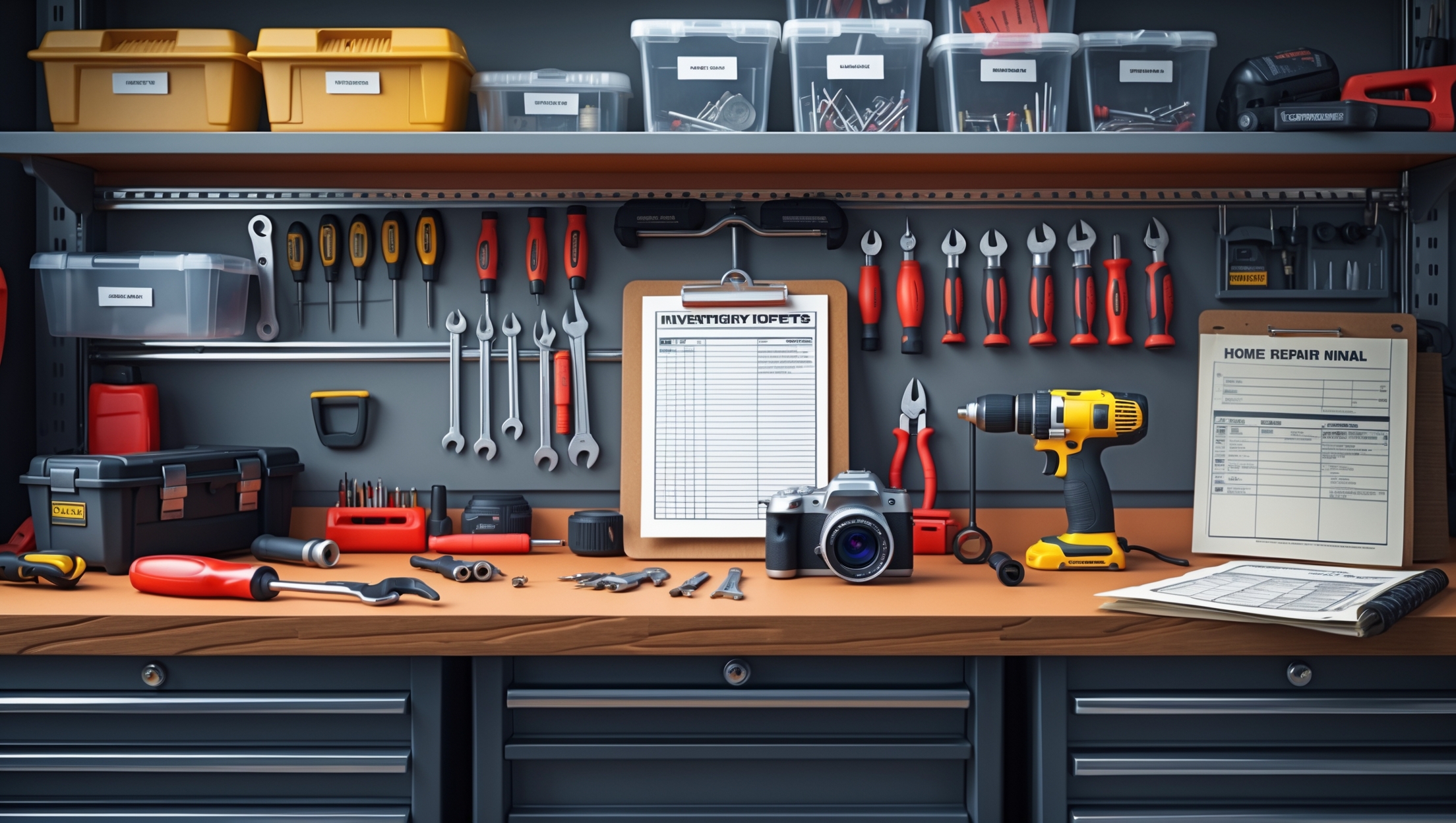
Introduction: Why Insurance Documentation Matters for DIY Home Repairs
If you’re a DIY enthusiast, your collection of tools and gadgets is more than a hobby—it’s a significant investment that powers your home repair and upgrade projects. But have you considered what would happen if your equipment was stolen, damaged, or destroyed in an unexpected event like a fire, flood, or break-in? Many homeowners overlook the critical step of preparing for insurance claims related to their tools and home repair work. When disaster strikes, having proper documentation and a current tool inventory can make the difference between a smooth, successful claim and a frustrating, costly experience. This comprehensive guide walks you through the practical steps of documenting your DIY tools, organizing receipts, and building an inventory that will help you recover your investment quickly and efficiently in case of loss.
We’ll cover why insurance companies care about detailed records, how to create a tool inventory (both high-tech and low-tech methods), tips for organizing receipts and manuals, and common documentation mistakes that can delay or deny your claim. Whether you’re a seasoned DIYer or just setting up your first workshop, these strategies will protect your tools, your time, and your peace of mind.
Understanding Insurance Coverage for DIY Tools & Equipment
Types of Policies That May Cover Your Tools
Before documenting your tools, identify which insurance policy covers them. For most homeowners or renters, basic property insurance may provide some coverage for personal property, including tools. However, coverage limits, exclusions, and special conditions often apply—especially if you use your tools for any commercial or side business purposes.
- Homeowners Insurance: Typically covers personal property, but may limit coverage for tools, especially those stored in outbuildings or garages.
- Renters Insurance: Similar coverage for personal items but with lower limits.
- Personal Articles Floater: An add-on policy that can specifically cover high-value tools and equipment.
- Business Endorsements: Required if you use tools for income-generating activities.
Key Coverage Considerations
- Limits: Many policies cap coverage for tools at $1,000–$5,000 unless you schedule individual items.
- Deductibles: Know your out-of-pocket responsibility before insurance pays out.
- Exclusions: Floods, earthquakes, and certain types of theft may not be covered by default.
- Proof of Ownership: Insurers require documentation to prove you owned the items and their value.
Building a Comprehensive Tool Inventory
Step 1: List Every Tool and Gadget
Start by listing every tool and piece of equipment you own, from expensive power tools to hand tools, measuring devices, and specialty gadgets. Don’t forget accessories like batteries, chargers, and attachments.
- Walk through your workshop, garage, and any other storage areas.
- Record item names, brands, model numbers, and serial numbers.
- Include purchase dates, prices, and store names if possible.
- Keep a running total of estimated values.
Step 2: Choose Your Inventory Method
- Manual Spreadsheet: Use Excel or Google Sheets. Create columns for all key details.
- Inventory Apps: Consider tools like Sortly, Memento, or Encircle for photo and receipt integration.
- Paper Log: A notebook or printed inventory template works if you prefer analog records.
Step 3: Photograph & Video Documentation
Visual proof is essential for insurance. Take clear, well-lit photos and short videos showing your tools’ condition, serial numbers, and storage setup.
- Photograph each item individually, focusing on identifying features.
- Group shots of shelves, drawers, and toolboxes help establish scale and context.
- Record a narrated video tour of your workspace, mentioning key items and their value.
- Store backups of digital files in the cloud and on an external drive.
Gathering and Organizing Receipts, Manuals, and Proof of Purchase
Why Receipts Matter
Receipts are the gold standard for proving ownership and value. They show date of purchase, price, and vendor—details that speed up claims and help you get full replacement value.
What If You Don’t Have Receipts?
If you’ve lost receipts, don’t panic. Insurance companies may accept alternative documentation such as:
- Credit card or bank statements showing the transaction
- Product registration emails
- Warranties or service records
- Photos of the item in use prior to the loss
Best Practices for Organizing Documentation
- Scan or photograph all paper receipts and manuals.
- Use digital folders—sort by tool type or purchase date.
- Maintain a binder or file box for originals if you prefer hard copies.
- Store digital copies in a cloud service (Google Drive, Dropbox, iCloud, etc.).
- Update your documentation whenever you buy, sell, or upgrade equipment.
Special Considerations for DIYers: Unique Tools, Custom Builds, and Modifications
Documenting Custom or Modified Equipment
Many home DIYers customize tools or build gadgets from kits and components. These may be harder to value but are still insurable if you have thorough documentation.
- Keep records of all parts purchased, including receipts and sources.
- Document assembly with photos or videos.
- Note the time and cost invested in customizations.
- Include links to similar retail items or comparable values.
Tools No Longer in Production
For discontinued or vintage tools, collect:
- Appraisals from tool collectors or specialty retailers
- Online listings for similar used items
- Photos of the item’s condition
Accessories, Attachments, and Consumables
Inventory key attachments (blades, batteries, bits) and high-value consumables (specialty fasteners, abrasives). While most policies won’t individually cover every drill bit, documenting major accessories can help maximize your claim.
Submitting a Claim: Step-by-Step Guide for DIY Tool Loss
1. Report the Loss Promptly
Notify your insurer as soon as you discover loss or damage. For theft, file a police report and obtain a copy for your claim.
2. Provide Complete Documentation
Submit your inventory list, photographs, receipts, and any supporting records. The more organized and thorough your documentation, the faster the claim will progress.
3. Cooperate with Adjusters
An insurance adjuster may visit your property, request additional details, or ask for serial numbers. Have your inventory and documentation ready to share electronically or in print.
4. Track Claim Progress
Keep records of every phone call, email, and letter regarding your claim. Note claim numbers, adjuster names, and deadlines for providing additional information.
5. Appeal If Necessary
If your claim is denied or underpaid, you can appeal. Additional documentation, appraisals, or a second opinion may help your case.
Common Documentation Mistakes That Delay or Deny Claims
- Failing to record serial numbers or identifying details
- Not updating inventory as tools are purchased or sold
- Storing receipts and photos only on a single device (risk of loss)
- Not photographing tools in their storage context
- Waiting until after a loss to start documentation
- Assuming coverage without confirming policy limits and exclusions
Maintaining and Updating Your Tool Inventory
Set a Schedule
Review and update your tool inventory at least once a year, or any time you make a significant purchase or sale. Many DIYers do this seasonally, along with workspace cleaning or reorganization.
Back Up Your Inventory
- Keep at least two digital copies in separate locations (cloud and external drive).
- Print a hard copy and store it in a fire-resistant safe or offsite location if possible.
Update Policy Information
If your tool collection grows or you acquire high-value items, notify your insurer to adjust coverage as needed. Schedule items or purchase additional coverage if required.
Tools & Templates: Resources to Simplify Documentation
- Inventory Templates: Downloadable spreadsheets from insurance company websites or DIY forums.
- Mobile Apps: Sortly, Memento Database, Encircle, Home Inventory, and others provide built-in photo and document storage.
- Cloud Storage: Google Drive, Dropbox, iCloud—set up folders by tool type or purchase date.
- Label Makers & QR Codes: Label tools for quick identification and inventory updates.
Conclusion: Protect Your DIY Investment with Smart Documentation
Your DIY tools and gadgets represent years of investment, effort, and expertise. Don’t let an unexpected disaster wipe out your hard work or put your next project on hold. By taking a proactive approach to documentation—building a complete inventory, organizing receipts, and photographing your workspace—you give yourself the best chance of a smooth, full insurance claim if the worst happens.
Remember, insurance companies are in the business of validating loss, not just replacing items. The more thorough and organized your records, the easier it is to prove ownership and value. Regularly updating your inventory, keeping digital and physical backups, and understanding your policy’s fine print will save precious time and money down the line.
Start today: set aside an afternoon to walk through your workspace, photograph your tools, gather receipts, and set up a digital folder for your documentation. It’s a small investment of time that can protect your entire DIY toolkit—so you can repair, maintain, and upgrade your home with confidence, no matter what the future holds.

If most of my DIY tools are stored in my garage, would homeowners insurance generally cover them the same as if they were inside the house, or are there extra steps I need to take to ensure they’re protected under my policy?
Homeowners insurance usually covers personal property like your DIY tools, whether they’re stored in your garage or inside your house. However, some policies may have special limits or requirements for items in outbuildings or detached garages. It’s a good idea to review your policy details and, if needed, create an inventory and take photos for documentation. If your tools are especially valuable, ask your insurer if you need extra coverage or a rider.
Does most homeowners insurance cover tools that are occasionally used for side jobs, or would I need to get a separate policy if I sometimes earn a bit of extra money from DIY projects?
Most standard homeowners insurance policies only cover tools used for personal or household purposes, not for any kind of business or side job. If you’re earning extra money with your tools, even occasionally, you might need additional coverage like a business policy or a rider to ensure those tools are protected. It’s a good idea to check your policy details or speak directly with your insurer to clarify what’s covered in your situation.
You talk about different methods for creating a tool inventory. Is there a recommended app or template for this, or is a simple spreadsheet just as effective for most insurance companies?
A simple spreadsheet is usually effective and widely accepted by most insurance companies, as long as it clearly lists your tools, their values, and purchase details. Some people prefer dedicated inventory apps, which can make it easier to add photos and receipts, but they’re not required. Choose whichever method makes it easiest for you to keep your records organized and updated.
The article mentions different methods for creating a tool inventory. Is there a particular app or template you recommend for families who want something quick and simple to use on their phones?
For families looking for a quick and simple way to create a tool inventory on their phones, using the built-in notes app or a spreadsheet app like Google Sheets is a practical option. Both let you easily list items, add photos, and update details as needed. If you prefer a dedicated app, Sortly and Memento Database are user-friendly and work well for organizing home inventories, supporting photos and categories.
Can you recommend a specific app or software for creating a tool inventory that works well for DIYers, especially for tracking things like serial numbers and receipts?
For DIYers looking to track tools, receipts, and serial numbers, Sortly is a popular choice that’s user-friendly and allows you to attach photos, receipts, and detailed notes. Another good option is Memento Database, which is flexible for custom fields like purchase dates and serial numbers. Both apps work on mobile devices, making it easy to update your inventory as you add or use tools.
You mentioned using both high-tech and low-tech methods for creating a tool inventory. What are some easy ways to get started if I’m not very tech-savvy but want to make sure my documentation is solid enough for insurance?
If you prefer low-tech options, start by making a detailed list of your tools in a notebook, including brand, model, and purchase date if you have it. Take clear photos of each tool and store printed copies with your list. You can also keep receipts or manuals in a folder. These simple steps create strong documentation that most insurers will accept.
For people who occasionally use their DIY tools for side gigs, how do insurance companies typically differentiate between personal and commercial use when processing claims? Would having documentation showing mostly home use help, or are there other requirements?
Insurance companies usually draw a clear line between personal and commercial use. If you use your DIY tools for paid side gigs, even occasionally, this can be considered commercial use, which may not be covered under standard home insurance. Documentation showing mostly home use can help, but insurers may still ask detailed questions or require additional coverage. It’s best to be upfront about any side gigs and check if you need a separate policy or rider for business use to avoid denied claims.
Do insurance companies usually require photos of every tool, or will a written inventory and receipts be enough when filing a claim for stolen or damaged equipment?
Most insurance companies prefer a written inventory and receipts, as these provide proof of ownership and value. However, photos of your tools can be extremely helpful, especially if receipts are missing or if you want to clearly document the condition and existence of your equipment. While it’s not always required to have photos of every tool, having both photos and receipts will make your claim process smoother and more convincing.
You mentioned that coverage limits might be different for tools stored in outbuildings or garages. Can you clarify if there are ways to increase coverage for those tools, or does it depend on the specific insurance provider?
You can usually increase coverage for tools stored in outbuildings or garages by adding a rider or endorsement to your homeowner’s policy, but the options and limits available depend on your specific insurance provider. It’s a good idea to contact your insurer directly to discuss your needs—they can explain what’s available and help you adjust your policy if needed.
The article mentions both high-tech and low-tech methods for creating a tool inventory. Could you give a few examples for each type and suggest which method is more reliable during an insurance claim?
High-tech methods for creating a tool inventory include using smartphone apps or digital spreadsheets to list your tools, taking photos or videos, and storing receipts and warranties digitally. Low-tech options involve writing lists by hand, keeping physical receipts, and storing photographs in a folder. High-tech methods are generally more reliable during an insurance claim because digital records are easier to update, back up, and share with insurers, making the claims process smoother.
I’m just starting to put together my first set of power tools for home repairs. The article mentions using inventory lists and keeping receipts, but what if I bought some tools secondhand and don’t have original receipts anymore? Will that affect my insurance claim process?
Not having original receipts for secondhand power tools can make the claims process a bit more challenging, but it’s still possible to get coverage. Take clear photos of each tool, record their make and model, and note where and when you purchased them. If you have messages, online listings, or payment confirmations from the purchase, keep those as supporting evidence. Sharing this documentation with your insurer helps show proof of ownership and value.
For those of us who have both personal DIY gear and a few tools used for side jobs, how do you keep the inventories and documentation separate to avoid claim issues if something happens? Any tips on drawing that line for insurance purposes?
To keep personal and side job tool inventories separate, store them in different locations if possible and maintain individual lists for each. Label tools clearly as ‘personal’ or ‘business.’ Keep purchase receipts and photos organized in separate folders, either physical or digital. This approach will help your insurer see a clear distinction if you need to file a claim, reducing the risk of complications.
What’s the best way to update my tool inventory if I keep adding new items to my collection over time? Should I be emailing myself receipts, using a spreadsheet, or is there a specific method insurance companies actually prefer to make claims smoother?
The most reliable way is to keep a detailed, updated inventory list—spreadsheets work well since you can easily add new tools and attach photos or scanned receipts. Some people also use home inventory apps, which help track purchase dates, serial numbers, and receipts all in one place. Insurance companies generally appreciate organized records, so choose a method you’ll keep up-to-date and can quickly share with them if needed.
I’m not sure how often I should update my tool inventory for insurance purposes. Is there a recommended timeframe for checking or adding new items to my records?
It’s a good practice to update your tool inventory at least once a year, or whenever you purchase new tools or equipment. Regular checks help ensure your records stay accurate for insurance claims. Setting a reminder to review your inventory annually and adding new items right after you buy them will keep your documentation up to date.
If some of my DIY tools are used occasionally for paid side projects, does that affect whether homeowners insurance will cover them if they’re stolen from my garage? I’m a bit confused about where the line is between personal and business use for insurance purposes.
If you use your tools for occasional paid side projects, your homeowners insurance might not fully cover them if they’re stolen, since most policies only cover personal property, not business equipment. The line is usually drawn at regular or significant use for business purposes. If you use your tools more than just occasionally for paid work, you may need special coverage for business property. It’s best to review your policy and ask your insurer how they define personal versus business use.
You mention that homeowners insurance may limit tool coverage, especially if they’re kept in garages or outbuildings. Does that mean I need a separate policy if most of my tools are stored in my detached shed? How do I know if my current policy is enough?
If most of your tools are stored in a detached shed, your homeowners policy might have lower coverage limits for those items. To check if you need extra coverage, review your policy’s section on personal property in outbuildings or speak to your insurance agent. They can clarify whether your current limits are sufficient or if you should consider an endorsement or separate policy for your tools.
I have a lot of tools in my garage, and some are used occasionally for side work. The article mentions insurance companies might have issues with tools used for business purposes. How can I clearly document which items are just for home projects versus occasional income, and will this affect my claim process?
To distinguish between personal and business tool use, keep a detailed inventory noting how each tool is used—labeling items as ‘personal’ or ‘business’ and recording purchase dates, receipts, and any side job history. During a claim, insurers may ask for this documentation, and tools used for business could be subject to different coverage rules. Being transparent and organized will help your claim process go more smoothly and clarify eligibility.
I sometimes use my tools for small paid projects on the side. Would that change how my homeowners insurance treats my tool inventory, or do I need a different kind of policy for part-time business use? The article said something about commercial exclusions but wasn’t sure how strict that is.
If you use your tools for paid work, even part-time, most homeowners insurance policies may exclude coverage for those tools due to business use. The commercial exclusions are usually quite strict. You’ll likely need a separate business or commercial policy, or a specific endorsement, to insure tools used for side jobs. Check with your insurance provider to make sure your coverage fits your situation.
I mostly store my power tools in a detached garage. The article mentions limits for tools kept in outbuildings. Can you explain how to ensure those tools are fully covered under a typical homeowners policy?
Homeowners policies often have lower coverage limits for tools stored in detached garages or sheds, sometimes capped at a percentage of your total personal property coverage. To ensure your power tools are fully protected, check your policy’s specific outbuilding limits and ask your insurer about increasing coverage for those items. You may need a rider or endorsement to list high-value tools separately. Keeping an up-to-date inventory and clear photos will also help if you ever need to file a claim.
What happens if I lost receipts for tools I bought years ago, but I still have manuals and photos? Is there a way to satisfy insurance requirements for an inventory without original proof of purchase, or are those claims likely to be denied?
You can still support your insurance claim without original receipts. Manuals, photos, credit card statements, and even warranty documents can all help establish ownership and value of your tools. Most insurers understand that older receipts may not be available, so providing as much alternative evidence as possible improves your chances of a successful claim. Be sure to document everything you have related to each tool to strengthen your inventory.
If I use some of my DIY tools occasionally for side jobs to earn extra money, does that affect how my homeowners insurance covers them, or do I need a different type of policy for those tools?
If you use your DIY tools to earn extra money, your homeowners insurance may not fully cover them, since most standard policies only protect personal property used for non-business purposes. For tools used in side jobs, you might need a separate business or commercial policy to ensure they’re properly covered. It’s a good idea to check with your insurance provider to clarify your current coverage and explore the right policy for your situation.
If I use my tools mainly for personal DIY projects but occasionally help friends for a small fee, will my homeowners or renters insurance still cover losses? Or would these occasional side jobs affect my coverage or require a different policy?
When you use your tools mostly for personal DIY but sometimes earn a little money helping friends, your standard homeowners or renters insurance may not fully cover losses to those tools. Occasional side jobs, even if small, can be seen as business use by insurers and may limit or exclude coverage. You might need a rider or separate policy for business equipment to ensure proper protection.
Organizing receipts and manuals sounds like a lot to keep up with, especially for older tools I don’t have paperwork for anymore. What are some practical ways to document those items or prove ownership if I never kept the original receipts?
If you no longer have receipts or manuals for your older tools, you can still document them effectively. Take clear photos of each tool, including any serial numbers or unique markings. Make a simple inventory list with details like brand, model, purchase year (if you remember), and estimated value. Storing these records digitally, like in a cloud folder, helps keep everything organized and easily accessible for insurance purposes.
If someone uses their tools for occasional side jobs but mostly for personal home repairs, how does that affect insurance claims and documentation requirements? Would the insurer treat those tools differently than if they were only for non-commercial use?
If you use your tools for side jobs, even occasionally, some insurers may classify them as business property, not just personal belongings. This can affect coverage limits and claim processes. You’ll likely need to document these tools more thoroughly and may need a business or rider policy for full coverage. It’s best to clarify with your insurer, as using tools for any commercial purpose often changes their coverage classification.
When organizing receipts and manuals for a tool inventory, is it better to use a digital method or keep physical copies, or should I do both? I want to make sure my documentation is accepted if I ever need to file a claim.
Using both digital and physical copies is the safest approach for insurance documentation. Digital files, like scanned receipts and manuals, are easy to organize and back up, making them quick to access for claims. However, some insurers may also request original documents, so keeping physical copies in a safe place adds extra security. This dual system ensures you’re well-prepared for any claim process.
If I use my tools for both personal DIY projects and occasional side jobs, does that affect whether homeowners insurance will cover them, or would I need a separate policy? The article mentions business use but I’m not sure where that line is.
If you use your tools for side jobs where you earn income, insurance companies may consider that business use. Most homeowners policies only cover personal use items and may not cover tools used for business purposes. You might need a separate business or commercial property policy for those tools. It’s a good idea to check with your insurer and explain your specific situation for clear guidance.
You mentioned that coverage limits might be different if my tools are used for a side business. How can I tell if my homeowners policy considers my DIY projects to be business use, and what steps should I take if that’s the case?
Homeowners policies usually define business use as any activity that generates income or involves regular services for others, even on the side. Check your policy’s definition of ‘business use’ or ‘business property.’ If you earn money or advertise your DIY work, your tools may be considered business property, which can limit coverage. If this applies to you, contact your insurer to clarify and consider adding a business property endorsement or a separate business policy to ensure proper coverage.
I noticed you discussed both high-tech and low-tech ways to create a tool inventory. Could you give some examples of easy, inexpensive methods for someone just starting out, especially if they don’t have a lot of digital equipment?
Absolutely! For a simple, low-cost tool inventory, you can use a basic notebook or a set of index cards to write down each tool’s name, purchase date, and condition. Another option is to take photos of each tool with a phone, even an older one, and keep them printed or saved somewhere safe. These methods don’t require any special digital devices and are very beginner-friendly.
How specific do my receipts and documentation need to be for tools that I bought secondhand or over many years? I’ve got a pretty mixed collection and not all of it has receipts anymore.
For secondhand or older tools without receipts, try to document as much detail as possible—such as brand, model, estimated purchase date, and where you got them. Photos of each tool and a written inventory list help strengthen your claim. Insurers understand older collections often lack full receipts, so thorough records and clear descriptions are usually acceptable.
You mentioned both high-tech and low-tech ways to keep a tool inventory. For someone on a tight budget, is there one method that insurance companies prefer, or is a basic spreadsheet with pictures just as reliable as an app?
Insurance companies generally accept any clear, organized record of your tools, so a basic spreadsheet with photos is just as reliable as using an app. The key is to include enough details—like tool names, purchase dates, and pictures—to prove ownership and value. This approach is cost-effective and meets most insurers’ documentation requirements for claims.
You mention that homeowners insurance might limit coverage for tools kept in a garage or outbuilding. Could you clarify what kinds of limits and exclusions usually apply in those situations, and how I can make sure my tools are fully covered?
Insurance policies often set lower coverage limits for items stored in detached garages or sheds, sometimes capping tool coverage at a percentage of your main personal property limit or a fixed dollar amount. Exclusions may also apply for business-use tools. To ensure full coverage, review your policy’s off-premises and outbuilding limits, consider scheduling valuable tools separately, and ask your insurer about endorsements or riders that can increase protection for specific items.
I’m just getting into DIY home repairs and have a bunch of tools scattered in both my garage and an outdoor shed. Based on what your article says about homeowners insurance possibly limiting coverage on tools kept in outbuildings, how do I make sure everything is properly covered? Should I talk to my insurance company about a specific rider?
You’re on the right track by thinking about coverage. Many standard homeowners policies limit coverage for tools stored in sheds or other outbuildings. It’s a good idea to make a detailed inventory of your tools and check your policy for off-premises or outbuilding limits. Contact your insurance company and ask if you need a special rider or endorsement to cover high-value items kept outside the main house. They can guide you on the best way to protect your tools.
You talked about both high-tech and low-tech ways to create a tool inventory. For someone not very tech-savvy, what’s the simplest method you’d suggest to start documenting a workshop without feeling overwhelmed?
If you prefer a simple, low-tech approach, I recommend using a notebook or binder. Just go through your workshop and list each tool, writing down its name, brand, model, and any unique features. You can even add receipts or take printed photos and attach them to your notes. This method keeps things straightforward and easy to update whenever you get new tools.
You mentioned that insurance coverage for tools stored in outbuildings or garages can be limited. How do most policies define ‘outbuilding,’ and are there specific steps I should take to make sure my detached workshop is fully covered?
Most insurance policies define an ‘outbuilding’ as any structure on your property that is separate from your main house, like a detached garage, workshop, or shed. Coverage limits for these can be lower than for your main residence. To ensure your detached workshop is fully covered, check your policy’s ‘other structures’ section and consider increasing that coverage if needed. It’s also helpful to inform your insurer about the workshop’s use and contents and keep a detailed inventory of tools stored there.
I’m just starting to build my workshop and don’t have receipts for every hand-me-down tool. What documentation tips do you have for older tools where proof of purchase is missing, especially when it comes to making a claim?
For older or hand-me-down tools without receipts, take clear photos of each item and note down details like brand, model, and approximate age. Create an inventory list with descriptions and estimated values. If possible, record who gave you the tool and when. This documentation can help support your claim, even if original purchase receipts are unavailable.
I’m curious about how insurance companies handle claims if tools are stored in different locations, like a detached garage versus inside my home. Does the location of the tools impact the coverage or the kind of documentation I should prepare?
The location of your tools can affect how insurance covers them. Tools stored in a detached garage might be covered differently than those kept inside your home, depending on your policy’s definitions of ‘dwelling’ and ‘outbuildings.’ It’s a good idea to document where each tool is stored, including photos and receipts. Check your policy or speak with your insurer to confirm if separate coverage or higher limits are needed for tools kept outside your main residence.
The article mentions that policies might have special conditions if tools are stored in a garage or outbuilding. How do I find out if my insurance actually covers tools kept in my detached garage, and is there a difference in coverage amount compared to keeping them inside the house?
To find out if your insurance covers tools stored in your detached garage, check your policy’s section on outbuildings or detached structures. Coverage amounts and conditions can differ from those for items kept inside your house. If the policy isn’t clear, contact your insurance provider directly and ask specifically about tool coverage in detached garages, including any limits or exclusions that may apply.
I noticed the article mentions that coverage for tools can be limited if they’re stored in outbuildings or garages. If most of my tools are in a detached shed, is there a way to increase my insurance coverage specifically for those items, or would I need a different type of policy?
If your tools are stored in a detached shed, you can usually increase coverage for them by adding a scheduled personal property endorsement or rider to your current homeowners policy. This lets you specifically list valuable items and insure them for their full value. Alternatively, check if your insurer offers an increased coverage option for outbuildings. You typically don’t need a separate policy—just an adjustment to your existing one. It’s best to discuss your needs with your insurance agent to find the right approach.
If I just started collecting tools for DIY projects, is it enough to save digital photos and bank statements as proof for insurance claims, or do I really need to keep all the paper receipts and manuals too?
Digital photos and bank statements are usually acceptable proof for most insurance claims, especially if you clearly show purchase details and item condition. Keeping manuals is optional but can be helpful for reference. Paper receipts aren’t strictly necessary if you have digital records, but it’s wise to store scanned copies just in case your insurer asks for more documentation.
You mentioned that commercial or side business use could affect tool coverage. If I occasionally do paid projects with my home tools, will that void my homeowners insurance for those items, or is there a way to adjust the policy to stay protected?
If you use your home tools for occasional paid projects, standard homeowners insurance may not cover damage or loss of those tools since they’re being used for business purposes. To ensure they’re protected, contact your insurer and ask about a business property endorsement or a separate policy for business equipment. This way, you can adjust your coverage and avoid any gaps.
For someone just getting started building a tool inventory, do you recommend using a spreadsheet, a dedicated app, or just taking photos and keeping them with receipts? I’m a bit overwhelmed by the options and want to make sure I don’t miss something important for an insurance claim.
It’s understandable to feel overwhelmed with all the choices. A spreadsheet is a solid and flexible option for listing tools, purchase dates, and values, and you can attach digital copies of receipts if possible. Pairing this with photos of your tools (including serial numbers) is highly recommended. Some dedicated apps offer added convenience, but starting simple with a spreadsheet and organized photos is often more manageable and meets most insurance documentation needs.
Can you clarify how detailed the tool inventory needs to be for insurance purposes? For example, do I need to list model numbers and serial numbers for every item, or is a group photo of all my hand tools enough if I don’t have the exact details?
For insurance purposes, the more detailed your tool inventory, the better. Ideally, you should list model and serial numbers for higher-value items or power tools. For common hand tools, if you don’t have exact details, group photos can still help—just try to note the quantity and types of tools shown. Keep receipts if possible and update your inventory as you add new items.
The article mentions coverage limits for tools stored in garages or outbuildings. How do I find out if my homeowners policy covers those, and should I list each tool’s storage location in my inventory?
To find out if your homeowners policy covers tools stored in garages or outbuildings, check your policy documents or contact your insurance agent for details about coverage limits and exclusions. When creating your tool inventory, it’s helpful to note each tool’s storage location. This extra detail can support your claim and make the process smoother if you ever need to file one.
How do insurance companies usually handle tool coverage if I use some of my equipment for occasional side jobs rather than just home repairs? Would that change how I need to document my inventory for claims?
If you use your tools for side jobs, even occasionally, insurance companies may consider them business equipment instead of personal property. This can affect coverage, as standard homeowners policies often exclude business-use items. You should clearly document which tools are used for business and home repairs, keep receipts, and note usage. It’s also wise to discuss coverage with your insurer, as you might need separate business or rider coverage for those tools.
If I use some of my tools for my side handyman business, would that affect how my homeowners insurance covers them, or would I need a separate policy for professional use?
Using your tools for a side handyman business usually means they’re being used for commercial purposes, which most homeowners insurance policies don’t cover. To protect those tools properly while you’re working professionally, you’ll likely need a separate business or commercial tools policy. It’s best to check with your insurance provider so you’re fully covered both at home and on the job.
Could you give a few practical examples of how to create a simple tool inventory if I’m not very tech-savvy? I have a lot of hand tools and receipts scattered around, and I want to avoid mistakes that could delay an insurance claim.
You can start your tool inventory by listing each tool in a notebook or on index cards—write down the tool name, purchase date, and store or brand if you remember. Tape receipts next to each entry or keep them in a labeled envelope. Taking clear photos of each tool, with the receipt beside it, is also very helpful and doesn’t require any special tech skills. This simple system ensures your records are organized and ready if you need to file an insurance claim.
You mention both high-tech and low-tech ways to create a tool inventory. Can you share examples of simple methods for someone who isn’t very tech-savvy but still wants to stay organized for insurance purposes?
Absolutely! For a low-tech approach, try writing a list of your tools in a notebook, including the brand, model, and purchase date if you know them. You could also take printed photographs of each tool, label them with the same details, and keep everything together in a folder. These simple methods are effective for keeping your inventory organized and ready for insurance claims.
You mention the importance of distinguishing between personal and business use—if I occasionally use my tools for paid side jobs, would listing this in my documentation affect my ability to make a claim under homeowners insurance?
If you use your tools for paid side jobs, it’s important to note this in your documentation because homeowners insurance typically covers personal property used for personal, not business, purposes. Listing business use could affect your claim, as many policies exclude or limit coverage for tools used in business activities. You may need a separate business or rider policy to cover those tools when used for side jobs.
Organizing receipts sounds important but honestly a bit overwhelming—do you have any practical tips for when you’ve lost or tossed old receipts for tools you already own? How strict are insurance companies about having proof of purchase if something happens?
If you don’t have original receipts for your tools, try to document what you own as best as you can now. Take clear photos of each tool, note down their make, model, and approximate purchase dates. Some insurers may ask for proof if you file a claim, but detailed photos and a written inventory can often help if receipts are missing. Insurers vary in strictness, but being proactive with your records is usually acceptable.
When putting together a tool inventory, do insurance companies prefer detailed photos, spreadsheets, or is a video walkthrough of the workshop just as effective? I’m trying to figure out the most efficient way to keep my records up to date without duplicating effort.
Insurance companies generally appreciate any clear, organized record of your tools, and there isn’t a strict preference across the board. Many people find a video walkthrough to be efficient since it captures both the items and their condition. However, combining this with a simple spreadsheet listing tool names, serial numbers, and purchase dates can make things even easier if you ever need to file a claim. Photos can also be helpful, but you don’t need to duplicate every method—choose the combination that feels most sustainable for you.
I do a few paid jobs on the side using my tools, but most of my projects are just for my own home. Would that make a difference when documenting my inventory for insurance, or could that impact whether claims get approved?
If you use your tools for both personal DIY and paid side jobs, it’s important to document that clearly. Some insurance policies treat business use differently from personal use, which could affect your coverage or a claim’s approval. When documenting your inventory, note how each tool is used and check your policy or ask your insurer if you need specific coverage for business use.
My workshop is in a detached garage, and I saw you mentioned that homeowners insurance may limit coverage for tools stored in outbuildings. Can you clarify what kind of documentation I’d need to make sure my tools are actually covered in that scenario?
To ensure your tools in a detached garage are covered, keep a detailed inventory listing each item, its purchase date, and value. Store receipts or photos of each tool, preferably showing serial numbers or unique identifiers. It’s also wise to update this inventory regularly. Check your policy for specific limits on outbuildings and consider sharing your documentation with your insurer to confirm adequate coverage.
If I’m using some of my tools for both personal DIY projects and occasionally for a small side business, would my homeowners insurance still cover them, or do I need a different type of policy? The article mentions exclusions when tools are used commercially, so I want to clarify.
If you use your tools for both personal DIY and for a side business, your homeowners insurance may not fully cover them when used for business purposes. Most policies exclude coverage for items used commercially. To ensure proper protection, you might need a separate business or commercial property insurance policy for tools used in your side business.
If I do a mix of personal and occasional paid home repair jobs, how do I make sure my tool inventory is covered appropriately? The article mentioned special conditions for commercial use, but I’m not sure where my situation fits in.
Since you use your tools for both personal and occasional paid repair jobs, let your insurer know about this mixed use. Standard home insurance often excludes tools used for business, so you may need a rider or separate policy for commercial use, even if it’s just occasional. Keep a detailed inventory with receipts and photos, and clarify your usage with your agent to make sure you have the right coverage.
I noticed the article mentions coverage might be limited if you use your tools for any side business. What kind of documentation would I need to prove my tools are strictly for personal DIY use instead of anything commercial?
To demonstrate that your tools are used only for personal DIY projects, keep detailed records such as purchase receipts, photos of your tools in your home workspace, and notes or logs about your repair projects. Avoid advertising services or listing tools for rent. If possible, save correspondence or invoices showing your repairs are just for your own property. This documentation can help clarify your non-commercial use if your insurer asks.
If I use some of my tools for side gigs as well as personal projects, will most homeowners policies still cover them, or do I need a separate policy for business equipment? The lines seem blurry when it comes to occasional paid jobs. Any advice on how to document this for insurance claims?
When you use tools for both personal and side business purposes, most standard homeowners policies only cover personal use, and coverage for business equipment is often limited or excluded. For tools used in paid work, even occasionally, insurers may require a separate business or rider policy. To document for claims, keep receipts, take photos of your tools, and maintain clear records showing when and how each tool is used. This helps clarify if an item was in personal or business use at the time of any loss.
You mentioned that organizing receipts can help with claims, but a lot of my tools were bought secondhand or at garage sales without clear receipts. What do you recommend in those cases for proving ownership and value to insurance companies?
If you don’t have receipts for your tools, you can still document ownership by taking clear, dated photos of each item, noting their make, model, and any serial numbers. Keep a detailed inventory list describing when and where you bought each tool, even if it was a garage sale. Online price guides or similar items for sale can help estimate value, which insurers often accept when receipts aren’t available.
For someone who has a mix of high-value power tools and smaller hand tools in both an attached garage and a backyard shed, does insurance typically require separate inventories for each location, or can everything be documented together?
You can usually document all your tools together in a single inventory, regardless of whether they’re stored in the garage or shed. However, it’s helpful to note the storage location for each item in your records, as some insurers may ask for this detail in case of a claim. Always check your specific policy or ask your provider about any location-based requirements.
If some of my tools are used for side jobs or freelance work occasionally, does that affect their eligibility for coverage under my homeowners or renters insurance? Should I list them differently in my documentation?
If you use some of your tools for side jobs or freelance work, your standard homeowners or renters insurance may limit or exclude coverage for those items since they’re considered business property. It’s best to clearly note in your documentation which tools are used for personal versus business use. You might need separate business insurance or an endorsement for tools used professionally, so check your policy details or speak with your insurer.
If I use my garage mostly as a workshop for DIY projects, would my homeowners insurance treat tools stored there any differently than if I kept them inside the house? The article mentions coverage limits for tools in outbuildings, and I want to avoid any claim headaches.
Homeowners insurance often views detached garages or outbuildings differently from the main house. Tools stored in your garage may be subject to lower coverage limits than if they were kept inside your home. It’s a good idea to check your policy’s specific limits for outbuildings and consider adding extra coverage (sometimes called a rider or endorsement) if your tool collection is valuable. Keeping an updated inventory and clear photos can also help streamline any claim process.
Could you provide more detail on the best way to organize digital receipts and manuals for a tool inventory? I’m trying to go paperless, but I’m worried about making sure everything would be accepted by insurance if I ever need to file a claim.
To organize digital receipts and manuals, scan or photograph each document and save them in clearly labeled folders by tool type or brand. Use consistent naming, like ‘receipt_drill_2024.pdf’. Cloud storage services are a secure place to back them up. Insurance providers typically accept well-organized digital copies as proof, but it’s always a good idea to check with your insurer for their preferred format or specific requirements.
Can you clarify whether homeowners insurance typically covers expensive power tools stored in a detached garage or shed, or if there are specific limitations on coverage for tools kept outside the main house?
Homeowners insurance policies often cover personal property like power tools, even if stored in a detached garage or shed. However, coverage limits for items in structures separate from the main house are typically lower—sometimes only 10% of your total personal property coverage. Expensive power tools may also have their own sub-limits, so it’s wise to check your policy details or speak with your insurer about increasing coverage if needed.
You mention organizing receipts for all tools, but what if I bought a lot of them secondhand or have lost the original receipts? Will photos and serial numbers be enough for most insurance providers?
If you no longer have original receipts or bought tools secondhand, most insurance providers will still accept clear photos and records of serial numbers as proof of ownership and value. It’s best to document each tool with detailed photos, note any visible serial numbers, and keep a list describing their condition and estimated value. While receipts are ideal, comprehensive documentation like this generally satisfies insurance requirements.
The article mentions coverage limits for tools stored in garages or outbuildings. Is there a typical dollar amount cap for those, and would getting a rider or endorsement increase that, or would I need a separate policy?
Most standard homeowners policies set a lower coverage limit for tools and equipment stored in garages or outbuildings, often around $1,000 to $5,000. Adding a rider or endorsement to your policy is usually the way to increase this limit rather than purchasing a separate policy. You should check with your insurer for their specific limits and options, as amounts and availability can vary by provider.
You mention that outbuildings or garages might have limited coverage under homeowners insurance. If most of my tools are stored in a detached garage, what steps should I take to make sure they’re fully protected and covered for their full value?
To ensure your tools in a detached garage are fully protected, review your homeowners insurance policy for specific limits on outbuilding contents. If the coverage is less than the value of your tools, ask your insurer about increasing the outbuilding or personal property limits, or consider adding a rider for high-value items. Also, keep a detailed inventory with photos, receipts, and serial numbers to streamline any future claims.
What would you recommend as the best way to keep receipts and manuals organized for someone on a budget? Is there a simple low-tech approach that’s still effective for making a claim if something happens?
A simple, budget-friendly approach is to use a basic accordion folder or an envelope system to keep all receipts and manuals together by category or room. Label each section clearly, and store it in a safe spot. For extra peace of mind, you can also snap photos of receipts and manuals with your phone and back them up to your email or free cloud storage, so you have copies if paperwork goes missing.
I keep most of my tools in a detached garage, which the article says might have different coverage. Is there a way to increase insurance protection just for the tools stored out there, or should I move everything into the house for better coverage?
You can usually add extra coverage, known as a rider or endorsement, to your existing policy specifically for tools kept in a detached garage. This way, you don’t have to move everything into the house. It’s a good idea to talk with your insurer about your options—they can help you adjust your policy so your tools are properly protected where they are.
I’m curious about organizing receipts and manuals for tools that were bought secondhand or gifted, since I don’t always have original paperwork. How do insurance companies handle documentation in those cases, and what’s the best way to prove ownership or value for tools without receipts?
Insurance companies understand that original receipts aren’t always available, especially for secondhand or gifted tools. In these cases, you can document ownership and value by taking clear photos of each tool, noting serial numbers, and keeping a detailed list with descriptions and any known purchase details. For value estimation, online listings or manufacturer information can help. This proactive documentation will support your claim if you ever need to file one.
Do insurance companies usually accept digital photos and spreadsheets as valid documentation for tool inventories, or do they prefer paper records and original receipts? I want to use the easiest method but still make sure my claim wouldn’t be denied if something happened.
Most insurance companies today do accept digital photos and spreadsheets as valid documentation for tool inventories. Digital records are often even encouraged because they’re easier to update and store safely. Just make sure your photos are clear and your inventory details are accurate. While original receipts can help, they’re not always required if your digital inventory is thorough. Check your specific policy for any unique requirements.
You mentioned organizing receipts and manuals as part of the documentation process. What should I do if I’ve lost some of my original receipts, especially for older tools in my collection?
If you’ve lost original receipts for older tools, try to document as much detail as possible, such as the make, model, estimated purchase date, and approximate value. Photos of the tools, user manuals, or even bank statements showing purchases can help support your claim. Some insurers may also accept a written inventory with these details when receipts aren’t available.
If I have tools stored in both my garage and a backyard shed, do I need to document them separately for insurance purposes? Are there different coverage limits depending on where the tools are kept?
You should document tools in both your garage and backyard shed, noting their location, value, and descriptions. Some insurance policies have different coverage limits or terms for items stored in outbuildings like sheds, as opposed to those in your main residence or garage. It’s a good idea to check your policy or ask your insurer if storage location affects your coverage or claim limits.
You mention that documentation mistakes can delay or deny a claim. Could you give some specific examples of common recordkeeping errors DIYers make, and how to avoid them? I want to be sure my inventory is done right from the start.
Common recordkeeping errors include forgetting to take clear, date-stamped photos of tools, not keeping receipts or proof of purchase, and failing to update your inventory after acquiring new equipment. DIYers also sometimes skip noting serial numbers or detailed descriptions of each tool. To avoid these mistakes, make a checklist: photograph each item, gather receipts, record serial numbers, and review your inventory regularly to keep it current.
If I use my tools for occasional side jobs, would that affect whether my homeowners or renters insurance covers them, or would I need a different type of policy?
If you use your tools for occasional side jobs, your homeowners or renters insurance may not fully cover them, since most policies exclude or limit coverage for items used for business purposes. To protect tools used for side work, you’ll likely need a business or commercial property policy, or a special endorsement. Contact your insurer to discuss the best option for your situation.
If I store most of my tools in a backyard shed, does my homeowners insurance usually still cover them, or would I need a separate policy or add-on for that? Not sure how outbuildings fit into the coverage limits mentioned.
Most homeowners insurance policies do cover tools and other personal property stored in outbuildings like backyard sheds, but there’s usually a separate coverage limit for structures other than your main house. This limit can be lower than your overall personal property coverage. It’s a good idea to review your policy’s section on ‘other structures’ and ‘personal property,’ and check if your tool collection exceeds those limits. If it does, you might want to ask your insurer about increasing coverage or adding a special endorsement for your tools.
Regarding insurance coverage, how can I confirm whether my current homeowners policy covers tools that I occasionally use for side jobs, or would that require additional coverage? Examples of what insurers look at would be helpful.
To confirm if your homeowners policy covers tools used for side jobs, check your policy’s personal property and business use exclusions. Most standard policies exclude coverage for items used for business or earning income. Insurers typically look at how often you use the tools for paid work and their total value. If you regularly use them for side jobs, you might need a separate endorsement or a business policy. Contact your insurance agent with details about your tool use to get a clear answer.
The article mentions both high-tech and low-tech ways to build a tool inventory. For someone not super tech-savvy, what’s a simple method you’d recommend so insurance claims go smoothly if I ever need to file?
A simple method is to make a written list of your tools in a notebook or on paper. Record the tool name, brand, purchase date, and where you got it. Take clear photos of each tool and store those printed pictures with your list, or keep them in a labeled folder on your phone. This way, you’ll have all the information handy if you ever need to file a claim.
Are there any recommendations for organizing receipts and manuals digitally if I don’t have a lot of expensive tools, or is it better to just keep paper copies in a safe place?
Digitally organizing receipts and manuals is a good idea even if you only have a few tools. Taking photos or scanning documents and storing them in a clearly labeled folder on your computer or cloud storage can make them easy to find when needed. This also protects them from being lost or damaged. Keeping paper copies as backup is helpful, but a digital system is often more convenient.
Can you explain more about how coverage limits work for tools stored in a garage or outbuilding versus inside the main house? I’m not sure where most of my tools would be safest from an insurance standpoint.
Coverage limits for tools often differ depending on where they’re stored. Most home insurance policies offer higher coverage for items kept inside the main house, while tools stored in garages or outbuildings may be subject to lower limits or separate sub-limits. It’s a good idea to review your policy to see these specific amounts. For maximum protection, consider storing your most valuable tools inside the main house or asking your insurer about increasing coverage for outbuildings.
You mentioned that coverage might differ if I use my tools for side gigs—does that mean I need a separate policy if I occasionally do paid work for neighbors, or can I still rely on my homeowners insurance for losses?
If you sometimes use your tools for paid work, even just for neighbors, your homeowners insurance may not cover tool losses or liability related to that work. Homeowners policies usually exclude business-related activities. For peace of mind, consider a separate business or contractor policy, even if your side gigs are occasional. Double-check with your insurer to be certain about your specific coverage.
I noticed you mention that homeowners insurance may limit coverage for tools stored in outbuildings or garages. Does that mean I need a separate policy or rider if most of my equipment is kept in a shed, or are there other ways to make sure they’re covered?
If your tools are mainly stored in a shed or outbuilding, standard homeowners insurance often sets lower coverage limits for items kept in those areas. You don’t always need a separate policy, but you can usually add a rider (also called an endorsement) to increase coverage for your tools. Alternatively, check with your insurer—sometimes simply adjusting your personal property limits or specifically listing valuable equipment will help ensure they’re fully protected.
I run a small side business using some of my tools, and others are just for my home projects. How should I document and separate those items for insurance purposes to avoid claim issues?
To keep things clear for insurance, make two separate inventories: one for your business tools and another for personal/home project tools. Photograph each item, note serial numbers, and keep receipts if possible. Clearly label which items are business-related in your records. If you use some tools for both, specify the primary use. This separation will help avoid confusion and claim disputes.
What’s the best way to organize and keep track of all the receipts for tools I’ve collected over several years, especially if I didn’t save them all from the beginning? Can you still file claims without every original receipt?
You can organize your receipts by scanning or photographing the ones you have and storing them in labeled folders—either digitally with cloud storage or in a dedicated physical binder. If you’re missing older receipts, document your tools by creating a detailed inventory with photos, serial numbers, and purchase dates if possible. Most insurers accept this kind of documentation, especially if original receipts are unavailable, though having as much proof as possible will strengthen your claim.
What should I do if I started organizing my receipts and inventory mostly on paper, but now I want to switch to a digital method? Is there a preferred way to make this transition so my documentation remains valid for insurance claims?
You can definitely switch to a digital method for your receipts and inventory. Start by scanning or photographing your paper receipts and documents, making sure all details are clearly visible. Organize the scanned files in folders by category or date. Many people use spreadsheets or dedicated home inventory apps for this. Keep backups in a secure cloud storage. As long as your digital copies are clear and complete, insurance companies usually accept them, but keep the original papers just in case.
The guide talks about organizing receipts and manuals, but what should I do if I bought some of my tools secondhand and don’t have original receipts? Will pictures and serial numbers be enough for an insurance claim?
If you bought tools secondhand and don’t have original receipts, clear photos and serial numbers are very helpful for documenting ownership. It’s also a good idea to note when and where you purchased each item. While insurance companies often prefer receipts, detailed photos, serial numbers, and written records can often serve as acceptable proof if receipts are unavailable.
How should I handle documentation if I bought most of my tools secondhand or received them as gifts, and don’t have original receipts? Would photos and detailed descriptions be enough for an insurance claim, or would I run into issues?
If you don’t have original receipts for your tools, photos and detailed descriptions are definitely helpful. Try to photograph each tool clearly and note details like brand, model, and any serial numbers. If possible, also document when and from whom you received each tool. While some insurers may prefer receipts, this thorough documentation usually strengthens your claim and demonstrates ownership. Double-check with your insurer to see if they have any specific requirements.
You discuss the importance of documenting receipts and manuals for claims, but what if I purchased some of my tools secondhand or no longer have the original receipts? Are there alternative forms of documentation insurers commonly accept in these cases?
If you bought tools secondhand or no longer have receipts, most insurers will accept alternative proof of ownership. You can provide clear photos of each tool, serial numbers if available, and any online listings or payment records from your purchase. For expensive tools, consider writing a dated inventory list or getting a professional appraisal, as these can help support your claim.
If some of my tools are used for both home projects and side jobs, do I need a different type of insurance or additional documentation to stay fully covered? The article mentions commercial use might affect coverage, but I’m not sure where the line is drawn.
If you use your tools for both personal home repairs and paid side jobs, your standard homeowners policy might not fully cover them, especially if they’re considered business property. It’s a good idea to check with your insurance provider about your specific situation. They may recommend a separate business or commercial policy, or additional endorsements, to ensure you’re properly covered. Be sure to keep detailed records of how and when you use your tools, as this documentation can help clarify any claims.
You explained that insurance coverage for tools can change if they’re used for side businesses. How can I tell if my DIY repairs or occasional paid handyman work might affect my claims or policy coverage for my tools?
If you use your tools mainly for personal DIY projects, your personal insurance should cover them. However, if you earn money from handyman work, even occasionally, your insurer may consider this a business activity, which could limit or exclude coverage. To be sure, review your policy and speak directly with your insurer about how you use your tools and whether any paid work is involved.
I’m a bit overwhelmed by the idea of documenting my entire tool collection. Besides receipts, what’s the most efficient way to build a tool inventory if I lost some paperwork over the years? Would photos or serial numbers be enough for insurance?
Photos and serial numbers are definitely helpful for your tool inventory, especially if you no longer have receipts. Take clear pictures of each tool, including close-ups of serial numbers or any unique markings. Organize these photos with a simple list detailing the brand, model, approximate purchase date, and estimated value. This combination is usually sufficient for most insurance claims if receipts are missing.
Could you clarify what happens if you use your tools for a small side business in addition to personal projects? Are there specific documentation steps or types of insurance I should consider to avoid coverage gaps in a claim?
If you use your tools for a side business as well as personal projects, let your insurer know—they may classify your tools as business property, which can affect coverage. Document how and when you use each tool, keep receipts, and maintain a clear inventory. Consider a business or commercial property policy, as standard homeowners insurance might not fully cover tools used for business. This approach helps avoid coverage gaps in case of a claim.
Could you clarify how coverage works if I use my tools both for personal home repairs and occasional side jobs? The article mentions exclusions for business use, but what if my tools serve both purposes?
When tools are used both for personal repairs and for side jobs, things can get complicated. Most standard homeowners policies exclude coverage for tools used for business or income-generating activities, even if you also use them at home. If you use your tools for side jobs, your insurer may consider them business property and deny a claim. You might need a separate policy or add-on for tools used for work. It’s best to discuss your specific situation with your insurance provider to ensure your tools are properly covered.
For someone using tools part-time for a side business, how do the documentation and inventory requirements differ when compared to personal use? I’m concerned about making sure my claim isn’t denied because I use some equipment for both DIY and small business projects.
When tools are used for both personal and business purposes, insurers often require more detailed documentation. You should keep separate records for each tool’s use—note when it’s used for business versus personal projects. Also, update your inventory with purchase receipts, serial numbers, and photos. For business use, some insurers may require a business policy or a rider on your homeowner’s insurance, so clarify tool usage with your agent to ensure proper coverage and avoid claim issues.
If I use my tools sometimes for side jobs but mostly for home projects, will that impact my coverage or claims process? The article mentions commercial use as a factor, and I’m not sure how insurance companies determine what counts.
Occasional use of your tools for side jobs could be considered commercial use by some insurance companies, even if home projects are your main focus. Insurers usually define commercial use as any activity where you’re earning money. If your tools are used for paid work, it’s best to inform your insurer, as this might affect coverage or claim approval. Policies vary, so clarifying your situation with your provider ensures the right protection.
Could you explain a bit more about how to organize receipts and manuals for tools I’ve had for years? I bought some secondhand and no longer have the original paperwork. Would photos or bank statements help with documentation?
Absolutely, for tools without original receipts or manuals, clear photos of each tool (including any serial numbers) can be very helpful for documentation. If you bought items secondhand, bank statements showing the purchase or even screenshots of old online listings can support your claim. Organize everything in a digital folder, labeled by tool name, to keep things easy to find if you ever need to file a claim.
If my tools are sometimes used for side projects where I earn a little extra cash, will that affect how my homeowners insurance handles a claim if they’re stolen or damaged? The article mentions special conditions for business use, but I’m unsure where my situation fits in.
If you’re using your tools for side projects that generate income, even on a small scale, most homeowners insurance policies may consider that business use. This can affect how claims are handled, as personal property coverage often excludes items used for business. It’s a good idea to check your policy details or speak with your insurer about your situation. You might need special coverage or a rider for tools used to earn money, even part-time.
The article touches on coverage limits for tools stored in outbuildings or garages. Are there specific steps homeowners can take to ensure those tools are fully covered, or do they need to purchase additional riders for outbuilding storage?
To make sure tools stored in outbuildings or garages are fully covered, homeowners should first check their policy’s coverage limits for items stored outside the main home. If the standard limits are too low, it’s wise to talk with your insurer about increasing coverage or adding a specific rider for outbuilding contents. Also, keep an up-to-date inventory and photos of your tools to help with any future claims.