

Introduction: The Overlooked Power of Surge Protection in Home Workshops
Every home DIYer dreams of a safe, efficient, and organized workshop. But while much attention goes to tool choices, storage solutions, and workbench design, one critical aspect is often underestimated: how you distribute and protect your workshop’s electrical power. A single surge or overloaded power strip can put expensive tools at risk, disrupt your workflow, or in worst cases, cause fire hazards. If you’ve ever wondered whether that aging power strip under your bench is enough, or what the difference really is between a $10 surge protector and a $50 one, this guide is for you.
This in-depth article will walk you through the key differences between surge protectors and power strips, how to choose the right one for your specific needs, and the step-by-step process to safely install and maintain them. We’ll cover practical considerations like amperage ratings, workshop layouts, tool compatibility, and what features matter most for protecting your investment. Whether you’re just setting up your first workspace or upgrading an established garage shop, understanding your electrical protection options is essential for efficient, safe, and worry-free DIY work. Let’s make sure your next project—and every tool you’ve invested in—has the power and protection it deserves.
Understanding the Basics: Power Strips vs. Surge Protectors
What is a Power Strip?
A power strip is a block of electrical sockets that allows multiple devices to connect to a single wall outlet. It’s a convenient solution for expanding limited access to power in workshops, garages, and basements. However, most basic power strips offer no protection against voltage spikes or surges—they simply split the available electricity between devices.
What is a Surge Protector?
A surge protector looks similar to a power strip but includes internal components (often metal oxide varistors or MOVs) that absorb and divert excess voltage during a power surge. This is crucial for protecting sensitive electronics and tools with delicate internal circuitry, such as battery chargers, computerized measurement devices, and smart home gadgets.
- Power Strip: Expands outlets, no surge protection.
- Surge Protector: Expands outlets, absorbs voltage spikes, often includes indicator lights and reset switches.
Key Differences
- Protection: Surge protectors offer voltage spike protection; power strips do not.
- Price: Surge protectors are typically more expensive due to added components.
- Certifications: Surge protectors usually carry UL 1449 certification.
- Use Cases: Power strips are fine for non-sensitive loads (fans, lamps), but surge protectors are essential for power tools, chargers, and electronics.
Why Surge Protection Matters for Home Workshops
The Risks of Power Surges
Power surges can result from lightning strikes, power outages, tripped breakers, or even large appliances cycling on and off. These spikes can instantly damage motors, batteries, microcontrollers, and other components in modern power tools and gadgets. Even minor, repeated surges shorten the lifespan of your equipment.
Cost of Tool Replacement
Modern power tools aren’t cheap. A single fried battery charger or digital measuring device can easily cost $50–$200 to replace. Add in the inconvenience and potential project delays, and the cost of skipping proper surge protection quickly outweighs the modest investment in quality devices.
Workshop Layout and Electrical Load
Workshops often house multiple high-draw tools—table saws, compressors, chargers, and lighting—all sharing limited outlets. Proper surge protection and distribution is essential for both safety and convenience.
How to Choose the Right Surge Protector or Power Strip
1. Assess Your Needs and Power Requirements
- Count Your Tools: List all devices you’ll plug in simultaneously.
- Check Amperage: Calculate the total amperage draw; most residential circuits are 15 amps.
- Identify Sensitive Equipment: Highlight items with electronics (chargers, smart devices, digital tools).
2. Surge Protection Ratings to Look For
- Joules Rating: Indicates how much energy the protector can absorb over its lifetime. For workshops, aim for at least 1,000–2,000 joules.
- Clamping Voltage: The voltage at which the protector diverts excess energy. Lower is better (330–400V is typical for quality products).
- Response Time: Faster is better—look for less than 1 nanosecond.
3. Certifications and Safety Labels
- UL 1449: The gold standard for surge protectors. Never buy unlisted products.
- CSA/ETL/Intertek: Other reputable safety marks.
4. Outlet Arrangement and Spacing
Many power tools have bulky plugs. Look for surge protectors with widely spaced or rotating outlets. Some advanced models include dedicated high-power outlets for large equipment.
5. Cord Length and Mounting Options
- Longer Cords: 6–12 feet is ideal for flexible workshop layouts.
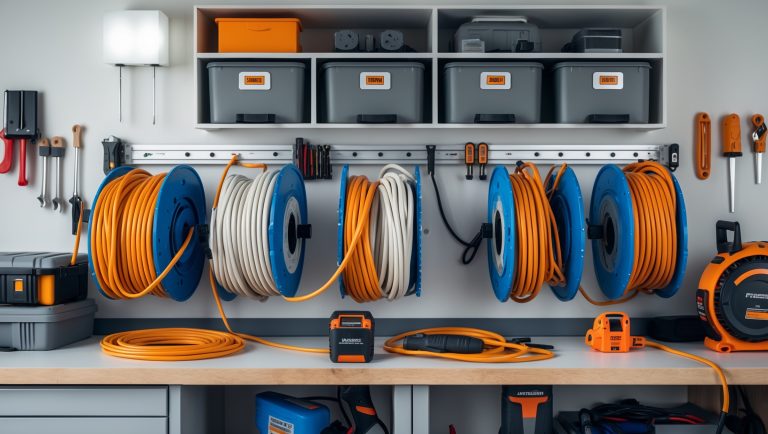
- Mountable Designs: Wall or bench-mounting keeps cords tidy and reduces tripping hazards.
6. Additional Features
- Indicator Lights: Show protection/status at a glance.
- Resettable Circuit Breaker: Cuts power in case of overload.
- USB Ports: Convenient for charging smart tools and gadgets.
- EMI/RFI Filtering: Reduces interference for sensitive electronics.
Comparison of Top Surge Protector and Power Strip Options for Workshops
Best for Heavy-Duty Tools
- Tripp Lite TLP1208TELTV: 2,160 joules, 12 outlets, widely spaced, 8-foot cord, UL 1449 listed, $35–$45.
- APC SurgeArrest P12U2: 4,320 joules, 12 outlets, 2 USB ports, wall/bench mountable, $45–$55.
Best for Compact or Portable Workspaces
- Belkin 6-Outlet Surge Protector: 900 joules, 6 outlets, 4-foot cord, $15–$20.
- Anker PowerExtend Strip: 1,700 joules, 6 outlets, 3 USB, slim profile, $25–$30.
Budget Picks
- Amazon Basics 8-Outlet Surge Protector: 4,500 joules, 8 outlets, 6-foot cord, $20–$25.
Things to Avoid
- Uncertified (no UL/ETL/CSA label) strips.
- Outdated surge protectors (older than 3–5 years, as MOVs degrade over time).
- Low joule ratings (<500) for critical equipment.
Step-by-Step: Safe Installation of Surge Protectors in Your Workshop
1. Plan Your Layout
Sketch your workshop and mark the location of all outlets, benches, and major tools. Decide where surge protectors will be most accessible and least likely to cause clutter or tripping hazards.
2. Inspect Existing Outlets
- Check that wall outlets are not damaged or loose.
- Test for ground faults and ensure outlets are properly grounded.
- Consider upgrading to GFCI outlets for added safety, especially in garages or basements.
3. Mount Surge Protectors Securely
- Use mounting holes or brackets to secure units to the wall or underside of benches.
- Keep surge protectors off the floor to avoid moisture and dust.
- Route cords neatly using cable ties, clips, or raceways.
4. Properly Load Your Surge Protector
- Never daisy-chain power strips or surge protectors.
- Plug in high-draw tools (e.g., compressors, saws) directly to wall outlets if possible.
- Use surge protectors mainly for chargers, small power tools, and electronics.
- Check the total amperage draw does not exceed the device or circuit rating.
5. Test and Monitor Functionality
- Check indicator lights regularly; replace if the protection light goes out.
- Test reset switches and circuit breakers monthly.
- Replace surge protectors every 3–5 years, or after any major surge event.
Maintenance Best Practices for Long-Lasting Protection
Regular Inspections
- Inspect all cords and outlets for fraying, scorching, or loose connections.
- Clean dust and debris from surge protectors and outlets with a dry cloth or compressed air.
Replacement and Upgrades
- Understand that surge protectors wear out—MOVs degrade over time, even without visible damage.
- Upgrade to a new unit if your protector is more than 5 years old or after a major power event.
Proper Use Habits
- Never cover surge protectors with rugs or tools—allow ventilation.
- Unplug surge protectors during extended periods of non-use or when severe storms are forecast.
- Label surge protectors for easy identification in multi-user workshops.
Compliance, Insurance, and Safety Considerations
Electrical Code Basics
- National Electrical Code (NEC) discourages permanent use of extension cords and power strips—install more outlets if needed.
- Never use indoor-only surge protectors in damp or outdoor areas.
Insurance Implications
Some homeowners’ insurance policies may not cover tool damage from surges unless proper protection is in place. Document your surge protector models and installation for peace of mind.
Fire Safety
- Don’t overload circuits—know your breaker’s amperage limit.
- Keep surge protectors away from flammable materials.
- Install smoke detectors in or near your workshop.
Common Myths About Surge Protectors and Power Strips—Debunked
- Myth: “All power strips offer surge protection.”
Truth: Only those labeled and certified as surge protectors do. - Myth: “A surge protector lasts forever.”
Truth: MOVs wear out; replace every 3–5 years or after a major surge. - Myth: “I only need one surge protector for my whole workshop.”
Truth: Multiple units may be necessary for different zones and tool types. - Myth: “Surge protectors prevent all electrical damage.”
Truth: They help, but extreme surges (e.g., direct lightning strikes) may require whole-house protection.
Conclusion: Empowering Your Workshop with Smart Power Choices
When you’re building, repairing, or upgrading anything at home, you want your tools to be reliable, safe, and ready to go. Investing time and a modest budget in the right surge protectors or power strips is a small price to pay for peace of mind and the longevity of your equipment. From understanding technical ratings to planning your layout and maintaining your gear, the steps outlined above will help you avoid common pitfalls that can lead to costly repairs or even dangerous situations.
Remember: not all power strips are created equal. Always opt for certified surge protection for your most valuable and sensitive equipment. Don’t ignore warning signs such as flickering indicator lights or worn cords, and make regular inspection a habit—just as you would with any other critical tool in your shop. With a well-planned power distribution setup, you’ll enjoy a more organized workspace, fewer interruptions, and the confidence that your hard-earned tools are shielded from electrical hazards. Protect your investment, stay safe, and keep your workshop humming—project after project, year after year.
When installing a surge protector in my workshop, is there a best location to place it for maximum protection? For example, should it be closer to the breaker panel, or right at my main workbench where I plug in most of my tools?
For maximum protection of your workshop tools, place the surge protector at your main workbench where you plug in most devices. This ensures your equipment is directly shielded from surges. Installing it near the breaker panel is less effective unless you’re using a whole-home surge protector. Be sure the protector is easily accessible for monitoring and reset.
When you talk about differences between a $10 and a $50 surge protector, is it just about how much voltage they can handle, or are there extra features that make the pricier ones better for running things like saws and sanders? I’m trying to balance protection and budget.
The price difference isn’t just about voltage handling—more expensive surge protectors often provide higher joule ratings (which means better protection), longer warranties, better build quality, and sometimes extra features like multiple outlets, wider spacing for bulky plugs, and indicator lights to show protection status. For tools like saws and sanders, look for a protector rated for higher current (amperage) and with a high joule rating, balancing your needs with your budget.
You mentioned that basic power strips don’t protect against voltage spikes, but is there a way to tell just by looking at a device whether it’s a surge protector or just a power strip? I’m worried I have the wrong type in my garage and don’t want to risk my tools.
You can usually tell the difference by checking for words like ‘surge protector’ or ‘surge protection’ printed on the device or its packaging. Surge protectors often have an indicator light showing protection status, while basic power strips typically lack this feature. If your device only says ‘power strip’ and has no mention of surge protection or a protection light, it’s likely not a surge protector.
Once I install a surge protector in my workshop, is there any kind of maintenance or inspection I should do over time, or do these devices wear out and need to be replaced after a certain period?
Surge protectors do wear out over time, especially after repeated power surges. It’s a good idea to check your surge protector’s indicator lights periodically—many have a light that shows whether protection is still active. If the light goes out or if the unit is several years old (typically 3-5 years), it’s wise to replace it even if it looks fine externally. Regular inspection ensures your equipment stays protected.
Can you explain whether investing in a $50 surge protector actually makes a big difference for heavy-duty tools in a workshop, or if a regular $10 one is usually good enough for most home DIY setups?
For heavy-duty tools in a home workshop, a higher-end surge protector—like a $50 model—offers better protection, higher joule ratings, and may handle larger surges caused by power tools cycling on and off. Cheaper $10 power strips typically have minimal surge protection and may not be rated for heavy loads. If you’re running expensive or sensitive equipment, investing in a quality surge protector is worth it for added safety and tool lifespan.
You mentioned the risks of overloading power strips in a home workshop. If I’m running several tools but not all at once, what’s the best way to figure out the right number and type of surge protectors or strips for my setup without risking a fire hazard?
To avoid overloading, first check the wattage or amp ratings for each tool and add up the total that might be running at the same time. Choose surge protectors or power strips rated for higher loads than your maximum usage. Spread out your tools over several strips if needed, and always plug heavy-duty equipment directly into wall outlets. Never daisy-chain strips, and regularly inspect cords and outlets for wear or heat.
When considering amperage ratings for surge protectors in a garage workshop with multiple power tools, what should I look for to avoid tripping breakers or overloading the strip? Some tools draw more power than others, and I’m not sure how to account for that when choosing equipment.
To avoid overloading your surge protector or tripping breakers in your garage workshop, add up the amperage ratings of the power tools you plan to run at the same time. Choose a surge protector that handles at least that total amperage, but never exceed the outlet or circuit’s maximum (usually 15 or 20 amps). Always check both the surge protector’s and your circuit’s ratings before plugging in multiple high-draw tools.
You talked about amperage ratings and tool compatibility in workshops. How do I figure out what amperage rating I actually need if I have a mix of high-powered tools like a table saw and smaller ones like a drill? Is there a simple way to calculate this?
To determine the amperage rating you need, check the amperage listed on each tool (usually found on the label or in the manual). Add up the amps for the tools you might use at the same time. Your surge protector or power strip should have a rating equal to or higher than this total. For safety, avoid maxing out the strip and leave some margin beyond your highest expected load.
I’m setting up my garage workshop and want to install everything correctly from the start. Is it better to use multiple smaller surge protectors near each work zone, or one large one for the whole area? Any tips on layout for both convenience and safety?
Using multiple smaller surge protectors near each work zone is usually the better approach. This keeps cords shorter, reduces tripping hazards, and makes it easier to reset or replace a unit if needed. Position each strip where it’s easily accessible, but away from areas where tools or liquids could create risks. Make sure none of the surge protectors are overloaded, and always check their ratings to match your equipment.
Could you explain how to figure out the right amperage rating for a surge protector or power strip in a workshop where I might be running several devices at once? Is there a formula or rule of thumb I should use to avoid overloading the circuit?
To determine the right amperage rating, first add up the wattage of all devices you’ll be using at once. Divide the total by your workshop’s voltage (typically 120V in the US) to get the amperage. For example, 1500 watts divided by 120V equals 12.5 amps. Choose a surge protector or power strip with a rating equal to or higher than this number, but never exceed your wall outlet or circuit’s limit, usually 15 or 20 amps.
If I already have a lot of basic power strips in my workspace, what are the biggest risks if I don’t upgrade to surge protectors right away? Is there a way to tell if my current setup is safe?
Using basic power strips instead of surge protectors means your equipment is vulnerable to sudden voltage spikes, which can damage sensitive tools or devices. The biggest risks are potential data loss, equipment failure, or even electrical fires in severe cases. To check if your setup is safe, ensure you’re not overloading outlets and that cords aren’t warm to the touch. Look for power strips with UL certification, but remember, only surge protectors can guard against surges.
The article mentions that basic power strips offer no protection against voltage spikes. If I have both sensitive electronics and heavy-duty tools in my workshop, should I use different types of surge protectors for each, or is one high-quality unit enough?
For a workshop with both sensitive electronics and heavy-duty tools, it’s best to use separate surge protectors. Sensitive electronics benefit from high-quality surge protectors with lower clamping voltage and features like EMI/RFI filtering. Heavy-duty tools require protectors rated for higher currents. Using different surge protectors ensures each device type gets the appropriate protection and prevents interference between sensitive electronics and high-power equipment.
The article explains the difference between $10 and $50 surge protectors, but I’m wondering what features actually justify the higher price. Are there certain certifications, indicator lights, or replaceable components that make the extra cost worthwhile for a home workshop setting?
Higher-priced surge protectors often have features that add value in a home workshop. These can include a higher joule rating for better protection, certifications like UL 1449, indicator lights to show protection and grounding status, and sometimes replaceable surge modules or fuses. Some also offer more outlets, wider spacing for bulky plugs, and built-in circuit breakers. These extras can be worth the cost if you’re protecting valuable or sensitive equipment.
When you talk about amperage ratings and tool compatibility, how can I figure out if my current setup is safe for running multiple power tools at the same time? Is there a simple way to check if I’m overloading my surge protector or power strip?
To check if your setup is safe, add up the amperage or wattage ratings listed on your power tools’ labels. Compare the total to the maximum rating of your surge protector or power strip, which is often printed on the device (for example, 15 amps or 1800 watts). If the total is close to or above that limit, you’re at risk of overloading it. Running too many high-draw tools at once is unsafe—spread them out or use separate circuits if needed.
You mention that some surge protectors cost significantly more than others, like $10 versus $50 models. Can you elaborate on what specific features or ratings justify the higher price in a home workshop setting?
Higher-priced surge protectors often offer a higher joule rating, which means they can absorb more energy from power surges, providing better protection for your tools. They may also feature more outlets, individual switch controls, built-in circuit breakers, indicator lights that show protection status, and better build quality. Some premium models include warranties for connected equipment, giving extra peace of mind in a home workshop.
You mention that the price difference between a $10 surge protector and a $50 one can be significant. Besides joule rating, what specific features or certifications should a home workshop owner look for to justify spending more on a higher-end surge protector?
Besides joule rating, higher-end surge protectors often include features like a lower clamping voltage, faster response time, and more outlets with better spacing for bulky plugs. Look for UL 1449 certification, a protected/grounded indicator light, and options like EMI/RFI noise filtering. Some pricier models also offer connected equipment warranties, which can add peace of mind for expensive workshop tools.
I noticed you mentioned the difference in price between a $10 surge protector and a $50 one. For someone setting up a first workshop, is it really necessary to invest in the higher-end option, or will a basic surge protector offer enough protection for standard power tools?
For a first workshop using standard power tools, a basic surge protector is usually sufficient as long as it meets the equipment’s wattage and amperage requirements. Higher-end surge protectors offer extra features like better surge absorption and indicator lights, but for everyday tools, a $10 model should provide adequate protection. Just be sure not to overload it and replace it if it ever takes a big surge.
The article mentions considering amperage ratings when choosing surge protectors for a workshop. How do I figure out the right amperage for my setup if I’m running several large power tools at once?
To determine the right amperage for your surge protector, first check the amp rating of each power tool—usually found on the tool itself or in the manual. Add up the highest amps you might use at the same time. Pick a surge protector with a rating equal to or greater than that total, but never exceed your workshop’s circuit breaker capacity, which is often 15 or 20 amps.
When setting up a new workshop, are there specific amperage ratings or surge protector features you’d recommend prioritizing if I plan to use multiple high-powered tools at once? I want to make sure I’m not overloading anything.
When outfitting a workshop with high-powered tools, prioritize surge protectors and power strips rated for at least 15 amps, as this matches most household circuits. Look for units with a high joule rating (over 2000 joules) for better surge protection. Make sure your combined tool amperage does not exceed the circuit or surge protector’s rating, and avoid daisy-chaining strips. For several heavy-duty tools, consider dedicated circuits or consult an electrician for safe setup.
After installing a surge protector in my workshop, what maintenance steps should I take to make sure it stays effective over time? Are there signs that indicate I need to replace it, or is it safe to assume it keeps working as long as power flows through it?
After installing a surge protector, check its indicator light regularly—most have one that shows they’re still providing protection. If the light goes out or changes color, it’s usually a sign the unit no longer protects against surges and needs replacing. Also, replace surge protectors after any major electrical event, like a lightning strike or power surge, even if they appear to work. It’s not safe to assume they’re effective just because power still flows through them.
You talked about amperage ratings and tool compatibility—how do I figure out if the surge protector or power strip I’m considering can safely handle my table saw and other heavy-duty tools?
To check if a surge protector or power strip can handle your table saw and other heavy-duty tools, first find the amperage or wattage rating on each tool—usually listed on a label. Add up their total amps (or watts). Next, check the surge protector’s rating, which is often printed on the packaging or device. Make sure the total draw of your tools does not exceed the surge protector’s rating. For power-hungry tools, it’s safest to plug them directly into a wall outlet.
If my workshop layout changes often and I use extension cords to reach new setups, is it still safe to use surge protectors with these cords? Or does this increase the risk of overloads or reduce the effectiveness of the surge protection?
Using surge protectors with extension cords in a workshop that changes layouts can be safe if done carefully. However, daisy-chaining power strips or plugging surge protectors into extension cords can increase the risk of overload and may reduce surge protection effectiveness. Always check the total wattage of all connected devices, use heavy-duty extension cords rated for your tools, and avoid exceeding the power ratings of both the cord and surge protector.
If my power strip is pretty old but seems to still work fine, is there a way to tell if its protection components are worn out, or should I just automatically replace it after a certain number of years?
Surge protectors can lose effectiveness over time, even if they still supply power. Most don’t show visible signs when their protective components wear out. If your power strip is over 3–5 years old or has protected equipment through a few power surges, it’s safest to replace it. Some surge protectors have indicator lights showing protection status, so check for that feature, but otherwise, regular replacement is recommended.
You referenced how some basic power strips offer no surge protection. For someone with both older and newer power strips in the workshop, is there a reliable way to tell the difference at a glance, or do I need to open them up or check the model numbers?
You usually don’t need to open up the power strips. Most surge protectors will clearly state ‘Surge Protection’ or have a light labeled ‘Protected’ on the strip. Basic power strips without surge protection typically lack these labels and lights. If you can’t find any markings, checking the model number online is the next best way to confirm.
The article mentions price differences between surge protectors, like $10 versus $50 models. For a weekend DIYer with mostly mid-range tools, is there really a big safety or lifespan difference if I go with a cheaper surge protector?
For a weekend DIYer using mid-range tools, a basic surge protector should cover your needs for safety and basic protection against power spikes. The more expensive models usually offer higher joule ratings, extra outlets, and features like noise filtering or indicator lights. If your tools aren’t especially sensitive or expensive, a reliable cheaper surge protector is generally fine, but make sure it’s certified and has a good joule rating for peace of mind.
I see you mention differences between a $10 surge protector and a $50 one. Besides price, what practical features or ratings should I look for to justify spending more on a higher-end surge protector for a workshop environment?
When choosing a higher-end surge protector for a workshop, look for a higher joule rating (which means better protection against surges), a lower clamping voltage (the voltage at which it cuts off surges), and certifications like UL 1449. Extra features worth the investment include more robust outlets, spaced outlets for bulky plugs, and built-in noise filtering. Some premium models also offer indicator lights to show proper grounding and surge protection status.
You talked about amperage ratings when choosing surge protectors for workshops. If I use multiple tools together—like a saw and a dust collector—how do I figure out what amperage rating I actually need to stay safe and avoid overloading the equipment?
To determine the right amperage rating, check the amps listed on the labels or manuals for each tool you plan to run at the same time. Add those numbers together to get your total draw. Choose a surge protector or power strip with an amperage rating that meets or exceeds this total. This helps prevent overloads and keeps your equipment safe during use.
You mention amperage ratings and tool compatibility—how do I figure out if my current setup can handle several heavy-duty tools running at once without risking overload or damaging my equipment?
To check if your setup can handle multiple heavy-duty tools, add up the amperage ratings of all the tools you plan to use at the same time. Compare this total to the amperage limit of your circuit (usually listed on your breaker, often 15 or 20 amps in homes). Always stay below this limit, ideally leaving a safety margin. If your total amperage is close to or over the circuit’s rating, consider using fewer tools at once or installing a dedicated circuit for your workshop.
The article mentions the difference in price between a $10 surge protector and a $50 one. What are the actual features that make the more expensive surge protector better for a workshop setting, and is the extra cost really worth it for protecting power tools?
Higher-priced surge protectors typically offer features like a greater joule rating (which means better protection against bigger surges), sturdier build quality, more outlets, and sometimes dedicated protection for phone or data lines. In a workshop where power tools draw significant current and surges are a real risk, the extra investment can make sense. The added protection can help prevent expensive tool damage, making the higher cost worthwhile for frequent or high-value tool use.
If my older power strip doesn’t show any visible damage but has been in place for years under my workbench, is it still safe to use, or should I be replacing it after a certain timeframe even if it’s working?
Even if your power strip looks fine and is still working, it’s a good idea to replace it if it’s several years old, especially in a workshop environment. Over time, internal components can wear out, and older power strips may not offer the same level of protection as newer models. If you can’t recall when you bought it, or if it’s more than 3-5 years old, consider upgrading for safety.
The article talks about the risk of fire hazards from overloaded power strips. Can you share any practical tips for organizing multiple power-hungry tools so I don’t accidentally overload a strip, especially in a small space?
To avoid overloading power strips in a small workshop, plug only one high-wattage tool (like a saw or compressor) into a strip at a time. Use dedicated outlets for the most demanding devices. Label cords to track what’s plugged in, and consider a power strip with an overload protection feature. Organizing tools by task and unplugging those not in use can also help manage load safely.
If my workshop layout means I have to use a longer surge protector cord to reach my bench, does that affect the level of protection I get, or should I be looking for something specific in the extension length or gauge to stay safe?
Using a longer surge protector cord can introduce voltage drop and may impact its effectiveness if the cord is too thin or not rated for the load you need. Look for a surge protector with a heavy-duty cord, ideally 14-gauge or thicker for longer runs, and make sure it’s rated for the total amperage of your tools. Avoid daisy-chaining multiple surge protectors or extension cords, as that can reduce safety and protection.
After reading about installing and maintaining surge protectors, I’m wondering how often they should actually be replaced. Are there signs I should look out for, or is there a recommended replacement schedule even if everything seems to be working fine?
Surge protectors don’t last forever, even if they appear to be working. Many experts suggest replacing them every 3 to 5 years, as their protective components can degrade with repeated power surges. Signs you should replace them sooner include visible damage, a burnt smell, or the loss of a ‘protected’ indicator light if your device has one. If you know your area had a significant surge or lightning strike, it’s wise to swap them out as a precaution.
If my current power strip doesn’t have any kind of surge protection but I’ve never had a problem before, is it still necessary to upgrade? Are there specific warning signs that my workshop really needs a dedicated surge protector now?
Even if you’ve never experienced issues, it’s still wise to consider a surge protector, especially for a workshop with valuable tools or electronics. Power surges are unpredictable and can happen without warning. Warning signs that you might need one include frequent power outages, flickering lights, or if your area is prone to storms or unreliable power. Upgrading now can help prevent costly damage in the future.
If I’m just starting out and have to stick with a budget, is there a minimum joule rating or specific feature that’s actually worth spending extra on for a home garage? Also, how much difference does it make to pay for a $50 surge protector instead of a basic $10 one?
For a home garage with basic power tools, aim for a surge protector rated at least 1000 joules for better protection. Key features to prioritize are a resettable circuit breaker and grounded outlets. Higher-priced models usually offer more joules and extra convenience, but for most starters, a $20–$30 protector from a reputable brand is sufficient. Spending $50 is mainly worthwhile if you need to safeguard sensitive or expensive electronics.
I noticed you talked about amperage ratings and tool compatibility. Could you elaborate on how to calculate the total amps my various workshop tools might draw, and how that should influence my choice between a power strip and a surge protector?
To calculate the total amps your workshop tools draw, check each tool’s label for its amperage or wattage rating. If it lists watts, divide that number by your household voltage (usually 120V) to get amps. Add up the amps for all tools you plan to use simultaneously. Choose a power strip or surge protector with an amp rating higher than this total. This helps prevent overloads and ensures safe operation with all your tools.
When it comes to installing a surge protector in a garage workshop, are there certain amperage ratings or features I should look out for if I regularly run high-draw tools like table saws and shop vacs at the same time?
For a garage workshop with high-draw tools, look for surge protectors or power strips rated for at least 15 amps (1800 watts). Make sure the device is UL-listed and designed for heavy-duty or workshop use. Features like a high joule rating (over 2000 joules), wide-spaced outlets, and built-in circuit breakers add extra protection and convenience when running equipment like table saws and shop vacs together.
Once a surge protector has been installed in a garage workspace, are there specific maintenance steps or signs of wear we should watch for to ensure ongoing protection, especially since these devices may not always visibly indicate when they stop functioning?
Surge protectors often don’t show clear signs when their protection fails, so it’s important to check them periodically. Look for any visible damage like discoloration, melted areas, or a tripped indicator light if your model has one. If your surge protector lacks an indicator, consider replacing it every few years, especially if you’ve experienced a power surge or lightning storm. Regular dusting and ensuring the plugs fit snugly can also help maintain performance.
You mentioned the difference between a $10 surge protector and a $50 one. Besides the price, what practical features really justify the cost in a home workshop—like indicator lights, reset buttons, or better warranties? Would those higher-end options make a noticeable difference for most DIY setups?
Higher-priced surge protectors often offer better protection with higher joule ratings, which means they can handle bigger power surges. You’ll also find features like indicator lights that show if protection is still active, resettable circuit breakers for overloads, and longer or more flexible warranties. For most home DIY workshops—especially if you use expensive or sensitive tools—these upgrades can make a worthwhile difference in both safety and peace of mind.
The article explains the difference between power strips and surge protectors, but I’m still unsure how much I should spend. Does paying more for a surge protector really get you better protection for expensive tools, or are the cheaper models just as effective?
Higher-priced surge protectors often offer better protection, with higher joule ratings and more advanced components that can handle larger surges or spikes. For expensive tools, it’s wise to choose a surge protector with a joule rating of at least 1000–2000 joules. Cheaper models might provide basic protection, but may not last as long or protect as well during strong surges. Investing a bit more usually means better long-term safety for your tools.
I noticed you mentioned the difference in price between $10 and $50 surge protectors. For a typical home garage workshop with a mix of older and newer power tools, is it worth investing in the more expensive surge protector, or would a basic one be sufficient?
For a home garage workshop with a mix of older and newer power tools, a mid-range surge protector often provides adequate protection. The more expensive models offer higher joule ratings and added features like better noise filtering or indicator lights, which can help protect sensitive or valuable equipment. If your tools are mostly standard power tools without delicate electronics, a basic surge protector with a sufficient joule rating should be enough. However, for extra peace of mind or if you use electronic or computerized tools, the investment in a better unit can be worthwhile.
The article talks about amperage ratings and tool compatibility. If I’m regularly running a table saw and a shop vacuum at the same time, how do I figure out which surge protector would actually handle that load without tripping or overheating?
To determine the right surge protector, check the amperage (amps) and wattage ratings on both your table saw and shop vacuum. Add up their total amps. Make sure your surge protector’s maximum amperage rating is higher than this combined number. Also, verify that the power strip can handle the wattage by adding up both tools’ watts. Never exceed the surge protector’s listed limits, and if your tools draw significant power, consider using separate circuits or a heavy-duty power strip rated for workshop tools.
If I already have some older power strips in my workshop, is it possible to upgrade their surge protection without rewiring everything, or should I just replace them completely? Curious about best practices for home DIYers on a budget.
You can’t upgrade the surge protection of an existing power strip; the protective components are built into the device itself. For the best safety and reliability, it’s recommended to replace older power strips with new ones that have built-in surge protection. Look for those labeled with a clear joule rating and safety certifications. This approach is budget-friendly and doesn’t require any rewiring.
If my workshop has a mix of older and newer tools, how can I tell if my current power strips are providing enough amperage or if they’re at risk of overloading? Are there warning signs I should watch for?
To determine if your power strips are handling your tools safely, check their maximum amperage rating, usually printed on the strip itself. Add up the amp ratings of the tools you use at the same time and make sure it doesn’t exceed the strip’s limit. Warning signs of overload include warm or hot plugs, buzzing sounds, flickering lights, or tripping circuit breakers. If you notice any of these, unplug devices right away and consider upgrading to a higher-capacity surge protector or using additional circuits.
You talk about surge protectors coming in different price ranges, like $10 versus $50 models. What are the actual safety or performance differences I’d notice between cheap and expensive surge protectors in a busy, tool-heavy workshop?
In a busy, tool-heavy workshop, more expensive surge protectors usually offer higher joule ratings, meaning they can absorb more powerful surges and last longer. They often include better built-in safety features like indicator lights, more durable housings, and faster response times. Cheaper models may protect against minor surges but can fail faster, especially with heavy or frequent tool usage. For peace of mind and equipment safety, investing in a better-quality surge protector is wise in such environments.
Is there a significant difference in real-world protection between a $10 surge protector and a $50 model, or is the price mainly about extra outlets and brand? I want to protect a few expensive tools, but I also need to stick to a reasonable budget.
The price difference between surge protectors often comes from more than just extra outlets or branding. Higher-priced models usually offer greater surge protection (measured in joules), better build quality, and features like indicator lights or warranty coverage for connected devices. For protecting expensive tools, check the joule rating—aim for at least 1,000 joules. A budget-friendly option with a solid joule rating can still provide good protection, but avoid the cheapest models if your equipment is valuable.
I noticed you mentioned the difference in price between basic and higher-end surge protectors. Are there specific brands or features you look for when deciding if the extra cost is worth it for protecting larger workshop equipment like table saws or air compressors?
When protecting larger workshop equipment, I recommend looking for surge protectors with higher joule ratings (at least 2,000 joules), built-in circuit breakers, and UL or ETL safety certifications. Brands like Tripp Lite, APC, and Belkin are known for quality. Features such as diagnostic LEDs, isolated filter banks, and equipment warranties can also justify the extra cost, especially if you’re protecting expensive tools like table saws or compressors.
The article mentions differences between a $10 surge protector and a $50 one. What are the main features that justify spending more, and is the extra investment really necessary for protecting heavy-duty tools, or could a cheaper option be just as safe in a basic workshop?
Higher-priced surge protectors typically offer greater joule ratings, which means they can absorb more power from surges before failing. They also often have better build quality, more outlets, indicator lights for protection status, and sometimes warranties for connected equipment. For heavy-duty tools—especially those with sensitive electronics—the added protection is wise. In a basic workshop with simple tools, a cheaper surge protector might be sufficient, but always check the joule rating and safety certifications to ensure adequate protection.
If I mainly use hand tools and just a couple of power tools in my garage workspace, is it really necessary to invest in a more expensive surge protector, or would a basic power strip be sufficient for my needs?
For a garage workspace where you’re mainly using hand tools and just a few power tools, a basic power strip is usually sufficient, especially if your tools aren’t particularly sensitive to power fluctuations. A higher-end surge protector is more important for delicate electronics or expensive equipment. Just make sure your power strip is rated for the combined load of your tools, and avoid overloading it.
You talk about the differences between a $10 power strip and a $50 surge protector—could you explain which features actually justify the higher price? Are there specific certifications or specifications I should look out for when upgrading in a home workshop?
A $50 surge protector usually offers higher joule ratings (meaning better protection against large surges), built-in circuit breakers, and indicator lights to show proper grounding and protection status. Look for UL 1449 certification, which assures tested surge protection, and features like EMI/RFI filtering and robust warranties. These are especially important for protecting sensitive workshop equipment against electrical spikes.
Could you explain more about how to figure out what amperage rating I need for my setup? I use a mix of hand tools and a few bigger machines, so I’m worried about overloading a strip or buying one that’s overkill.
To determine the right amperage rating, start by checking the amp rating on each tool or machine you’ll plug in; this is usually listed on the tool’s label. Add up the maximum amps you might use at one time. The surge protector or power strip should have a higher rating than that combined total, but avoid going much higher than necessary for safety and efficiency. For a typical home workshop, a strip rated for 15 amps is common, but always double-check your equipment’s needs.
I’m setting up my first garage workshop and have a bunch of older power strips lying around. The article says they usually don’t offer any surge protection, but is it possible to add surge protection to them somehow, or do I really need to replace everything with new surge protectors?
It’s not possible to upgrade regular power strips to provide true surge protection, since the protective components need to be built into the design. If you want to protect your tools and equipment from power surges, you’ll need to use actual surge protectors. You don’t have to replace every strip, but for expensive or sensitive devices, plug them into new surge protectors for peace of mind.
The article talks about amperage ratings and tool compatibility, but I’m unsure how to match my specific tools with the right surge protector. Is there a simple way to calculate the correct amperage or capacity I should look for when choosing one?
To match your tools with the right surge protector, check each tool’s power rating label for its amperage (A) or wattage (W). Add up the amperage of all the tools you plan to use at the same time. Choose a surge protector with a maximum amperage rating equal to or greater than that total. For example, if you want to run two tools rated at 5A each, look for a protector rated for at least 10A.
You mention the difference in price between a $10 surge protector and a $50 one—could you explain what specific features or levels of protection justify spending more? Are the pricier models generally worth it for typical power tools or just sensitive electronics?
More expensive surge protectors typically offer higher joule ratings, which means they can absorb larger surges, and they often include features like better indicator lights, warranty coverage for connected devices, and filtering to reduce electrical noise. For everyday power tools in a workshop, a basic model may be enough, but pricier units are worthwhile if you’re protecting sensitive electronics like computers or CNC equipment.